Imagine a world where managing diabetes doesn’t involve painful finger pricks or cumbersome continuous glucose monitors. For millions living with diabetes and even more seeking proactive health insights, this vision of seamless, non-invasive glucose monitoring integrated into everyday wearables like smartwatches has long been the holy grail. The promise of effortlessly tracking blood sugar levels in real-time could revolutionize personal health management, offering unparalleled convenience and driving better health outcomes. But how close are we to this groundbreaking reality, and what technologies are leading the charge?
The journey to developing reliable, needle-free glucose monitoring has been long and fraught with challenges, yet recent advancements suggest we might be on the cusp of a significant breakthrough. This article will delve into the cutting-edge technologies being explored, highlight the companies spearheading these innovations, examine the formidable hurdles remaining, and provide a realistic outlook on when these transformative devices might finally grace our wrists.
The Promise of Non-Invasive Glucose Monitoring
The need for non-invasive glucose monitoring is immense. Current methods, while effective, often involve frequent finger-prick tests or minimally invasive continuous glucose monitors (CGMs) that require a sensor inserted under the skin. These can be painful, inconvenient, and costly, leading to lower adherence rates for many individuals.
A truly non-invasive wearable would offer several profound benefits:
- Painless and Convenient: Eliminating needles or subcutaneous insertions would make monitoring a seamless part of daily life.
- Continuous Real-time Data: Users could track glucose trends around the clock without interruption, providing invaluable insights into diet, exercise, and medication effectiveness.
- Early Detection and Prevention: Continuous monitoring could help identify pre-diabetic individuals or those at risk, enabling earlier intervention and lifestyle changes.
- Improved Quality of Life: For individuals with diabetes, this technology promises greater freedom, reduced anxiety, and more effective management of their condition.
- Accessibility and Affordability: With widespread adoption, these devices could potentially become more accessible and affordable than current solutions, democratizing critical health data.
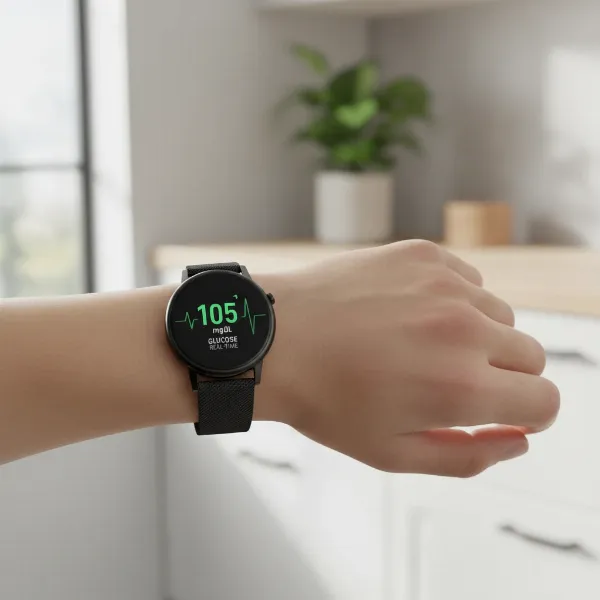 A person smiling while checking their non-invasive glucose monitoring smartwatch.
How Non-Invasive Glucose Monitoring Works: Diverse Technologies at Play
The quest for non-invasive glucose monitoring has spurred a wide array of technological approaches, each attempting to detect glucose molecules without piercing the skin.
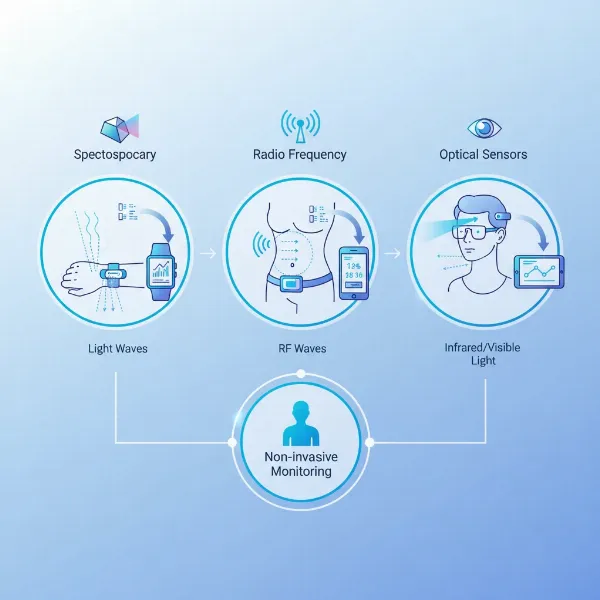 Illustration showing various non-invasive glucose monitoring technologies.
Spectroscopy: Reading the Body’s Chemical Signature
Spectroscopy is a leading method, leveraging the interaction of molecules with electromagnetic radiation. Different types of spectroscopy are being investigated:
- Molecular Spectroscopy: This technique uses light absorption by molecules to detect glucose through the skin. Companies like DiaMonTech are developing systems based on this principle, including devices that can be integrated into watches or fitness bands. Know Labs also employs spectroscopy, utilizing proprietary radiofrequency sensors to interact with glucose molecules.
- Raman Spectroscopy: Rumored to be a focus for tech giants like Apple, Raman spectroscopy uses near-infrared light to analyze reflected light and glean information about blood glucose levels. Researchers are exploring its potential to provide highly accurate, continuous data.
|
Our Picks for the Best Smartwatch in 2026
As an Amazon Associate I earn from qualifying purchases.
|
||
| Num | Product | Action |
|---|---|---|
| 1 | Smart Watch for Men, 120 Sports Modes Smartwatch with 1.83" HD Touchsreen, IP67 Waterproof, Sleep Monitor, Bluetooth Call & Music Control Fitness Watch for Android/iPhone (Black) |

|
| 2 | Apple Watch Series 11 [GPS 46mm] Smartwatch with Jet Black Aluminum Case with Sport Band - M/L. Sleep Score, Fitness Tracker, Health Monitoring, Always-On Display, Water Resistant |
|
| 3 | Apple Watch Series 11 [GPS 42mm] Smartwatch with Rose Gold Aluminum Case with Light Blush Sport Band - S/M. Sleep Score, Fitness Tracker, Health Monitoring, Always-On Display, Water Resistant |
|
| 4 | Smart Watch, 2026 AMOLED 1.43" Fitness Smartwatch for Men Women, Bluetooth 5.4 Call, 130+Sports Modes, 60+Days Flashlight, Heart Rate/Sleep Monitor, IP68 Waterproof Activity Tracker for Android iOS |
|
| 5 | Amazfit Bip 6 Smart Watch 46mm, 14 Day Battery, 1.97" AMOLED Display, GPS & Free Maps, AI, Bluetooth Call & Text, Health, Fitness & Sleep Tracker, 140+ Workout Modes, 5 ATM Water-Resistance, Black |
|
| 6 | WHOOP 5.0/MG Activity Tracker - 12 Month Membership - Health and Fitness Wearable – 24/7 Activity and Sleep Tracker, Personalized Coaching, Menstrual Cycle Insights – 14+ Days Battery Life |
|
| 7 | Smart Watch for Men Women Compatible with iPhone Samsung Android Phone 1.83 inch Full Touch Screen IP68 Waterproof Bluetooh Fitness Tracker Heart Rate/Sleep Monitor, Black |
|
| 8 | Smart Watch with Alexa Built-in, 1.83" HD Touchscreen Fitness Tracker with Bluetooth Calling, Fitness Watch with Heart Rate/Sleep Monitor, 120+ Sports Modes, IP68 Waterproof Smartwatch for Android iOS |
|
| 9 | SAMSUNG Galaxy Watch 7 40mm Bluetooth AI Smartwatch w/Energy Score, Wellness Tips, Heart Rate Tracking, Sleep Monitor, Fitness Tracker, 2024, Cream [US Version, 1Yr Manufacturer Warranty] |
|
| 10 | Smart Watch for Men, 120+ Sports Modes Smartwatch with 1.83" HD Touchsreen, Sleep Monitor, IP67 Waterproof, Bluetooth Call & Music Control Fitness Watch for iPhone/Android Black |
|
Radio Frequency (RF) Sensors: Signals from Beneath the Skin
Another promising avenue involves radio frequency sensors. These devices emit radio waves that interact with substances beneath the skin, including glucose, and then analyze the returned signals. Afon Technology’s Glucowear, for example, is an RF sensor designed to fit under the wrist, aiming to provide real-time monitoring without the time lag often associated with other non-invasive methods. Movano is also testing similar RF technology for integration into a smart ring.
Optical Sensors: A Challenging but Persistent Approach
Optical sensors were among the earliest concepts for non-invasive glucose monitoring, emerging in the early 2010s. These sensors use light to obtain signals from beneath the skin. While initially faced with significant challenges in accuracy and reliability, major players like Apple and Samsung are reportedly still exploring integrated optical glucose sensors for their smartwatches, indicating a continued interest in refining this approach.
Emerging Concepts: Beyond the Wrist
Innovation isn’t limited to traditional wearables. Sync Neuro is developing a device that uses electroencephalogram (EEG) signals—brainwaves—to track and predict blood sugar levels. This ear-worn patch detects distinct electrical patterns emitted by the brain’s hypothalamus when glucose levels shift, translating them into glucose trends. This innovative approach highlights the diverse scientific pathways being explored.
Pioneering Companies and Their Innovations
The race to bring non-invasive glucose monitoring to market involves a mix of dedicated startups and established tech giants.
Afon Technology: The Glucowear Ambition
Based in Wales, Afon Technology is developing Glucowear, an RF sensor designed to be worn under a smartwatch. This device promises completely non-invasive, continuous, real-time blood glucose monitoring, offering features like alarm notifications, trend profiles, and seamless Bluetooth communication with smart devices. Afon has received significant funding from the European Innovation Council and is undergoing multi-phase clinical trials, with an optimistic, though challenging, target launch in early 2024.
Know Labs: Accessibility and Accuracy with KnowU
Know Labs, Inc. has announced its KnowU device, a wearable, non-invasive continuous glucose monitor (CGM) that utilizes spectroscopy with proprietary radiofrequency sensors. The KnowU is designed for long-term use, rechargeability, and connection to a user-friendly app, aiming to integrate accessibility, affordability, and accuracy. Know Labs anticipates sending its sensor, which has shown stability and accuracy in lab settings, to the FDA for clearance, potentially making it the world’s first non-invasive blood glucose monitor introduced to the global marketplace upon approval.
DiaMonTech: Handheld to Wearable Spectroscopy
From Germany, DiaMonTech has developed a system based on molecular spectroscopy. They are working on three versions: a handheld “D-Pocket” for finger-press readings (expected by 2023), a small “D-sensor” for integration into watches or fitness bands (anticipated for 2024), and a larger device for clinical settings. Their CEO, Thorsten Lubinski, emphasizes the accuracy of their technology, which focuses specifically on glucose molecules.
Major Tech Giants: Apple and Samsung’s Silent Race
For years, rumors have swirled about Apple and Samsung’s efforts to integrate non-invasive glucose monitoring into their popular smartwatches. While neither company has released a product with this capability, reports suggest both are actively pursuing the technology. Apple is reportedly working on an integrated optical glucose sensor or potentially Raman spectroscopy. Samsung’s Senior Vice President, Dr. Hon Pak, announced in early 2025 the company’s work on an AI-assisted non-invasive blood glucose monitoring solution, along with continuous glucose monitoring-integrated nutrition coaching, signalling serious intent from these industry leaders.
Other Innovators: A Diverse Landscape
Beyond these frontrunners, several other companies are contributing to the field:
- Scanbo: Showcased a prototype at CES 2022 that uses a 60-second non-invasive finger measurement combining ECG and Photoplethysmogram (PPG) data.
- Hagar Technology: Developing the GWave, a wrist-worn ceramic bracelet that uses radio frequencies, and has received FDA fast track designation.
- SugarBEAT (Nemaura Medical): An adhesive peel-and-place patch approved in Europe, which uses a mild electric current to draw glucose molecules from interstitial fluid.
- NovioSense: A Dutch startup developing a glucose sensor placed under the lower eyelid that wirelessly sends measurements from tear fluid to a smartphone.
- LifePlus: Working on LifeLeaf, a non-invasive wristwatch that aims to detect blood glucose, blood pressure, and more using spectroscopic principles.
The Hurdles to Overcome: Challenges and Skepticism
Despite the exciting progress, bringing non-invasive glucose monitoring to market is a monumental task, riddled with significant challenges that have led to the failure of many past attempts.
Regulatory Approval: A Stringent Gauntlet
One of the most formidable hurdles is navigating the stringent requirements of health regulators like the FDA. Unlike general fitness trackers, devices providing medical-grade glucose data must meet exceptionally high standards for accuracy, reliability, and safety. This process is often lengthy and expensive, pushing back optimistic launch timelines. Companies like Afon, despite aiming for a 2024 launch, acknowledge the “extremely optimistic” nature of this goal due to regulatory demands.
Accuracy and Reliability: The “Deceitful Turkey”
Historically, achieving consistent accuracy with non-invasive methods has proven incredibly difficult. Industry experts, some of whom have watched this field for decades, remain skeptical. John L. Smith, author of the seminal paper “The Pursuit of Noninvasive Glucose: Hunting the Deceitful Turkey,” notes that many premature announcements have raised false hopes. The challenge lies in accurately measuring glucose through various skin types, temperatures, hydration levels, and other physiological factors that can interfere with readings. Past failures, such as the infamous GlucoWatch in the early 2000s (which was unreliable and caused skin burns), and Google’s scrapped contact lens project, serve as stark reminders of these complexities.
High Development Costs and Investment Risks
Developing a truly accurate and reliable non-invasive glucose monitor requires substantial investment—potentially millions of dollars and years of research, clinical trials, and regulatory navigation. This financial burden, coupled with the high risk of failure, can deter investors and delay progress, particularly for smaller startups.
Expert Skepticism: Hype Versus Hope
Many seasoned diabetes technology experts caution against excessive hype. Dr. Aaron Kowalski, CEO of JDRF, states that “It’s the easiest slide-deck pitch to make, but it never seems to go anywhere,” citing major technological challenges. Dr. Barry Ginsberg, a premier expert, predicts the market will be dominated by “less invasive” and smaller devices rather than truly non-invasive ones in the near future. The core problem, some argue, isn’t just getting a reading, but ensuring users understand and act on that data to improve health outcomes effectively.
“The amount of interest in seeing the development of an accurate [noninvasive glucose sensor] and the amount of hyperbole by companies promising an accurate [product] both far outstrip the amount of publicly available data actually generated by these potential products.” – Diabetes Technology Society, Scientific Analysis, October 2021
What to Expect: Timeline and Future Outlook
While a universally available, perfectly accurate non-invasive smartwatch glucose monitor isn’t here yet, the intense research and development indicate that the future is bright, albeit with realistic expectations.
Short to Mid-Term (2024-2026): We are likely to see continued advancements from specialized companies. Some devices, like DiaMonTech’s D-sensor for wearables or Afon’s Glucowear, aim for market entry around 2024, but regulatory approvals will be key determinants. “Less invasive” solutions, which are smaller and more convenient than current CGMs, will likely bridge the gap.
Longer Term (2026-2030 and Beyond): As technologies mature and regulatory pathways become clearer, major tech companies like Apple and Samsung may finally integrate these capabilities into their flagship smartwatches. Breakthroughs in spectroscopy, RF sensors, and even novel approaches like EEG-based monitoring could lead to commercial launches in this timeframe, with some projects like Sync Neuro’s eyeing a 2028 commercial debut.
The journey towards non-invasive glucose monitoring in smartwatches is a marathon, not a sprint. The unwavering dedication of scientists, engineers, and healthcare professionals promises a future where diabetes management is truly integrated, effortless, and accessible. This innovation will not only transform the lives of people with diabetes but also empower a broader population to gain unprecedented insights into their metabolic health, paving the way for a healthier future for all.
Frequently Asked Questions
When can I expect to buy a smartwatch with built-in non-invasive glucose monitoring?
While several companies are targeting launches between 2024 and 2028, these timelines are highly dependent on rigorous clinical trials and stringent regulatory approvals. Early versions might appear from specialized startups first, with major tech brands potentially following later in the decade once the technology is proven accurate and safe.
How accurate are current non-invasive glucose monitoring prototypes?
Prototypes show varying levels of accuracy in lab settings, with some claiming comparability to existing minimally invasive CGMs. However, real-world accuracy across diverse users and conditions remains the biggest challenge for regulatory clearance. Consistent reliability is paramount before commercial release.
Will non-invasive glucose monitoring replace traditional finger-prick tests?
The ultimate goal is to significantly reduce or eliminate the need for traditional finger-prick tests. Initially, non-invasive devices might serve as complementary tools, offering trends and alerts, while more precise readings might still require confirmation with existing methods, especially for critical decisions like insulin dosing.
What are the main challenges preventing widespread adoption of non-invasive glucose smartwatches?
The primary challenges are achieving consistent clinical accuracy across varied users, securing strict regulatory approvals from health authorities, and overcoming the substantial financial and technological hurdles in development. The history of failed attempts also contributes to a cautious approach.
Which companies are leading the development of this technology?
Key innovators include Afon Technology with its Glucowear RF sensor, Know Labs with its spectroscopy-based KnowU, and DiaMonTech with various spectroscopic devices. Major tech companies like Apple and Samsung are also heavily rumored to be investing in their own non-invasive glucose monitoring solutions.