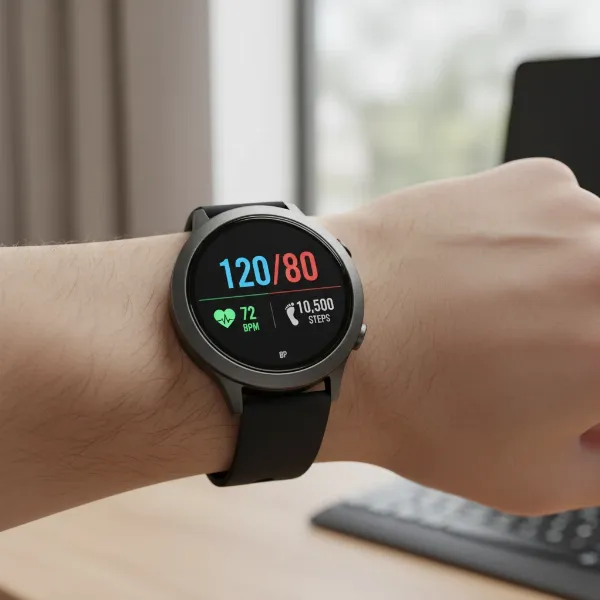
Navigating the delicate balance between a child’s growing independence and a parent’s natural desire for safety can be challenging in our increasingly connected world. As children venture out, whether to school, a friend’s house, or simply playing in the neighborhood, parents often seek reliable ways to stay connected without handing over a full-fledged smartphone. This is where kids’ smartwatches equipped with GPS tracking and robust parental controls step in, offering a vital link that provides peace of mind and fosters a sense of responsibility.
These purpose-built smartwatches bridge the “communication gap,” serving as an age-appropriate alternative to smartphones. They allow parents to monitor their child’s location, communicate instantly, and set boundaries, all while keeping internet distractions and social media at bay. But with a myriad of options available, selecting the perfect kids’ smartwatch requires careful consideration of features, durability, and most importantly, privacy safeguards.
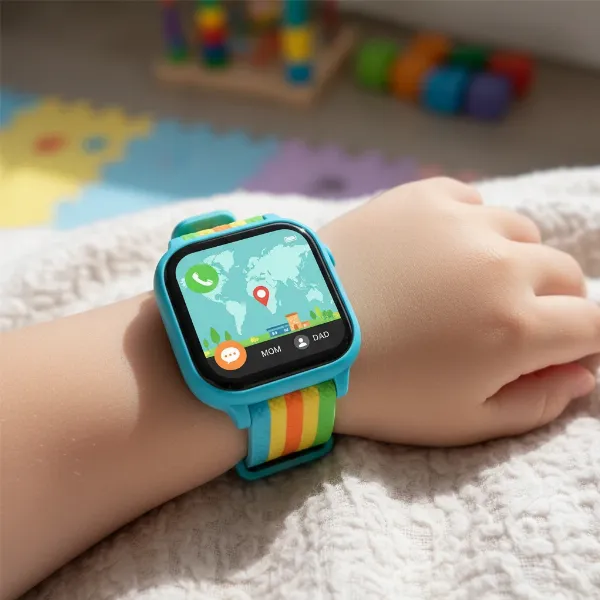 Child's hand wearing a kids smartwatch, showing GPS tracking and calling features.
Understanding Different Types of Kids’ Smartwatches
The market for kids’ smartwatches caters to various needs, from simple activity trackers to sophisticated communication devices. Understanding these categories can help you narrow down the best fit for your child’s age and lifestyle.
Smartwatches for Active Kids
Designed for the energetic child, these smartwatches prioritize durability and fitness tracking. They often come with kid-friendly interfaces and robust builds to withstand the rigors of play.
- Pros: Extremely durable, often water-resistant, encourage physical activity with step counters and challenges, typically feature long battery life.
- Cons: May offer limited communication capabilities or less precise GPS tracking compared to dedicated safety watches. Some models lack calling features entirely.
- Key Features: Step tracking, sleep monitoring, chore and reward systems, swim-friendly designs. Examples include the Garmin Vivofit Jr. series, which boasts impressive year-long battery life, removing the daily charging chore.
- Who it’s for: Younger children (ages 4-8) whose parents primarily want to encourage activity and provide a basic sense of time, with minimal emphasis on advanced communication.
|
Our Picks for the Best Smartwatch in 2026
As an Amazon Associate I earn from qualifying purchases.
|
||
| Num | Product | Action |
|---|---|---|
| 1 | Smart Watch, 2026 AMOLED 1.43" Fitness Smartwatch for Men Women, Bluetooth 5.4 Call, 130+Sports Modes, 60+Days Flashlight, Heart Rate/Sleep Monitor, IP68 Waterproof Activity Tracker for Android iOS |

|
| 2 | Smart Watch with Alexa Built-in, 1.83" HD Touchscreen Fitness Tracker with Bluetooth Calling, Fitness Watch with Heart Rate/Sleep Monitor, 120+ Sports Modes, IP68 Waterproof Smartwatch for Android iOS |
|
| 3 | Apple Watch Series 11 [GPS 46mm] Smartwatch with Jet Black Aluminum Case with Sport Band - M/L. Sleep Score, Fitness Tracker, Health Monitoring, Always-On Display, Water Resistant |
|
| 4 | Amazfit Bip 6 Smart Watch 46mm, 14 Day Battery, 1.97" AMOLED Display, GPS & Free Maps, AI, Bluetooth Call & Text, Health, Fitness & Sleep Tracker, 140+ Workout Modes, 5 ATM Water-Resistance, Black |
|
| 5 | Smart Watch for Men Women Compatible with iPhone Samsung Android Phone 1.83 inch Full Touch Screen IP68 Waterproof Bluetooh Fitness Tracker Heart Rate/Sleep Monitor, Black |
|
| 6 | Smart Watch for Men, 120+ Sports Modes Smartwatch with 1.83" HD Touchsreen, Sleep Monitor, IP67 Waterproof, Bluetooth Call & Music Control Fitness Watch for iPhone/Android Black |
|
| 7 | Apple Watch Series 11 [GPS 42mm] Smartwatch with Rose Gold Aluminum Case with Light Blush Sport Band - S/M. Sleep Score, Fitness Tracker, Health Monitoring, Always-On Display, Water Resistant |
|
| 8 | SAMSUNG Galaxy Watch 7 40mm Bluetooth AI Smartwatch w/Energy Score, Wellness Tips, Heart Rate Tracking, Sleep Monitor, Fitness Tracker, 2024, Cream [US Version, 1Yr Manufacturer Warranty] |
|
| 9 | Smart Watch for Men, 120 Sports Modes Smartwatch with 1.83" HD Touchsreen, IP67 Waterproof, Sleep Monitor, Bluetooth Call & Music Control Fitness Watch for Android/iPhone (Black) |
|
| 10 | WHOOP 5.0/MG Activity Tracker - 12 Month Membership - Health and Fitness Wearable – 24/7 Activity and Sleep Tracker, Personalized Coaching, Menstrual Cycle Insights – 14+ Days Battery Life |
|
Smartwatches for Communication and Safety
This category represents the core of what most parents seek: a device that enables constant connection and precise location monitoring. These smartwatches are designed with safety as the paramount concern.
- Pros: Offer comprehensive real-time GPS tracking, two-way voice and video calling, robust parental controls including approved contact lists, geofencing, and emergency SOS features. They block internet and social media access.
- Cons: Often require a dedicated cellular plan, which incurs a monthly cost. Some models can be a bit bulky for smaller wrists, and battery life, while generally good, can vary with heavy usage of communication features.
- Key Features: Real-time GPS, geofencing with alerts for safe zones, one-touch SOS buttons, approved contact lists, no internet browsing, school mode/quiet times. Devices like the TickTalk 5, Garmin Bounce, and GizmoWatch 3 are prominent in this category.
- Who it’s for: Children (ages 5-12) gaining more independence, whose parents need consistent communication and reliable location tracking for daily activities like school, playdates, and extracurriculars.
Advanced/Multi-functional Smartwatches for Older Kids and Tweens
As children grow, their needs evolve. Some smartwatches, or even repurposed adult smartwatches, cater to older kids and tweens who might be looking for more sophisticated features.
- Pros: Sleeker, more “grown-up” designs, offering a broader range of functionalities such as advanced health sensors, music streaming, and sometimes even tap-to-pay options. They can serve as a valuable stepping stone before a smartphone.
- Cons: May lack the explicit kid-focused parental controls found in dedicated children’s smartwatches, requiring parents to manage settings through the phone’s native OS, which can be less intuitive for child-specific restrictions. Often come with a higher price tag.
- Key Features: Heart rate tracking, music playback, customizable watch faces, and limited app access. Devices like the Apple Watch SE (with cellular) or certain Samsung Galaxy Watch models can be configured for older children.
- Who it’s for: Older children (ages 10-14) or tweens who are demonstrating greater responsibility and desire more features, where the primary concern might shift slightly from basic safety to a blend of connectivity, utility, and emerging independence.
Comparing Top Kids’ Smartwatch Brands
Choosing the right smartwatch often comes down to specific brand offerings. Here’s a look at some leading contenders and their unique selling points.
Garmin (Bounce, Vivofit Jr. 3)
Garmin is renowned for its GPS and fitness technology, extending its expertise to children’s wearables. The Garmin Bounce stands out with its robust GPS and communication features, including LTE and Wi-Fi connectivity, and supports geofencing for setting safe boundaries. The accompanying Garmin Jr. app makes management easy for parents, offering contact management, alarms, timers, and real-time location tracking. The Bounce also includes optional games and activities to keep kids engaged and promote physical activity. The newer Bounce 2 offers enhancements like an AMOLED screen and music streaming. For a more fitness-focused approach, the Garmin Vivofit Jr. 3 excels with its impressive one-year battery life and durability, though it lacks GPS tracking and direct communication features, relying on Bluetooth connectivity to a parent’s phone for data sync.
- Key Features: Excellent GPS (Bounce), strong fitness tracking (Vivofit Jr. 3), durable design, geofencing (Bounce), chore/reward systems (Vivofit Jr. 3).
- Connectivity: LTE and Wi-Fi (Bounce), Bluetooth (Vivofit Jr. 3).
- Cost: Mid-range to higher for Bounce, lower for Vivofit Jr. 3. Bounce requires a monthly Garmin Wireless subscription.
TickTalk (TickTalk 5)
Often praised for its comprehensive safety features, the TickTalk 5 (and its predecessor, the TickTalk 4) is a popular choice for parents. The TickTalk 5 boasts highly accurate GPS tracking, allowing parents to pinpoint their child’s location with superior detail, even indoors. It offers two-way HD video and voice calling, secure messaging with approved contacts, and robust parental controls like school mode and quiet times. With no internet or social media access, it ensures a safe digital environment. The watch also includes kid-friendly features such as a 5MP camera for photos and video, and iHeartRadio Family streaming.
- Key Features: Superior GPS tracking, two-way HD video/voice calls, secure messaging, approved contact lists, school mode, iHeartRadio Family, 5MP camera.
- Connectivity: GSM cellular (AT&T or T-Mobile compatible).
- Cost: Higher end, requires a monthly cellular plan.
GizmoWatch (GizmoWatch 3)
Verizon’s GizmoWatch 3 (and earlier versions like GizmoWatch 2) is a user-friendly option tightly integrated with the Verizon network. It’s known for its straightforward setup and excellent call quality. Parents can manage nearly all aspects of the watch through the GizmoHub companion app, including setting up approved contacts for calling and messaging, establishing geofences, and tracking location via built-in GPS. The GizmoWatch 3 includes a camera for video calls and selfies, and offers safety features like an emergency contact button and school mode.
- Key Features: Easy setup, good call quality, GPS tracking, geofencing, approved contacts, school mode, emergency button, camera.
- Connectivity: Verizon’s 4G LTE network (locked to Verizon).
- Cost: Often budget-friendly, requires a Verizon plan.
MyFirst Fone (R2, S3)
MyFirst Fone smartwatches, such as the MyFirst Fone R2 and S3, focus on precise location tracking and immediate communication for younger children. The R2 offers an intuitive interface with voice and video call capabilities, a one-touch SOS feature that sends an emergency alert along with a 30-second live recording of ambient sounds, and advanced GPS, Wi-Fi, and GSM tracking for high accuracy. Geofencing is also a key feature, alerting parents when their child enters or leaves designated safe zones. “Class Mode” ensures the watch remains a tool for safety, not distraction, during school hours.
- Key Features: Precise GPS (indoor tracking), one-touch SOS with live recording, geofencing, two-way voice/video calls, Class Mode, pedometer, 5MP HD camera (R2).
- Connectivity: 4G cellular network, Wi-Fi, GSM.
- Cost: Mid-range, requires a cellular plan.
Fitbit (Ace LTE)
The Fitbit Ace LTE is Fitbit’s entry into the kids’ smartwatch market, emphasizing gamified activity and safety. It features cellular connectivity and GPS tracking, allowing parents to monitor their child’s location in real-time. The standout aspect is its integration with the Fitbit Arcade, which uses interactive 3D games and rewards physical activity, encouraging kids to move to unlock new levels. It includes heart rate tracking, a “School Time” option to limit play during school hours, and the option for Tap to Pay for older kids. The design is durable and water-resistant (5ATM).
- Key Features: Gamified fitness tracking (Fitbit Arcade, Eejie), heart rate tracking, GPS, cellular connectivity, Tap to Pay option, School Time mode, durable and water-resistant.
- Connectivity: 4G LTE cellular (requires subscription).
- Cost: Mid-range, requires a monthly cellular plan.
Detailed Comparison Chart: Key Smartwatch Features
| Feature | Garmin Bounce | TickTalk 5 | GizmoWatch 3 | myFirst Fone R2 | Fitbit Ace LTE |
|---|---|---|---|---|---|
| GPS Tracking | Accurate | Highly Accurate | Yes | Precise | Yes |
| Parental Controls | Extensive | Comprehensive | Extensive | Comprehensive | Extensive |
| 2-Way Calling | Yes | Yes | Yes | Yes | Yes |
| Video Calling | Yes (Bounce 2) | Yes | Yes | Yes | No |
| Geofencing | Yes | Yes | Yes | Yes | Yes |
| SOS Button | Yes | Yes | Yes | Yes | Yes |
| No Internet/Social | Yes | Yes | Yes | Yes | Yes |
| Water Resistance | Swim-friendly | Enhanced | IP68 | Splash-proof | 5ATM |
| Battery Life | 2-3 days | Good | Approx. 1 day | Approx. 2 days | Approx. 16 hours |
| Cellular Plan | Required | Required | Required | Required | Required |
| Camera | Yes (Bounce 2) | Yes | Yes | Yes | Yes |
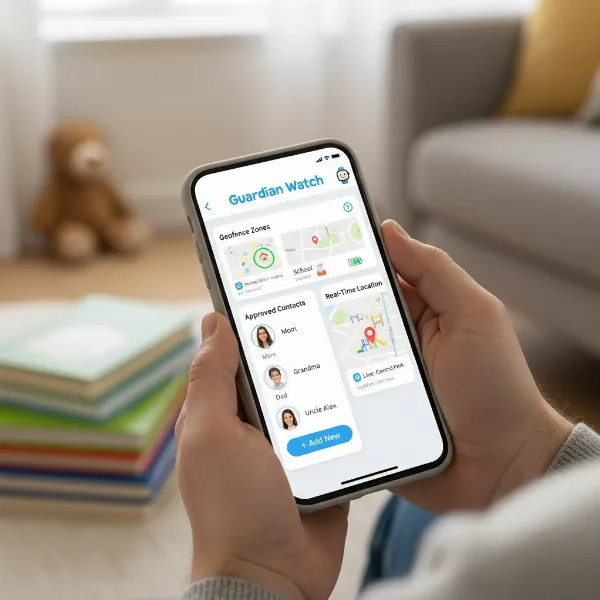 Parent using a smartphone to manage kid's smartwatch app settings for safety.
Guide to Choosing the Right Kids’ Smartwatch
Selecting the perfect smartwatch for your child involves more than just picking a cool gadget. It’s about finding a tool that aligns with your family’s needs for safety, communication, and your child’s developmental stage.
Determine Usage Needs
Begin by identifying your primary goals. Do you need a smartwatch primarily for emergency communication and precise location tracking, or is basic activity monitoring sufficient? For instance, if your child walks to school independently, robust GPS and two-way calling are essential. If it’s more about encouraging activity and offering a fun accessory, a fitness-focused tracker might suffice. Clearly defining your “must-have” features will streamline your decision.
Budget Considerations
Kids’ smartwatches vary widely in price. Beyond the initial purchase, factor in ongoing costs like cellular subscriptions, which are often necessary for GPS and communication features to work outside of Wi-Fi range. These monthly fees are usually affordable, but they are a recurring expense to consider.
Brand and Model
Researching reputable brands is crucial. Look into user reviews that specifically address the accuracy of GPS, the reliability of parental controls, and the durability of the device. Some brands, like GizmoWatch, are tied to specific carriers, which might influence your choice based on your existing mobile plan.
Other Key Factors
- Age-Appropriateness: A smartwatch for a 5-year-old will differ significantly from one for a 12-year-old. Younger children benefit from simpler interfaces, vibrant designs, and extreme durability, while older kids might appreciate more sophisticated features and a less “toy-like” appearance.
- Durability and Water Resistance: Kids are active, and their gadgets need to keep up. Look for ratings like IP67, IP68, or 5ATM, which indicate resistance to dust and water, ensuring the watch can survive playground tumbles and accidental splashes or even swims.
- Battery Life: A smartwatch is only useful if it’s charged. Aim for a device that offers at least a full day of battery life with typical usage. Longer battery life reduces the hassle of daily charging and ensures continuous connectivity.
- Privacy and Security: This is paramount. Look for brands that explicitly state compliance with privacy regulations like the Children’s Online Privacy Protection Act (COPPA), which mandates verifiable parental consent for data collection and clear privacy policies. Ensure the device employs strong data encryption and secure servers to protect your child’s sensitive information (location, contacts, communication logs) from unauthorized access. Always review how a company collects, uses, and shares your child’s data.
- Ease of Use: Both for the child wearing the watch and the parent managing it via a companion app. An intuitive interface for calls, messages, and SOS functions is critical for children, while a well-designed parent app simplifies contact management, geofencing setup, and location tracking.
- Two-Way Communication: Ensure the watch supports clear voice calls and messaging. Some advanced models offer video calling, which can be a comforting feature for both parents and children.
- Entertainment Features: While safety is key, age-appropriate games, cameras for fun photos, or music streaming can make the smartwatch more appealing to children, encouraging them to wear it consistently, which in turn ensures safety features are always active.
Important Considerations: Privacy and Security
In an era of increasing digital connectivity, the privacy and security of children’s data are paramount. Smartwatches for kids collect sensitive information, including location data, contact lists, activity levels, and communication logs. It is essential for parents to understand how this data is handled.
“The best smartwatch for kids offers limited features, privacy, and parental controls, and is simple and fun to use,” highlights the balance between functionality and security. Reputable manufacturers comply with regulations like COPPA (Children’s Online Privacy Protection Act) in the United States, which requires verifiable parental consent before collecting personal information from children under 13. This law also mandates clear privacy policies, limits data collection to only what is necessary, and holds companies responsible for safeguarding children’s data with robust security measures.
Parents should actively:
- Review Privacy Policies: Understand what data is collected, how it’s used, and with whom it’s shared.
- Check for COPPA Compliance: Especially with newer or lesser-known brands, look for clear statements of compliance.
- Adjust Privacy Settings: Configure settings in the companion app to minimize data collection and sharing where possible.
- Use Strong Passwords: For both the device and the parent’s companion app, enable two-factor authentication if available.
- Monitor Usage: Regularly check for unusual activity and ensure the watch is being used safely and as intended.
“For safety-conscious parents looking for reliable ways to stay connected with their children, a kids GPS tracker that combines accurate location tracking with secure communication is one of the most practical tools available today.” This underscores that while smartwatches offer incredible benefits, vigilance regarding data protection is a shared responsibility between manufacturers and parents.
Conclusion
Kids’ smartwatches with GPS and parental controls offer an invaluable solution for modern families, blending a child’s growing need for independence with a parent’s desire for safety and connectivity. By carefully considering features like accurate GPS tracking, comprehensive parental controls (including approved contacts and geofencing), robust durability, and, crucially, strong privacy and security protocols, you can select a device that provides both peace of mind for you and a sense of responsibility for your child. Empower yourself with information to choose a smartwatch that not only connects you to your child but also safeguards their digital footprint.
Which smartwatch feature provides you the most peace of mind as a parent?
Frequently Asked Questions
What age is appropriate for a kids’ smartwatch with GPS?
Most kids’ smartwatches with GPS and parental controls are designed for children aged 5 to 12. Some basic fitness trackers might be suitable for younger children (4+) while more advanced models, like the Apple Watch SE, might be better for older tweens (10-14) transitioning towards smartphone responsibility.
Do all kids’ smartwatches require a cellular plan?
Many smartwatches offering GPS tracking, two-way calling, and advanced parental controls require a cellular plan with a SIM card to enable these features outside of Wi-Fi range. Some basic fitness-focused models might only connect via Bluetooth to a parent’s smartphone and thus don’t need a separate cellular plan.
Can kids’ smartwatches be hacked?
While modern, reputable brands have improved security, older or less secure models have been susceptible to hacking, potentially exposing location data or allowing unauthorized communication. It’s crucial to choose brands with strong app security, encrypted connections, and clear privacy policies to protect your child’s data.
What is geofencing on a kids’ smartwatch?
Geofencing allows parents to set virtual boundaries around specific locations, like home or school. If the child’s smartwatch enters or exits these predefined “safe zones,” the parent receives an instant notification, providing an added layer of security and peace of mind.
Do kids’ smartwatches have internet access or social media?
Most smartwatches designed specifically for children intentionally block internet browsing and social media access. This is a key parental control feature to minimize distractions and protect children from inappropriate online content, focusing instead on safe communication and tracking.