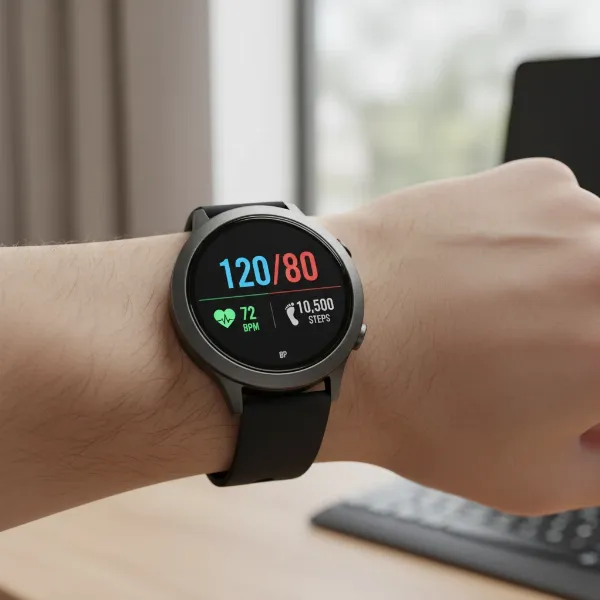
For construction workers, every piece of gear on a job site needs to withstand extreme conditions, and a smartwatch is no exception. In an environment where dust flies, impacts are common, and the weather is unpredictable, a regular smartwatch can quickly become a liability. Choosing the right rugged smartwatch isn’t just about convenience; it’s about investing in a reliable tool that can survive the daily grind and enhance safety.
Why Construction Workers Need Rugged Smartwatches
|
Our Picks for the Best Smartwatch in 2026
As an Amazon Associate I earn from qualifying purchases.
|
||
| Num | Product | Action |
|---|---|---|
| 1 | Smart Watch, 2026 AMOLED 1.43" Fitness Smartwatch for Men Women, Bluetooth 5.4 Call, 130+Sports Modes, 60+Days Flashlight, Heart Rate/Sleep Monitor, IP68 Waterproof Activity Tracker for Android iOS |

|
| 2 | Apple Watch Series 11 [GPS 46mm] Smartwatch with Jet Black Aluminum Case with Sport Band - M/L. Sleep Score, Fitness Tracker, Health Monitoring, Always-On Display, Water Resistant |
|
| 3 | SAMSUNG Galaxy Watch 7 40mm Bluetooth AI Smartwatch w/Energy Score, Wellness Tips, Heart Rate Tracking, Sleep Monitor, Fitness Tracker, 2024, Cream [US Version, 1Yr Manufacturer Warranty] |
|
| 4 | Smart Watch for Men, 120 Sports Modes Smartwatch with 1.83" HD Touchsreen, IP67 Waterproof, Sleep Monitor, Bluetooth Call & Music Control Fitness Watch for Android/iPhone (Black) |
|
| 5 | Apple Watch Series 11 [GPS 42mm] Smartwatch with Rose Gold Aluminum Case with Light Blush Sport Band - S/M. Sleep Score, Fitness Tracker, Health Monitoring, Always-On Display, Water Resistant |
|
| 6 | Smart Watch for Men, 120+ Sports Modes Smartwatch with 1.83" HD Touchsreen, Sleep Monitor, IP67 Waterproof, Bluetooth Call & Music Control Fitness Watch for iPhone/Android Black |
|
| 7 | Amazfit Bip 6 Smart Watch 46mm, 14 Day Battery, 1.97" AMOLED Display, GPS & Free Maps, AI, Bluetooth Call & Text, Health, Fitness & Sleep Tracker, 140+ Workout Modes, 5 ATM Water-Resistance, Black |
|
| 8 | Smart Watch with Alexa Built-in, 1.83" HD Touchscreen Fitness Tracker with Bluetooth Calling, Fitness Watch with Heart Rate/Sleep Monitor, 120+ Sports Modes, IP68 Waterproof Smartwatch for Android iOS |
|
| 9 | Smart Watch for Men Women Compatible with iPhone Samsung Android Phone 1.83 inch Full Touch Screen IP68 Waterproof Bluetooh Fitness Tracker Heart Rate/Sleep Monitor, Black |
|
| 10 | WHOOP 5.0/MG Activity Tracker - 12 Month Membership - Health and Fitness Wearable – 24/7 Activity and Sleep Tracker, Personalized Coaching, Menstrual Cycle Insights – 14+ Days Battery Life |
|
Construction sites are notoriously tough on electronics. Fine concrete and drywall particles can seep into sensitive components, while sudden drops and vibrations from heavy machinery can shatter screens and damage internal circuits. Regular smartwatches, designed for everyday wear, simply aren’t built to handle these challenges. Their delicate screens are prone to cracking, and their standard water resistance often falls short against mud, wet cement, or even heavy rain. Many also offer limited battery life, which is a major drawback for workers on 10-12 hour shifts, where constant charging isn’t feasible.
This harsh reality has led to a growing demand for specialized rugged smartwatches. These devices are engineered from the ground up to endure what a typical consumer gadget cannot, transforming them from fragile accessories into indispensable tools for the modern construction professional.
Key Features of a Rugged Smartwatch
To truly excel on a construction site, a smartwatch must possess a combination of robust design and practical features.
Military-Grade Durability
The gold standard for toughness is military-grade certification, specifically MIL-STD-810G/H. This means the watch has undergone rigorous testing against drops from 1.5 meters, extreme vibrations, rapid temperature changes, and even salt fog to ensure corrosion resistance. This level of resilience ensures your smartwatch won’t fail when exposed to the daily abuses of a construction environment. Reinforced casings made from materials like stainless steel, titanium, or impact-proof polymers, coupled with cushioned internals, absorb shocks effectively.
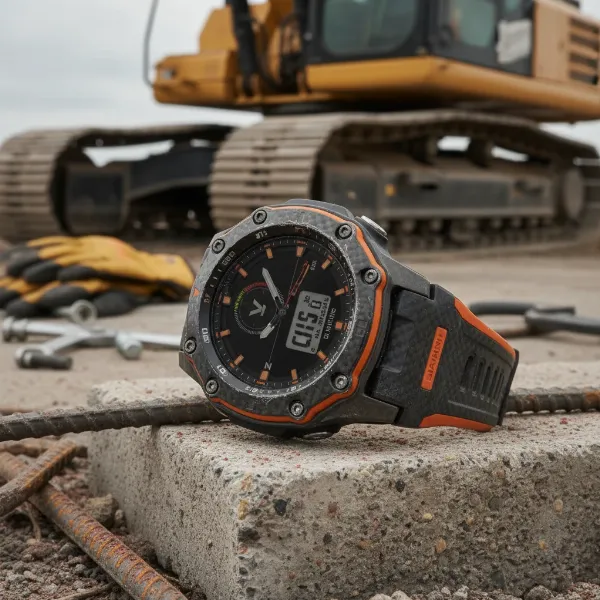 A rugged smartwatch with reinforced casing surviving a drop test on a dusty construction site.
Water & Dust Resistance
Protection against elements is paramount. Look for an IP68 or even IP69K rating. IP68 guarantees the watch is completely dustproof and can withstand immersion in 1.5 meters of water for up to 30 minutes. IP69K goes further, offering resistance to high-pressure water jets and hot water, crucial for sites where equipment is regularly washed down. A minimum of 5ATM water resistance is generally recommended to handle rain, mud, and splashes without issue.
Impact & Scratch Resistance
The display is often the most vulnerable part of any smartwatch. Rugged models feature scratch-resistant glass, such as Gorilla Glass or sapphire crystal, to prevent damage from scrapes against rebar or accidental bumps. Heavy-duty seals also prevent dust and dirt from infiltrating the device, protecting internal components.
Long Battery Life
Short battery life is a common complaint with standard smartwatches. For construction workers, a device that can last through multiple shifts without needing a charge is essential. Many rugged smartwatches offer 7 to 14 days of battery life, and some premium models incorporate solar charging to extend this even further, providing potentially unlimited power in battery-saver modes with sufficient sun exposure.
Glove-Friendly Controls
Operating a touchscreen with gloves on can be frustrating and impractical. Rugged smartwatches often feature large, tactile physical buttons that are easy to press even with heavy-duty work gloves. Some also offer dedicated “glove modes” for touchscreens, though physical buttons remain a more reliable option in demanding conditions.
Sun-Readable Display
Working outdoors means battling sun glare. A clear, bright, and sun-readable display is critical for checking information quickly without needing to shade the watch. Some models feature monochrome displays, which offer excellent visibility in direct sunlight and conserve battery life.
Advanced Navigation & Environmental Sensors
For larger sites or those working in remote locations, integrated GPS with multi-GNSS support (GPS, GLONASS, Galileo) offers superior accuracy for location tracking and route planning. Features like offline maps, altimeters, barometers, and compasses are invaluable for navigation and monitoring environmental changes. [cite: 1, 2 from search results 1, 5]
Health & Safety Features
Beyond durability, many rugged smartwatches offer health and safety monitoring. Heart rate monitoring, blood oxygen (SpO2) tracking, and stress tracking can help workers monitor their physical well-being. Crucially, features like emergency SOS and fall detection can be literal lifesavers, automatically alerting contacts or emergency services in the event of an accident.
Top Rugged Smartwatches for Construction Workers
Several brands stand out for their commitment to durability and advanced features tailored for tough environments.
Garmin
Garmin is a dominant player in the rugged smartwatch market, renowned for its GPS capabilities and military-grade durability. [cite: 1, 2, 4 from search results 1, 4, 5, 7]
- Garmin Instinct 2 Solar:
- Pros: Military-grade toughness, solar charging for extended battery life (up to 28 days in smartwatch mode, potentially unlimited in battery saver with solar), monochrome display for excellent sun readability, robust GPS, heart rate, and stress tracking. Physical buttons are ideal for gloves. Available in different sizes. [cite: 1, 2, 4 from search results 4, 7]
- Cons: Monochrome display lacks the vibrancy of AMOLED screens.
- Price: Mid-range, offering excellent value for its durability and feature set.
- Garmin Fenix Series (e.g., Fenix 7 Pro):
- Pros: Premium build quality (titanium cases, sapphire glass), advanced mapping and navigation, comprehensive health and fitness tracking, incredible battery life, often with solar charging options. Tested to U.S. military standards for thermal, shock, and water resistance. Includes a built-in flashlight. [cite: 4 from search results 4, 5]
- Cons: High price point, can be bulky.
- Price: High-end.
- Garmin Epix Pro (Gen 2):
- Pros: Combines Fenix’s ruggedness with a vibrant AMOLED display, advanced health and fitness tracking, and robust GPS. [cite: 4 from search results 6]
- Cons: Higher price than Fenix, AMOLED display uses more battery.
- Price: High-end.
Apple Watch Ultra 2
Apple’s foray into the rugged market offers a compelling option for those integrated into the Apple ecosystem.
- Pros: Titanium casing and sapphire crystal display provide significant durability. Bright, always-on Retina display. Comprehensive health tracking, advanced safety features (fall detection, emergency SOS siren), and seamless integration with other Apple devices. [cite: 4 from search results 5]
- Cons: Expensive, battery life, while improved, may not match dedicated outdoor watches for multi-day usage without charging, especially with heavy GPS use.
- Price: Premium/High-end.
Samsung Galaxy Watch 5 Pro / Galaxy Watch Ultra
Samsung offers a durable option for Android users.
- Pros: Titanium body and sapphire crystal glass offer enhanced durability. All the functionality of Wear OS, allowing for a wide range of third-party apps. Good battery life compared to other Samsung watches. [cite: 4 from search results 5, 6]
- Cons: GPX maps often support only hiking and cycling, default band can be clunky. While durable for a mainstream brand, some dedicated rugged watches offer superior extreme-condition performance.
- Price: Upper mid-range to premium.
Amazfit T-Rex 2 / T-Rex Ultra
Amazfit provides excellent value for rugged performance.
- Pros: Military-grade durability, often tested against 15 military standards. Excellent battery life (T-Rex Ultra up to 80 hours in Endurance GPS Mode), can operate in extreme temperatures. Offers blood oxygen monitoring, barometric altimeter, and various workout modes. [cite: 4 from search results 5, 7]
- Cons: Zepp app might not be as deep as Garmin’s, and tracking accuracy can sometimes be inconsistent compared to premium brands.
- Price: Budget-friendly to mid-range.
Casio G-Shock / Pro Trek Smart WSD-F30
Casio has a long-standing reputation for producing incredibly tough watches.
- Pros: G-Shock models are virtually indestructible, known for extreme shock and water resistance. The Pro Trek Smart WSD-F30 is military-certified and offers solar-assisted charging, offline mapping, altimeter, barometer, and compass. Dual-layer display helps save battery. [cite: 1, 2 from search results 2, 4, 5]
- Cons: Some models are less “smart” with fewer advanced features compared to other brands, and designs can be bulky.
- Price: Varies widely from budget-friendly G-Shocks to mid-range Pro Trek smartwatches.
Suunto Vertical
Suunto focuses on outdoor adventure with robust features.
- Pros: Robust and durable, with options for stainless steel or titanium bodies and solar charging. Excellent for route planning and offline maps, with superb battery life (up to 60 days on a single charge or six days with GPS always on). Manufactured in Finland with high quality control. [cite: 4 from search results 5]
- Cons: Software can sometimes be less slick than competitors.
- Price: High-end.
How to Choose the Right Rugged Smartwatch for Your Job
Selecting the ideal smartwatch for construction isn’t just about picking the toughest model; it’s about finding the right balance of features, durability, and cost for your specific needs.
1. Determine Your Usage Needs
- Purpose: What do you primarily need the smartwatch for? Is it for safety monitoring, communication, navigation, fitness tracking, or a combination?
- Key Features: Which features are non-negotiable? For a construction worker, high durability, water/dust resistance, and long battery life are usually top priorities. GPS and communication features like notifications are also highly valued for staying connected without handling a phone.
2. Consider Your Budget
Rugged smartwatches range significantly in price. While a budget-friendly option might seem appealing, investing $200-$300 in a quality rugged watch that lasts for years is often more cost-effective than repeatedly replacing cheaper, less durable models. Evaluate the long-term value against the initial cost.
3. Brand and Model Preference
Research reputable brands known for ruggedness, like Garmin, Apple Watch Ultra, Samsung Galaxy Watch, Amazfit, and Casio. Each offers unique strengths, so consider which ecosystem you prefer or if a standalone, robust device is more important. Read user reviews, especially from other construction workers, to gauge real-world performance and longevity.
4. Evaluate Other Crucial Factors
- Size and Comfort: While rugged watches tend to be larger, ensure it fits comfortably on your wrist and won’t snag on equipment.
- Battery Life: Match the watch’s battery life to your typical shift length and charging habits. Solar charging can be a game-changer for extended outdoor work.
- Water and Dust Resistance: Always check the IP and ATM ratings to ensure it meets the demands of your specific work environment (e.g., exposure to concrete, mud, or heavy rain).
- Operating System and Ecosystem: Consider compatibility with your smartphone and access to necessary apps.
- Glove-Friendliness: If you frequently wear gloves, prioritize watches with physical buttons for easier interaction.
“On a dusty jobsite, swiping a small touchscreen simply doesn’t work, but physical controls keep the watch functional.” – KOSPET Official Store, explaining the importance of glove-friendly controls on construction sites.
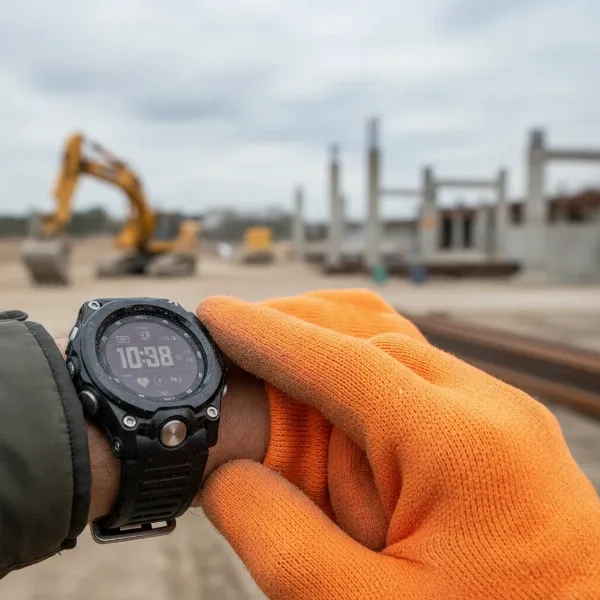 A construction worker wearing heavy duty gloves operating a rugged smartwatch using its physical buttons.
Conclusion
For construction workers, a rugged smartwatch is far more than a gadget; it’s an essential piece of personal protective equipment that enhances communication, safety, and efficiency. By prioritizing military-grade durability, superior water and dust resistance, extended battery life, and glove-friendly controls, you can select a smartwatch built to survive the relentless demands of your profession. Leading brands like Garmin, Apple, Samsung, and Amazfit offer robust options, each with unique strengths to fit various needs and budgets. Don’t settle for a smartwatch that can’t keep up with your grit. Invest in a tool that works as hard as you do, day in and day out.
What features do you value most in a rugged smartwatch for your daily work?
Frequently Asked Questions
Can a regular smartwatch truly survive construction work?
Generally, no. Regular smartwatches are not designed for the extreme conditions of a construction site and are highly susceptible to damage from dust, impacts, water, and temperature fluctuations, often failing within weeks or months.
What does “military-grade durability” (MIL-STD-810G/H) mean for a smartwatch?
MIL-STD-810G/H signifies that the smartwatch has been rigorously tested against a range of environmental stressors, including drops, vibrations, extreme temperatures, and moisture, ensuring it can withstand harsh industrial conditions.
Are rugged smartwatches expensive?
The price of rugged smartwatches varies. While some premium models can be high-end, many mid-range and budget-friendly options offer excellent durability and essential features, providing better long-term value than repeatedly replacing standard smartwatches.
How important is battery life for a construction worker’s smartwatch?
Battery life is critically important. Construction shifts often last 10-12 hours or more, making smartwatches with multi-day battery life, and ideally solar charging, far more practical than those requiring daily recharges.
Do rugged smartwatches come with health and safety features?
Yes, many rugged smartwatches include valuable health features like heart rate and blood oxygen monitoring, along with crucial safety features such as fall detection and emergency SOS alerts, which can be vital on a job site.