Introduction:
- The frustrating reality of smartwatch screen scratches.
- Smartwatches are essential, but screens are vulnerable.
- This guide will cover prevention, types of protection, and maintenance.
Understanding Smartwatch Screen Materials and Their Vulnerability
- Plastic Screens: Prone to scratches, flexible, found on budget models.
- Glass Screens (e.g., Gorilla Glass): More scratch-resistant than plastic, but can still scratch. Common in mid-range.
- Sapphire Screens: Extremely scratch-resistant (Mohs scale), found in high-end, but can crack.
- Why material matters for protection.
Essential Strategies to Protect Your Smartwatch Screen
Choosing the Right Screen Protector
- Tempered Glass: Best for impact and scratch resistance, maintains clarity and touch.
- Pros: High protection, glass-like feel.
- Cons: Can be thicker, might not conform to extreme curves.
- Best for: General users, active individuals.
- Hydrogel (Water Gel) Film: Flexible, self-healing properties for minor scratches, good for curved screens.
- Pros: Thin, flexible, self-healing for minor abrasions, good for curved displays.
- Cons: Less impact resistance than tempered glass.
- Best for: Users with curved screens, those prioritizing thinness.
- Plastic Film: Basic protection against minor scuffs.
- Pros: Cheapest, very thin.
- Cons: Minimal protection, can affect clarity/feel.
- Best for: Budget-conscious users, very light use.
- Application Tips: Clean workspace, alcohol wipes, dust removal, proper alignment, smoothing bubbles.
|
Our Picks for the Best Smartwatch in 2026
As an Amazon Associate I earn from qualifying purchases.
|
||
| Num | Product | Action |
|---|---|---|
| 1 | Smart Watch for Men Women Compatible with iPhone Samsung Android Phone 1.83 inch Full Touch Screen IP68 Waterproof Bluetooh Fitness Tracker Heart Rate/Sleep Monitor, Black |

|
| 2 | Smart Watch with Alexa Built-in, 1.83" HD Touchscreen Fitness Tracker with Bluetooth Calling, Fitness Watch with Heart Rate/Sleep Monitor, 120+ Sports Modes, IP68 Waterproof Smartwatch for Android iOS |
|
| 3 | Smart Watch for Men, 120+ Sports Modes Smartwatch with 1.83" HD Touchsreen, Sleep Monitor, IP67 Waterproof, Bluetooth Call & Music Control Fitness Watch for iPhone/Android Black |
|
| 4 | Smart Watch for Men, 120 Sports Modes Smartwatch with 1.83" HD Touchsreen, IP67 Waterproof, Sleep Monitor, Bluetooth Call & Music Control Fitness Watch for Android/iPhone (Black) |
|
| 5 | WHOOP 5.0/MG Activity Tracker - 12 Month Membership - Health and Fitness Wearable – 24/7 Activity and Sleep Tracker, Personalized Coaching, Menstrual Cycle Insights – 14+ Days Battery Life |
|
| 6 | Smart Watch, 2026 AMOLED 1.43" Fitness Smartwatch for Men Women, Bluetooth 5.4 Call, 130+Sports Modes, 60+Days Flashlight, Heart Rate/Sleep Monitor, IP68 Waterproof Activity Tracker for Android iOS |
|
| 7 | Apple Watch Series 11 [GPS 46mm] Smartwatch with Jet Black Aluminum Case with Sport Band - M/L. Sleep Score, Fitness Tracker, Health Monitoring, Always-On Display, Water Resistant |
|
| 8 | Amazfit Bip 6 Smart Watch 46mm, 14 Day Battery, 1.97" AMOLED Display, GPS & Free Maps, AI, Bluetooth Call & Text, Health, Fitness & Sleep Tracker, 140+ Workout Modes, 5 ATM Water-Resistance, Black |
|
| 9 | SAMSUNG Galaxy Watch 7 40mm Bluetooth AI Smartwatch w/Energy Score, Wellness Tips, Heart Rate Tracking, Sleep Monitor, Fitness Tracker, 2024, Cream [US Version, 1Yr Manufacturer Warranty] |
|
| 10 | Apple Watch Series 11 [GPS 42mm] Smartwatch with Rose Gold Aluminum Case with Light Blush Sport Band - S/M. Sleep Score, Fitness Tracker, Health Monitoring, Always-On Display, Water Resistant |
|
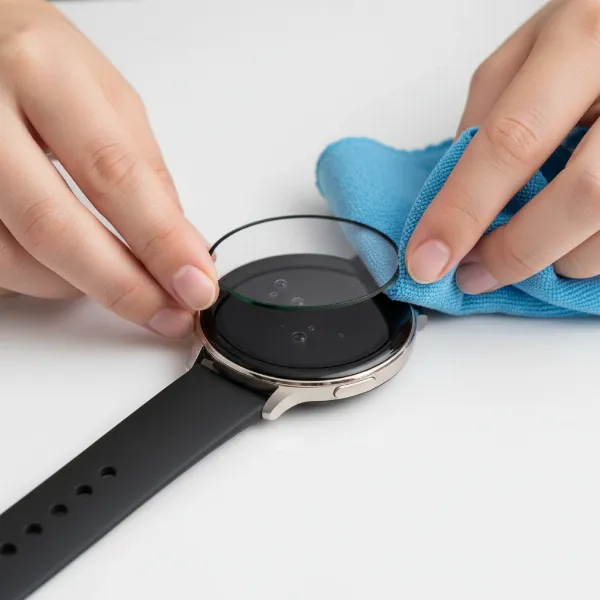 Hands applying a tempered glass screen protector to a smartwatch screen, showing cleaning and alignment.
The Power of Protective Cases
- Types: Full-body cases, bumper cases, cases with raised bezels.
- Benefits: Protects edges, sides, and can offer additional screen protection from direct impact.
- Choosing a case: Compatibility, material (silicone, TPU, metal).
Best Practices for Handling and Wearing Your Smartwatch
- Mindful Wearing:
- Avoid high-risk activities (manual labor, sports with impact).
- Wear on the opposite wrist from other jewelry.
- Proper Storage:
- Store in a protective case or pouch when not in use.
- Keep away from keys, coins, and sharp objects in bags/pockets.
- Place face-up on soft surfaces.
Regular Cleaning and Maintenance
- Why clean? Dust and microscopic debris can cause micro-scratches.
- How to clean:
- Microfiber cloth.
- Gentle solutions (ammonia-based cleaner 3:1 water, or 4:1 rubbing alcohol to water).
- Avoid harsh chemicals or abrasive materials (e.g., paper towels).
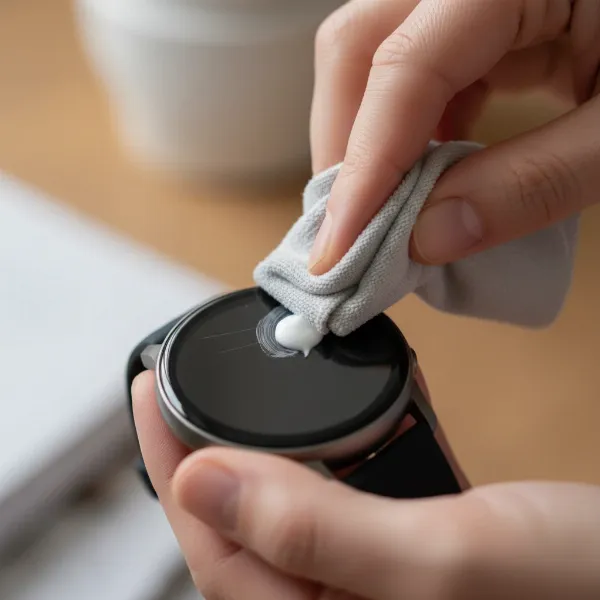 Person gently rubbing non-gel toothpaste on a smartwatch screen with a microfiber cloth to remove scratches.
What to Do When Scratches Occur: Minor DIY Solutions
- Assessing Scratch Severity: Fingernail test (superficial vs. deep).
- DIY for Superficial Scratches (on glass/sapphire):
- Toothpaste Technique: Non-gel, non-whitening toothpaste, microfiber cloth, gentle circular motions.
- Screen Polishing Compounds: Specialized products for electronic screens.
- Caution: Avoid on plastic screens, deep scratches, or cracks.
- When to Seek Professional Help: Deep scratches, cracks, impact on functionality, water resistance concerns.
The Myth of “Scratch-Proof”
- Clarifying “scratch-resistant” vs. “scratch-proof.”
- No screen is 100% immune; even sapphire can scratch under extreme conditions.
Conclusion:
- Recap: Smartwatch screens are vulnerable, but protection is achievable.
- Emphasize layered protection (protector + case + good habits).
- Call to action: Invest in protecting your valuable device.
FAQ:
- Are all smartwatch screens equally scratch-resistant?
- Can a scratched screen be fully repaired?
- How often should I replace my screen protector?
- Is it okay to use a phone screen protector on a smartwatch?