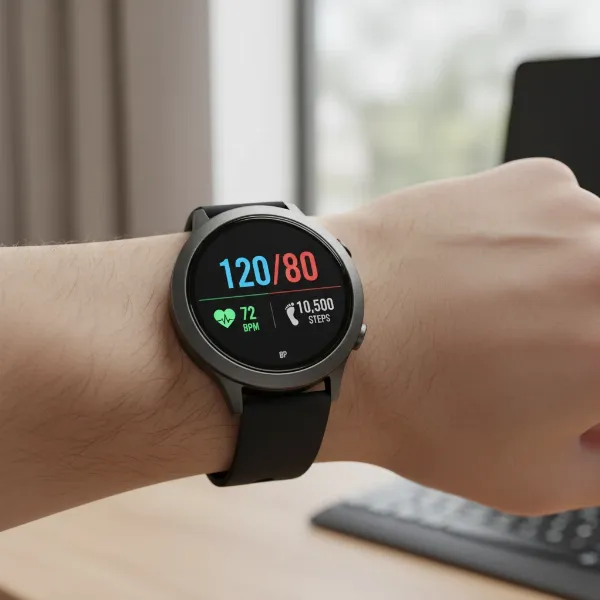
As we age, maintaining independence and peace of mind becomes increasingly vital. The fear of falling, especially when living alone, can significantly impact quality of life for seniors and their families. Thankfully, advancements in wearable technology, particularly smartwatches with sophisticated fall detection capabilities, offer a powerful solution. These devices provide a discreet safety net, ensuring help is automatically alerted in critical moments, empowering seniors to live confidently and actively.
Understanding Smartwatches and Fall Detection for Seniors
Living independently is a cherished goal for many seniors, and modern technology can play a crucial role in supporting this. Smartwatches equipped with fall detection are not just gadgets; they are innovative tools that offer an essential layer of safety and reassurance for older adults and their loved ones.
What is Fall Detection and Why is it Crucial?
|
Our Picks for the Best Smartwatch in 2026
As an Amazon Associate I earn from qualifying purchases.
|
||
| Num | Product | Action |
|---|---|---|
| 1 | Smart Watch for Men, 120+ Sports Modes Smartwatch with 1.83" HD Touchsreen, Sleep Monitor, IP67 Waterproof, Bluetooth Call & Music Control Fitness Watch for iPhone/Android Black |

|
| 2 | Smart Watch for Men, 120 Sports Modes Smartwatch with 1.83" HD Touchsreen, IP67 Waterproof, Sleep Monitor, Bluetooth Call & Music Control Fitness Watch for Android/iPhone (Black) |
|
| 3 | Smart Watch for Men Women Compatible with iPhone Samsung Android Phone 1.83 inch Full Touch Screen IP68 Waterproof Bluetooh Fitness Tracker Heart Rate/Sleep Monitor, Black |
|
| 4 | Smart Watch with Alexa Built-in, 1.83" HD Touchscreen Fitness Tracker with Bluetooth Calling, Fitness Watch with Heart Rate/Sleep Monitor, 120+ Sports Modes, IP68 Waterproof Smartwatch for Android iOS |
|
| 5 | SAMSUNG Galaxy Watch 7 40mm Bluetooth AI Smartwatch w/Energy Score, Wellness Tips, Heart Rate Tracking, Sleep Monitor, Fitness Tracker, 2024, Cream [US Version, 1Yr Manufacturer Warranty] |
|
| 6 | Apple Watch Series 11 [GPS 42mm] Smartwatch with Rose Gold Aluminum Case with Light Blush Sport Band - S/M. Sleep Score, Fitness Tracker, Health Monitoring, Always-On Display, Water Resistant |
|
| 7 | Smart Watch, 2026 AMOLED 1.43" Fitness Smartwatch for Men Women, Bluetooth 5.4 Call, 130+Sports Modes, 60+Days Flashlight, Heart Rate/Sleep Monitor, IP68 Waterproof Activity Tracker for Android iOS |
|
| 8 | WHOOP 5.0/MG Activity Tracker - 12 Month Membership - Health and Fitness Wearable – 24/7 Activity and Sleep Tracker, Personalized Coaching, Menstrual Cycle Insights – 14+ Days Battery Life |
|
| 9 | Amazfit Bip 6 Smart Watch 46mm, 14 Day Battery, 1.97" AMOLED Display, GPS & Free Maps, AI, Bluetooth Call & Text, Health, Fitness & Sleep Tracker, 140+ Workout Modes, 5 ATM Water-Resistance, Black |
|
| 10 | Apple Watch Series 11 [GPS 46mm] Smartwatch with Jet Black Aluminum Case with Sport Band - M/L. Sleep Score, Fitness Tracker, Health Monitoring, Always-On Display, Water Resistant |
|
Fall detection is an advanced safety feature that utilizes built-in accelerometers, gyroscopes, and motion sensors to monitor the wearer’s movements. When these sensors detect a sudden, significant impact followed by a lack of motion, the device interprets it as a potential fall and triggers an alert. Falls are a leading cause of injury and hospitalization among older adults, with more than one in four adults over 65 experiencing a fall annually. Automatic fall detection ensures that even if a senior is unable to call for help after a fall, assistance is still on its way, significantly reducing response times and potential long-term consequences.
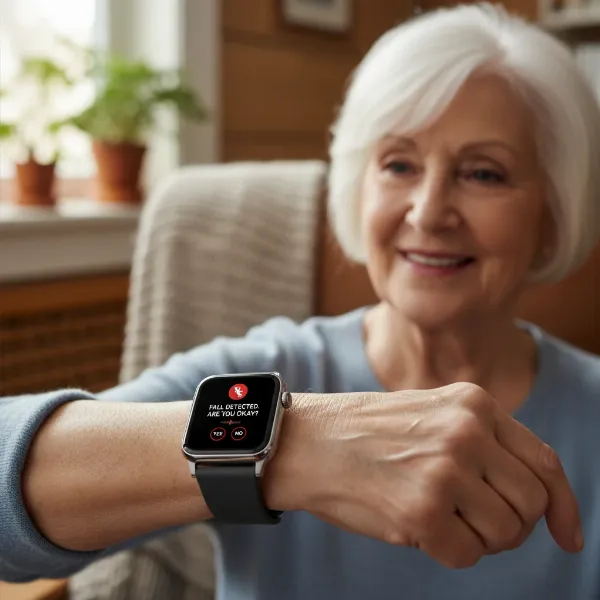 A senior woman wearing a smartwatch on her wrist, illustrating fall detection technology.
Smartwatch vs. Medical Alert Watch: Key Differences
While both smartwatches and medical alert watches offer fall detection, their primary functions and how they handle emergencies differ. Traditional smartwatches, like the Apple Watch or Samsung Galaxy Watch, are designed for broad functionality, including communication, fitness tracking, and health monitoring. Their fall detection typically contacts 911 or pre-set emergency contacts directly. Medical alert watches, such as the Medical Guardian MGMove or Bay Alarm Medical SOS Smartwatch, are purpose-built for emergency response. They often connect to a 24/7 professional monitoring center, where trained staff assess the situation before dispatching emergency services or contacting family members. This distinction means medical alert watches often work independently of a smartphone, offering dedicated support tailored for seniors.
Top Smartwatches for Seniors with Fall Detection
Selecting the right smartwatch with fall detection can be a critical decision. Each device offers a unique blend of features, benefits, and price points. Here’s a look at some of the top options available, designed to cater to varying needs and preferences.
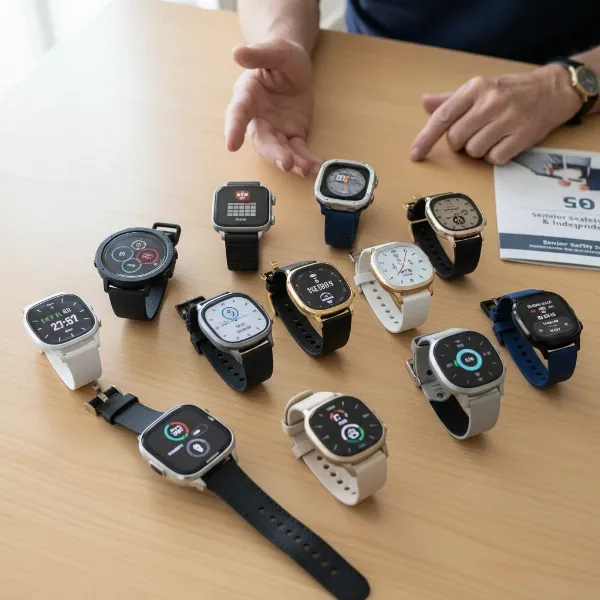 Multiple smartwatches and medical alert devices displayed, representing comparison for seniors' safety.
1. Medical Guardian MGMove
The Medical Guardian MGMove is a standout medical alert watch designed specifically with seniors in mind, offering a robust blend of safety and user-friendliness. Its primary advantage lies in connecting directly to a 24/7 monitoring center, ensuring professional assistance in any emergency.
- Pros: Comfortable and discreet, user-friendly design with large icons, fast response time (averaging 29 seconds), reliable GPS tracking, long 24-hour battery life, and helpful features like weather updates and step tracking. It also offers an enhanced caregiver portal for family connectivity.
- Cons: Comes with a significant upfront equipment cost ($199.99) in addition to a monthly monitoring subscription ($42.95), and the watch band cannot be changed. Fall detection is an optional add-on for an extra monthly fee.
- Key Features: Automatic fall detection (optional, $10/month), two-way voice communication, AT&T cellular network connectivity (no smartphone required), and a quick 1-2 hour charging time.
- Price Considerations: This watch represents a higher investment but provides dedicated medical alert services and professional monitoring.
2. Bay Alarm Medical SOS Smartwatch
The Bay Alarm Medical SOS Smartwatch is celebrated for its exceptional ease of use and streamlined design, making it an excellent choice for seniors who prioritize simplicity. It offers a clear, straightforward interface and direct connection to a monitoring center without requiring a smartphone.
- Pros: Very easy to set up and use with clear instructions and voice prompts for battery status. It features a sleek, discreet appearance and offers the ability to cancel accidental emergency calls. Fall detection uses AI to minimize false alarms.
- Cons: Shorter battery life, typically lasting 6-18 hours, which requires more frequent charging. The wristband can also be challenging for some seniors with limited hand dexterity to put on by themselves.
- Key Features: Automatic fall detection (optional, $10/month), GPS tracking for location accuracy, fast average response time (22 seconds), and a 15-day trial period. It supports both AT&T and Verizon networks.
- Price Considerations: Similar to the MGMove, it involves an upfront equipment fee ($199) and a monthly subscription ($39.95), with fall detection as an additional cost.
3. Apple Watch Series (Latest/SE)
The Apple Watch, particularly the latest Series models (such as Series 10 or SE), is a popular option for tech-savvy seniors already familiar with the Apple ecosystem. It combines extensive health monitoring with reliable fall detection and a highly customizable experience.
- Pros: Outstanding health tracking features, including ECG, heart rate alerts, blood oxygen monitoring, and medication reminders. Its fall detection is built-in and automatically contacts emergency services if the user is unresponsive after a detected hard fall.
- Cons: Primarily detects “hard falls” and may be less accurate for “soft falls” common among older adults. Requires an iPhone for full functionality and a cellular plan for standalone emergency calling, making it more expensive upfront and with ongoing data costs.
- Key Features: Advanced health sensors, seamless integration with other Apple devices, wide range of third-party apps, and robust accessibility features like VoiceOver.
- Price Considerations: High upfront cost for the device ($249-$1000+) plus potential cellular plan fees, but no dedicated monthly monitoring subscription.
4. Samsung Galaxy Watch Series (Latest)
For seniors who use Android smartphones, the latest Samsung Galaxy Watch series (e.g., Galaxy Watch 7 or 8) offers a comprehensive and integrated experience. These watches provide robust fall detection alongside a suite of health and wellness features.
- Pros: Excellent integration with Android devices, bright and large AMOLED display with ample accessibility features (like voice assistant and vibration time for visually impaired users). It includes detailed fitness tracking, ECG monitoring, and stress management tools.
- Cons: Like the Apple Watch, it generally connects to emergency services or pre-selected contacts rather than a dedicated monitoring center. Full features require pairing with an Android smartphone.
- Key Features: Automatic fall detection that texts emergency contacts or calls services if no response within 60 seconds, GPS tracking, walking reminders, and sleep tracking.
- Price Considerations: Typically a mid-to-high upfront cost, with potential cellular plan fees if standalone LTE is desired.
5. UnaliWear Kanega Watch
The UnaliWear Kanega Watch is a distinctive medical alert watch designed with ease of use and continuous wear in mind, particularly for those who may find traditional charging cumbersome. It focuses on essential safety features without the complexity of a full-fledged smartwatch.
- Pros: Fall detection is included without an extra monthly fee. It features swappable, rechargeable batteries, meaning the watch doesn’t need to be removed for charging, offering continuous protection. The design is sleek and comes with multiple band options.
- Cons: Very high equipment cost ($299) and a substantial monthly subscription fee ($84.95), making it one of the more expensive options. It lacks an accompanying smartphone app and real-time location tracking for caregivers, which can be a limitation for families.
- Key Features: 24/7 monitoring, two-way communication, GPS tracking, and voice-guided interface.
- Price Considerations: This watch has the highest overall cost due to both equipment and monthly fees but provides a unique solution for uninterrupted wear.
Detailed Comparison: Smartwatches for Seniors with Fall Detection
Choosing the best smartwatch involves weighing numerous factors beyond just fall detection. Here’s a comparative overview of the leading devices to help highlight their distinct offerings.
| Feature | Medical Guardian MGMove | Bay Alarm Medical SOS Smartwatch | Apple Watch (Latest) | Samsung Galaxy Watch (Latest) | UnaliWear Kanega Watch |
|---|---|---|---|---|---|
| Type | Medical Alert Watch | Medical Alert Watch | Smartwatch | Smartwatch | Medical Alert Watch |
| Fall Detection | Automatic (optional add-on) | Automatic (optional add-on, AI) | Automatic (hard falls only) | Automatic (calls contacts/services) | Automatic (included) |
| Emergency Contact | 24/7 Monitoring Center | 24/7 Monitoring Center | 911 / Emergency Contacts | Emergency Contacts / Services | 24/7 Monitoring Center |
| Smartphone Needed | No | No | Yes (for full features) | Yes (for full features) | No |
| Battery Life | ~24 hours | 6-18 hours | ~18 hours (up to 36 low power) | ~30-40 hours | Swappable, continuous use |
| GPS Tracking | Yes | Yes | Yes | Yes | Yes |
| Heart Rate Monitor | Yes | Yes | Yes | Yes | Yes |
| ECG/Blood Oxygen | No | No | Yes | Yes | No |
| Ease of Use | User-friendly interface | Very simple, voice prompts | Good, but tech-savvy preferred | Good (Android users) | Voice-guided interface |
| Price (approx.) | High upfront + monthly | High upfront + monthly | High upfront (device + plan) | Mid-High upfront (device + plan) | Very high upfront + monthly |
| False Alarm Mgmt. | Cancellation option | AI, cancellation option | Yes (if responsive) | Yes (if responsive) | Cancellation option |
| Accuracy (Simulated Falls) | 9/10 | 8/10 | Varies (better for hard falls) | Good | High |
How to Choose the Right Smartwatch for Seniors
Selecting the perfect smartwatch with fall detection requires careful consideration of individual needs, preferences, and lifestyle. This decision is about more than just technology; it’s about empowering safety and independence.
Assessing Your Needs
Before exploring specific models, think about what you or your loved one truly needs from a smartwatch. Do you require a device primarily for safety, or are comprehensive health tracking and communication features equally important? Consider the wearer’s daily activities—are they very active, or do they spend more time at home? Their familiarity with technology is also key; some prefer simple, voice-guided interfaces, while others are comfortable with complex touchscreens. Identifying the main purpose, whether it’s solely for fall detection, general wellness monitoring, or staying connected, will guide your choice.
Budget Considerations
Smartwatches with fall detection vary widely in price, influenced by their features, brand, and whether they are dedicated medical alert devices. You’ll need to factor in both the initial equipment cost and any ongoing expenses. Dedicated medical alert watches often have upfront equipment fees and monthly subscription costs for monitoring services and fall detection. General smartwatches like the Apple Watch or Samsung Galaxy Watch may have a higher initial purchase price and often require a cellular plan (which adds a monthly fee) if you want standalone connectivity without a smartphone. Always clarify all potential costs, including activation fees, fall detection add-ons, and any protection plans, to avoid surprises.
Key Features to Prioritize
When making your selection, certain features stand out as particularly important for seniors. Prioritizing these elements will help ensure the chosen device genuinely meets safety and lifestyle requirements.
- Reliable Fall Detection: This is paramount. Understand the accuracy claims, particularly whether the device detects both “hard falls” (high-impact) and “soft falls” (slumping to the floor), as accuracy can vary.
- Emergency Response: Decide between a 24/7 professional monitoring center (common with medical alert watches) or direct connection to 911/emergency contacts (typical for general smartwatches). Monitoring centers offer personalized assessment before dispatch.
- Battery Life: Aim for a watch with at least a 24-hour battery life to ensure continuous protection throughout the day and night without constant recharging. Longer battery life reduces the risk of the device dying when it’s most needed.
- Ease of Use: A simple interface with large, clear icons, intuitive navigation, and possibly voice prompts is crucial for seniors, especially those who are not tech-savvy or have visual impairments.
- Connectivity: Determine if the senior needs a device that works independently via its own cellular connection (standalone LTE), or if they are comfortable with a smartwatch tethered to a smartphone.
- Durability & Water Resistance: Choose a watch that can withstand daily wear, including exposure to water, as falls often occur in bathrooms or during activities.
- Health Monitoring: While fall detection is the priority, integrated features like heart rate monitoring, ECG, and sleep tracking can provide valuable insights into overall health.
- GPS Tracking: This feature is essential for location accuracy during an emergency, allowing responders to quickly find the wearer wherever they may be.
Conclusion: Empowering Independence with Smartwatches
Smartwatches with fall detection are more than just advanced gadgets; they are vital tools empowering seniors to live with greater confidence and independence. By offering timely alerts and access to help in critical moments, these devices provide invaluable peace of mind for both older adults and their families. From dedicated medical alert watches with 24/7 monitoring to versatile smartwatches with comprehensive health tracking, the options available today are diverse, allowing for a personalized choice to fit every unique need and lifestyle. Embracing this technology means embracing a future where safety and autonomy go hand in hand.
What specific features do you believe are most critical for a smartwatch to truly enhance the daily safety and well-being of seniors?
Frequently Asked Questions
Do all smartwatches have fall detection?
No, not all smartwatches include fall detection. While many modern smartwatches from leading brands like Apple and Samsung offer this feature, it’s not universal. Always check the product specifications carefully to confirm its presence and how it functions.
Is fall detection on smartwatches always accurate?
While smartwatch fall detection technology is highly advanced, it is not 100% accurate. Factors like the type of fall (hard versus soft), the wearer’s activity level, and the specific device’s algorithms can influence its reliability. False alarms can occur, but many devices allow users to cancel alerts.
Can I use a medical alert smartwatch without a smartphone?
Yes, many dedicated medical alert smartwatches, such as the Medical Guardian MGMove and Bay Alarm Medical SOS Smartwatch, are designed to operate independently. They often have built-in cellular connectivity, allowing them to communicate directly with monitoring centers or emergency services without needing to be paired with a smartphone.
How much does a smartwatch with fall detection cost?
The cost varies significantly. General smartwatches with fall detection can range from $200 to over $1000, often requiring a separate cellular plan. Dedicated medical alert watches typically have an upfront equipment fee (around $150-$300) plus a monthly subscription for monitoring services, which can range from $30 to $85.
What’s the difference between hard fall and soft fall detection?
Hard fall detection is designed to recognize high-impact events, like falling from a standing height onto a hard surface. Soft fall detection is more advanced, aiming to identify less impactful falls, such as slumping to the floor, which are common among seniors. Some smartwatches excel at detecting hard falls but may struggle with softer ones.