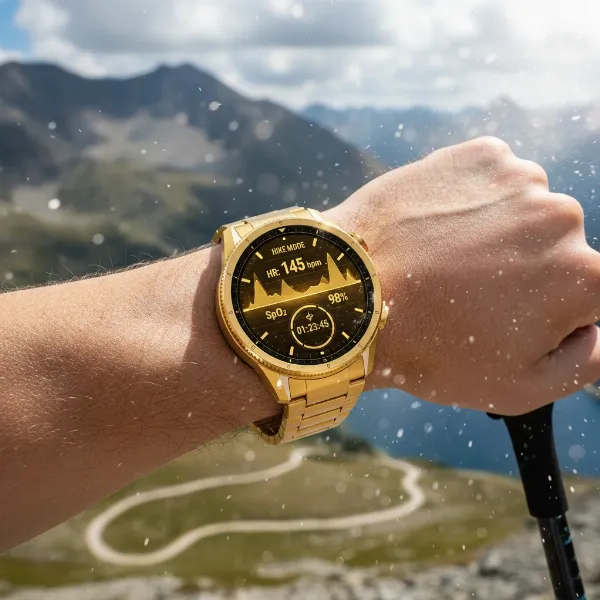
The smartwatch market is a dynamic landscape, constantly pushing the boundaries of technology and design. Among the myriad of wearables, the Nubia Watch stands out with its audacious flexible screen concept, attempting to redefine how we interact with time and technology on our wrists. This review delves into Nubia’s ambitious offering, exploring its unique features, performance, and whether its futuristic vision translates into practical daily use.
The Flexible Screen: A Daring Design Statement
The most striking feature of the Nubia Watch is undoubtedly its 4.01-inch flexible AMOLED display, which gracefully wraps halfway around the wrist. This elongated screen offers an expansive canvas, making it a head-turner in a world of predominantly square or circular smartwatches. The flexibility is most noticeable at the edges, allowing the device to conform to your wrist for a more ergonomic fit, though the main display area remains largely flat.
However, this innovation comes with trade-offs. The Nubia Watch is often described as bulky and heavier than conventional smartwatches, a direct consequence of accommodating such a large, curved display. While the screen itself is vibrant, with excellent brightness and color reproduction, the practical utilization of its extended real estate is often limited by the software. Some apps, like health and weather, may show more information, but many others, including watch faces, don’t fully leverage the extra space, displaying content similar to what you’d find on a smaller screen.
Durability is another consideration. While Nubia claims the display can withstand thousands of flexes and some sources mention Schott glass protection, other reviews suggest a plastic-like feel. It carries an IP54 rating, meaning it’s splash and dust resistant, but it’s not designed for swimming or heavy rain.
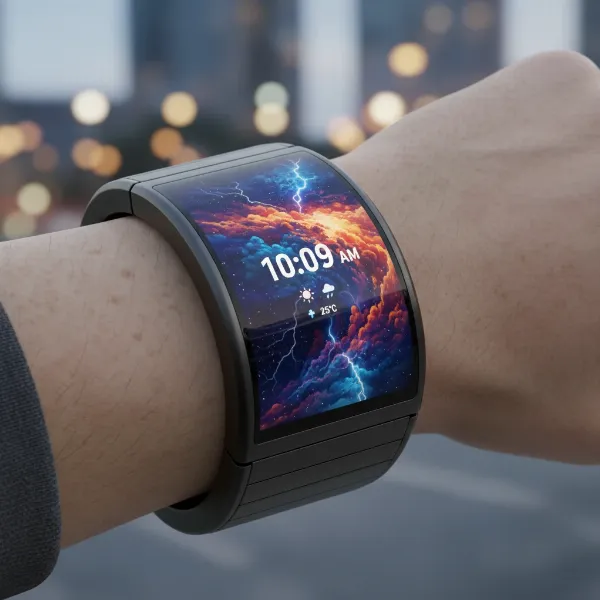 Nubia Watch with flexible AMOLED display wrapped around a wrist, showcasing its unique design.
Performance and Software: Potential Hampered by Limitations
Underneath its innovative exterior, the Nubia Watch is powered by a Qualcomm Snapdragon Wear 2100 processor, an older chipset in the smartwatch world, paired with 1GB of RAM and 8GB of storage (with about 4GB usable). Despite the dated processor, many reviewers found the custom Nubia OS to be surprisingly snappy and fluid, likely due to its relatively bare-bones nature and lack of demanding third-party applications.
The software, however, is where the Nubia Watch faces its biggest challenges. The custom OS lacks support for a robust ecosystem of third-party apps, a common pitfall for non-Wear OS or Apple Watch devices. Essential features like syncing contacts, calendar appointments, music, or photos often prove problematic or non-functional in the international version of the Nubia Wear app. Notifications, while readable, offer limited interaction, often requiring manual clearing even after being dismissed on the phone.
The “hyper-dimensional interaction” promised by Nubia, including air gestures, often proves finicky and less efficient than direct touchscreen input. While the concept of gesture controls is intriguing, their inconsistent performance can lead to frustration.
Fitness and Health Tracking: Basic, Not Enthusiast-Grade
For those prioritizing comprehensive fitness and health tracking, the Nubia Watch offers a mixed bag. It includes a heart rate monitor, step tracking, and automatic sleep monitoring. GPS is also onboard for tracking outdoor activities.
However, many reviews point to its fitness tracking capabilities as being basic and, at times, inaccurate. For instance, running distances tracked by the Nubia Watch were reported to be significantly shorter compared to leading smartwatches like the Apple Watch or Samsung Galaxy Watch. The visualization of health data and training logs within the app is also considered rudimentary, making it unsuitable for serious athletes or those seeking in-depth insights into their performance. Moreover, its bulky design and IP54 rating make it less ideal for vigorous workouts or water-based activities.
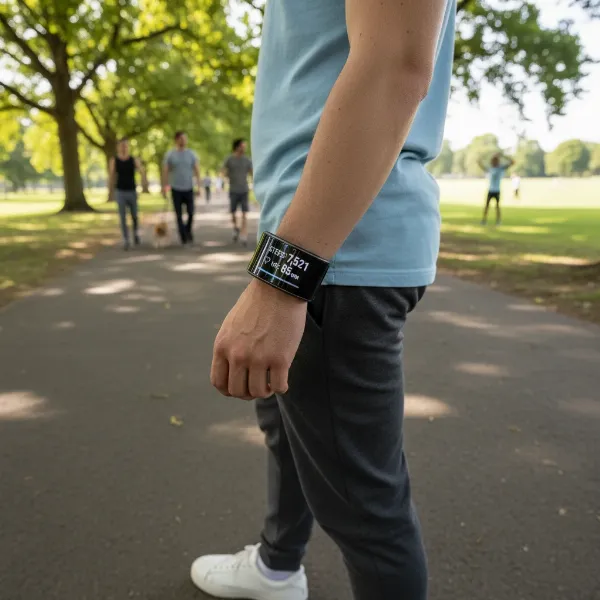 Nubia Watch displaying basic fitness data on its screen, perhaps during a casual walk or light exercise.
Battery Life: A Day or Two of Daily Use
Battery performance is a critical aspect of any smartwatch. The Nubia Watch houses a 425mAh battery. While Nubia advertised up to 7 days in power-saving mode, real-world usage typically yields around 1 to 2 days (approximately 36 hours) with moderate use (50% brightness, GPS/Wi-Fi off, minimal notifications). This means you’ll likely need to charge it every other night, similar to many mainstream smartwatches, but falling short of the “week-long” claims.
Pricing and Availability: A Niche Product
The Nubia Watch was initially launched via a Kickstarter crowdfunding campaign in mid-August 2020, with units shipping from October of that year. The retail price was set at $399, though early bird backers could acquire it for as low as $179-$219. This pricing places it in competition with established smartwatches from major brands, which often offer a more refined software experience and robust feature sets.
Who is the Nubia Watch For?
The Nubia Watch is a device primarily for early adopters, tech enthusiasts, and those who prioritize unique design and a futuristic aesthetic over a fully polished and feature-rich smartwatch experience. It’s a statement piece, designed to turn heads and spark conversations, rather than a practical daily driver for someone deeply integrated into a smartwatch ecosystem.
“The Nubia Watch is a fascinating experiment in wearable design, showcasing what’s possible with flexible display technology. However, its software limitations and basic feature set mean it remains more of a concept than a fully realized competitor in the mainstream smartwatch market.” – Dr. Anya Sharma, Wearable Tech Analyst
Conclusion
The Nubia Watch, with its flexible screen concept, represents a bold step towards a future where wearables seamlessly integrate with our bodies. Its stunning display and unique form factor are undeniably impressive. However, the device is ultimately held back by its underdeveloped software, basic fitness tracking, and somewhat bulky design, making it more of a “future potential” device than a prime-time contender. While it excels as a conversation starter, those seeking a comprehensive, reliable, and feature-rich smartwatch might find themselves looking elsewhere.
What are your thoughts on flexible screen smartwatches? Do you think the innovative design outweighs the current software limitations?
Frequently Asked Questions
Is the Nubia Watch durable with its flexible screen?
|
Our Picks for the Best Smartwatch in 2026
As an Amazon Associate I earn from qualifying purchases.
|
||
| Num | Product | Action |
|---|---|---|
| 1 | Smart Watch, 2026 AMOLED 1.43" Fitness Smartwatch for Men Women, Bluetooth 5.4 Call, 130+Sports Modes, 60+Days Flashlight, Heart Rate/Sleep Monitor, IP68 Waterproof Activity Tracker for Android iOS |

|
| 2 | Apple Watch Series 11 [GPS 42mm] Smartwatch with Rose Gold Aluminum Case with Light Blush Sport Band - S/M. Sleep Score, Fitness Tracker, Health Monitoring, Always-On Display, Water Resistant |
|
| 3 | Smart Watch for Men Women Compatible with iPhone Samsung Android Phone 1.83 inch Full Touch Screen IP68 Waterproof Bluetooh Fitness Tracker Heart Rate/Sleep Monitor, Black |
|
| 4 | Smart Watch for Men, 120 Sports Modes Smartwatch with 1.83" HD Touchsreen, IP67 Waterproof, Sleep Monitor, Bluetooth Call & Music Control Fitness Watch for Android/iPhone (Black) |
|
| 5 | SAMSUNG Galaxy Watch 7 40mm Bluetooth AI Smartwatch w/Energy Score, Wellness Tips, Heart Rate Tracking, Sleep Monitor, Fitness Tracker, 2024, Cream [US Version, 1Yr Manufacturer Warranty] |
|
| 6 | Amazfit Bip 6 Smart Watch 46mm, 14 Day Battery, 1.97" AMOLED Display, GPS & Free Maps, AI, Bluetooth Call & Text, Health, Fitness & Sleep Tracker, 140+ Workout Modes, 5 ATM Water-Resistance, Black |
|
| 7 | WHOOP 5.0/MG Activity Tracker - 12 Month Membership - Health and Fitness Wearable – 24/7 Activity and Sleep Tracker, Personalized Coaching, Menstrual Cycle Insights – 14+ Days Battery Life |
|
| 8 | Apple Watch Series 11 [GPS 46mm] Smartwatch with Jet Black Aluminum Case with Sport Band - M/L. Sleep Score, Fitness Tracker, Health Monitoring, Always-On Display, Water Resistant |
|
| 9 | Smart Watch with Alexa Built-in, 1.83" HD Touchscreen Fitness Tracker with Bluetooth Calling, Fitness Watch with Heart Rate/Sleep Monitor, 120+ Sports Modes, IP68 Waterproof Smartwatch for Android iOS |
|
| 10 | Smart Watch for Men, 120+ Sports Modes Smartwatch with 1.83" HD Touchsreen, Sleep Monitor, IP67 Waterproof, Bluetooth Call & Music Control Fitness Watch for iPhone/Android Black |
|
The Nubia Watch has an IP54 rating for splash and dust resistance, making it suitable for everyday splashes. While Nubia claims the screen can withstand many flexes, its overall durability for rigorous activities or impacts is a concern for some, and it’s not recommended for swimming or showering.
Does the Nubia Watch support third-party apps?
No, the Nubia Watch runs on a custom OS (Alpha OS) and does not support third-party applications from major ecosystems like Wear OS or Apple’s App Store, limiting its functionality compared to more established smartwatches.
How accurate is the fitness tracking on the Nubia Watch?
The fitness tracking on the Nubia Watch, including heart rate monitoring and GPS, is generally considered basic and less accurate than leading smartwatches. It may be sufficient for casual tracking but is not recommended for serious fitness enthusiasts requiring precise data.
What is the battery life of the Nubia Watch?
The Nubia Watch typically offers about 1 to 2 days (around 36 hours) of battery life with regular daily use. While a power-saving mode can extend this to several days, this significantly reduces its smart functionalities.