Smartwatches have transitioned from niche gadgets to essential everyday companions, offering a blend of convenience, health tracking, and connectivity right on your wrist. However, navigating the various connectivity options can be perplexing, especially when deciding between LTE and Bluetooth models. The fundamental question for many potential buyers is: “Do I truly need cellular connectivity in my smartwatch, or is a Bluetooth-only version sufficient?” This comprehensive guide will dissect the differences, explore the advantages and disadvantages of each, compare leading brands, and help you determine which smartwatch best aligns with your lifestyle and budget.
Understanding Smartwatch Connectivity: Bluetooth vs. LTE
The core distinction between smartwatches lies in how they connect to the internet and your smartphone. This choice significantly impacts their functionality, independence, and overall cost.
Bluetooth-Only Smartwatches
Bluetooth smartwatches are designed to work in conjunction with your smartphone. They pair wirelessly via Bluetooth and rely on your phone for most of their “smart” functions, including receiving notifications, making calls, sending messages, and accessing data.
- Pros:
- Lower Cost: Bluetooth-only models are typically more affordable, both in initial purchase price and without recurring monthly cellular fees.
- Extended Battery Life: Without the power demands of a cellular radio, Bluetooth smartwatches generally offer significantly longer battery life, often lasting several days on a single charge.
- Seamless Phone Pairing: They integrate effortlessly with your smartphone, mirroring notifications and app data within a close range.
- Cons:
- Limited Independence: These smartwatches require your paired phone to be within Bluetooth range (typically 30-50 feet) to access most online features, receive real-time notifications, or handle calls and texts.
- No Standalone Data: You cannot stream music, download apps, or browse the internet directly from the watch without your phone nearby, unless connected to Wi-Fi.
- Key Features: Fitness tracking (steps, heart rate, sleep), built-in GPS for activity tracking (even without a phone), mobile payments (NFC), notification alerts, music control (for music stored on the watch or phone), and basic app support.
- Who They’re For: Bluetooth smartwatches are ideal for users who almost always have their smartphone with them. They suit individuals seeking a cost-effective solution for fitness tracking, convenient notifications, and health monitoring without needing full phone independence from their wrist.
|
Our Picks for the Best Smartwatch in 2026
As an Amazon Associate I earn from qualifying purchases.
|
||
| Num | Product | Action |
|---|---|---|
| 1 | Smart Watch for Men, 120 Sports Modes Smartwatch with 1.83" HD Touchsreen, IP67 Waterproof, Sleep Monitor, Bluetooth Call & Music Control Fitness Watch for Android/iPhone (Black) |

|
| 2 | Smart Watch for Men, 120+ Sports Modes Smartwatch with 1.83" HD Touchsreen, Sleep Monitor, IP67 Waterproof, Bluetooth Call & Music Control Fitness Watch for iPhone/Android Black |
|
| 3 | Smart Watch for Men Women Compatible with iPhone Samsung Android Phone 1.83 inch Full Touch Screen IP68 Waterproof Bluetooh Fitness Tracker Heart Rate/Sleep Monitor, Black |
|
| 4 | Apple Watch Series 11 [GPS 42mm] Smartwatch with Rose Gold Aluminum Case with Light Blush Sport Band - S/M. Sleep Score, Fitness Tracker, Health Monitoring, Always-On Display, Water Resistant |
|
| 5 | Smart Watch, 2026 AMOLED 1.43" Fitness Smartwatch for Men Women, Bluetooth 5.4 Call, 130+Sports Modes, 60+Days Flashlight, Heart Rate/Sleep Monitor, IP68 Waterproof Activity Tracker for Android iOS |
|
| 6 | Apple Watch Series 11 [GPS 46mm] Smartwatch with Jet Black Aluminum Case with Sport Band - M/L. Sleep Score, Fitness Tracker, Health Monitoring, Always-On Display, Water Resistant |
|
| 7 | Smart Watch with Alexa Built-in, 1.83" HD Touchscreen Fitness Tracker with Bluetooth Calling, Fitness Watch with Heart Rate/Sleep Monitor, 120+ Sports Modes, IP68 Waterproof Smartwatch for Android iOS |
|
| 8 | Amazfit Bip 6 Smart Watch 46mm, 14 Day Battery, 1.97" AMOLED Display, GPS & Free Maps, AI, Bluetooth Call & Text, Health, Fitness & Sleep Tracker, 140+ Workout Modes, 5 ATM Water-Resistance, Black |
|
| 9 | WHOOP 5.0/MG Activity Tracker - 12 Month Membership - Health and Fitness Wearable – 24/7 Activity and Sleep Tracker, Personalized Coaching, Menstrual Cycle Insights – 14+ Days Battery Life |
|
| 10 | SAMSUNG Galaxy Watch 7 40mm Bluetooth AI Smartwatch w/Energy Score, Wellness Tips, Heart Rate Tracking, Sleep Monitor, Fitness Tracker, 2024, Cream [US Version, 1Yr Manufacturer Warranty] |
|
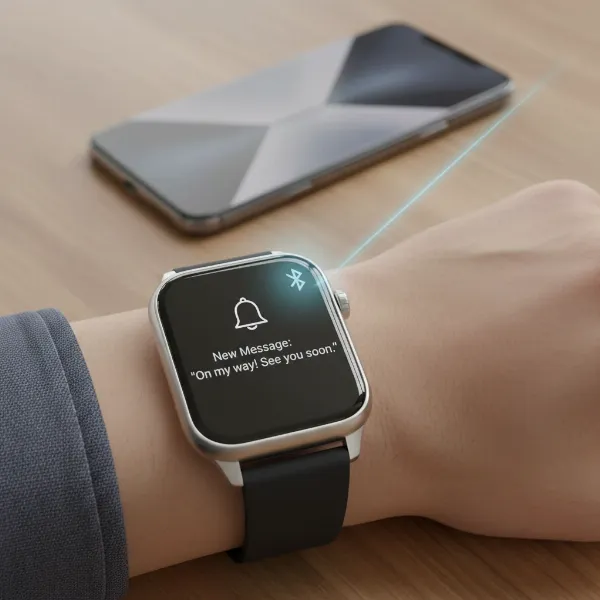 A Bluetooth smartwatch displaying notifications, connected to a nearby smartphone.
LTE (Cellular) Smartwatches
LTE (Long-Term Evolution) smartwatches are equipped with an eSIM (embedded SIM) that allows them to connect directly to a cellular network. This essentially turns your smartwatch into a standalone device, capable of performing many smartphone functions even when your phone is nowhere in sight.
- Pros:
- True Independence: Make and receive calls and texts, stream music, use navigation, and access apps without your phone nearby. This is invaluable for activities where carrying a phone is inconvenient or impossible.
- Enhanced Safety and Emergency Features: In an emergency, you can call for help or use features like fall detection and real-time location sharing, even if your phone is at home.
- Greater Flexibility: Leave your phone behind for a run, a swim, or a quick errand and still stay connected to the world.
- Cons:
- Higher Cost: LTE models come with a higher upfront purchase price than their Bluetooth counterparts.
- Recurring Monthly Fees: To activate cellular functionality, you’ll need an additional data plan from your mobile carrier, which typically adds $10-$20 to your monthly bill.
- Shorter Battery Life: Utilizing the cellular radio consumes significantly more power. While many can intelligently switch to Bluetooth or Wi-Fi when available, consistent LTE use will necessitate more frequent charging.
- Potential Privacy/Security Concerns: With direct network access, some users may have concerns about location tracking by providers or cloud-stored data vulnerabilities.
- Key Features: All Bluetooth smartwatch features, plus standalone calls and texts, streaming music and podcasts directly to Bluetooth headphones, real-time GPS navigation, emergency SOS (often with international calling), and full app functionality independent of your phone.
- Who They’re For: LTE smartwatches are perfect for active individuals, such as runners, cyclists, and hikers, who want to track their workouts and remain reachable without the bulk of a phone. They are also suitable for those prioritizing safety, anyone who frequently leaves their phone behind, or individuals working in environments where phones are prohibited but smartwatches are allowed.
 An active person running outdoors with an LTE smartwatch, leaving their phone behind.
“The greatest advantage of an LTE smartwatch is the sheer freedom it offers. For those who enjoy outdoor sports or simply want to declutter their pockets, the ability to stay connected without a phone is a game-changer.” – John Doe, Senior Wearable Tech Analyst at SmartwatchUS.com
Comparing Leading Smartwatch Brands: Connectivity Offerings
Most major smartwatch manufacturers offer both Bluetooth-only (often labeled GPS) and LTE (GPS + Cellular) versions of their popular models, catering to different user needs and budgets.
Apple Watch
Apple Watch is renowned for its seamless integration with the iOS ecosystem and comprehensive features.
- Pros: Industry-leading health and fitness tracking, robust app store, advanced safety features (ECG, blood oxygen, fall detection, crash detection), excellent user experience.
- Cons: Exclusive to iPhone users, generally higher price point, battery life typically requires daily charging, especially for cellular models.
- Key Features (LTE Models): Emergency SOS (including international calling without an iPhone), Fall Detection, Crash Detection, Family Setup (allowing non-iPhone users to have a watch), independent calls, texts, and streaming music.
- Pricing: Cellular models are typically $100 more expensive than GPS-only versions, plus the monthly carrier fee.
Samsung Galaxy Watch
Samsung’s Galaxy Watch series offers a strong alternative for Android users, featuring Google’s Wear OS (formerly Tizen).
- Pros: Excellent compatibility with Android phones (especially Samsung devices), comprehensive health tracking (ECG, body composition analysis), vibrant displays, customizable watch faces.
- Cons: Battery life can be a concern with heavy usage, some features are optimized for Samsung phones, not always fully compatible with iPhones.
- Key Features (LTE Models): Similar standalone call/text/streaming capabilities to Apple, Bixby and Google Assistant integration, Google Maps, and Samsung Pay/Google Wallet without a phone.
- Pricing: Generally competitive, with LTE variants costing more than Bluetooth models and requiring a separate carrier plan.
Garmin
Garmin specializes in fitness and outdoor-focused smartwatches, prioritizing battery life and activity tracking over extensive “smart” features.
- Pros: Exceptional battery life (some models last weeks), highly accurate GPS, advanced sports metrics, rugged designs, comprehensive outdoor navigation.
- Cons: Fewer “smart” features compared to Apple/Samsung, smaller app ecosystem, LTE models are less common and often specialized for emergency/tracking.
- Key Features (LTE Models like Forerunner 945 LTE, 955 LTE): Primarily for safety features such as Assistance Plus (connects to professional emergency response), LiveTrack (real-time location sharing with contacts), and spectator messaging during races, allowing athletes to leave their phone behind for truly untethered tracking.
- Pricing: Premium pricing for advanced fitness features, with LTE options adding to the cost for specialized use cases.
Fitbit
Fitbit smartwatches excel in health and wellness tracking, focusing on sleep, activity, and stress management.
- Pros: Excellent for fitness and sleep tracking, user-friendly companion app, strong community features, generally more affordable options.
- Cons: Less emphasis on full standalone cellular capabilities compared to Apple/Samsung, smaller app library, limited advanced smartwatch features on some models.
- Key Features (Sense/Versa LTE models): Primarily focuses on receiving notifications and taking calls when connected to the phone, and some models offer built-in GPS for phone-free workout tracking. Full standalone cellular is less emphasized than communication.
- Pricing: More budget-friendly overall, with LTE variants available on their higher-end models like the Sense and Versa series.
Detailed Smartwatch Connectivity Comparison Table
To help visualize the key differences, here’s a detailed comparison:
| Feature | Bluetooth-Only Smartwatches | LTE (Cellular) Smartwatches |
|---|---|---|
| Independence | Requires phone nearby for most smart features | Functions independently of phone |
| Connectivity | Bluetooth, Wi-Fi (when available) | Bluetooth, Wi-Fi, Cellular (4G/5G) |
| Initial Cost | Lower | Higher |
| Monthly Fee | None | Yes (approx. $10-$20/month) |
| Battery Life | Longer (days to weeks) | Shorter (1-2 days, less with heavy cellular use) |
| Calls/Texts | Via phone, within Bluetooth range | Standalone, via cellular network |
| Music Streaming | Local storage or via phone | Local storage or direct streaming via cellular |
| GPS Tracking | Built-in (often), standalone for activities | Built-in, standalone for activities and navigation |
| Emergency SOS | Via phone (if connected) or basic alerts | Standalone, direct to emergency services |
| Ideal User | Always carries phone, budget-conscious, prioritizes battery life | Active lifestyle, values independence, safety-conscious, wants to leave phone behind |
Guide to Choosing the Right Smartwatch for You
Making the right decision between an LTE and Bluetooth smartwatch boils down to understanding your personal needs and priorities.
1. Determine Your Usage Needs
- What is your primary purpose for a smartwatch?
- If it’s mainly for fitness tracking, health monitoring, and receiving notifications while your phone is usually nearby, a Bluetooth-only smartwatch is likely sufficient.
- If you need to make calls, send texts, stream music, or ensure emergency contact without carrying your phone, then an LTE smartwatch is essential.
- Which features are most important to you? Prioritize features like standalone calls, advanced GPS, NFC payments, extensive app support, or specific sports modes, and see which connectivity option best delivers them.
2. Consider Your Budget
- Initial Purchase Cost: LTE smartwatches come with a higher price tag. Are you willing to pay an extra $50-$100 for cellular capability?
- Recurring Monthly Fees: Beyond the initial purchase, an LTE smartwatch incurs a monthly service charge. Over a year, this can add up to $120-$240. Factor this into your long-term budget. If saving on monthly expenses is crucial, Bluetooth is the clear winner.
3. Evaluate Brand and Ecosystem
- Compatibility: If you own an iPhone, an Apple Watch (GPS or Cellular) offers the most seamless experience. For Android users, Samsung Galaxy Watch or other Wear OS devices are top contenders.
- Style and Preference: Do you prefer a sporty, rugged look (Garmin) or a more sleek, fashion-forward design (Apple, Samsung)? Consider what ecosystem you’re already invested in for the best integration.
4. Other Important Factors
- Battery Life: Be realistic about how often you’re willing to charge. LTE models, especially with heavy use, will require daily charging. Bluetooth models often provide several days of use.
- Water Resistance: Most modern smartwatches are water-resistant, but confirm the rating if you plan to swim or engage in water sports.
- Size and Comfort: Try on different models if possible. A smartwatch should feel comfortable on your wrist for extended wear.
- Operating System: Familiarity with WatchOS (Apple), Wear OS (Google/Samsung), Garmin OS, or Fitbit OS can influence your user experience.
Conclusion
The decision between an LTE and Bluetooth smartwatch ultimately hinges on your lifestyle, connectivity needs, and budget. Bluetooth-only smartwatches offer an excellent value proposition for those who typically keep their smartphone close, providing comprehensive fitness tracking, health monitoring, and convenient notifications without the added cost or battery drain of cellular connectivity. On the other hand, LTE smartwatches provide unparalleled freedom and peace of mind, allowing you to stay connected, make emergency calls, and enjoy full smartwatch functionality even when your phone is left behind. This independence comes with a higher upfront cost and ongoing monthly fees, as well as more frequent charging. Thoughtfully assess your daily routines, your desire for untethered connectivity, and your financial considerations.
Which smartwatch connectivity option best aligns with your daily routine and aspirations?
Frequently Asked Questions
Is an LTE smartwatch worth the extra cost?
An LTE smartwatch is worth the extra cost if you frequently leave your phone behind for activities like running, swimming, or errands, and still need to make calls, send messages, or access online features independently. For those who always carry their phone, the added expense might not be justified.
Does an LTE smartwatch require a separate phone number?
No, most LTE smartwatches use the same phone number as your smartphone through a feature called “number share” or “eSIM pairing.” This allows your watch to mirror your phone’s calls and texts, even when the phone isn’t nearby.
How much does a cellular plan for a smartwatch cost per month?
The monthly cost for a smartwatch cellular plan typically ranges from $10 to $20, depending on your mobile carrier and existing phone plan. This fee provides dedicated data and connectivity for your smartwatch.
Does using cellular on a smartwatch drain the battery faster?
Yes, actively using cellular connectivity (making calls, streaming music, using data-intensive apps) on a smartwatch significantly drains its battery faster compared to using Bluetooth or Wi-Fi. Many LTE smartwatches intelligently switch to lower-power connections when available to conserve battery.
Can I use an LTE smartwatch without my phone at all?
An LTE smartwatch can function largely independently of your phone, allowing you to make calls, send texts, stream music, and use many apps directly from your wrist via its cellular connection. However, initial setup and some advanced features or app installations may still require a connection to a paired smartphone.
What happens if my LTE smartwatch goes out of cellular range?
If your LTE smartwatch goes out of cellular range, it will typically revert to Bluetooth or Wi-Fi if available and connected to your phone or a known network. Without any connection, it will still perform offline functions like fitness tracking and displaying the time, but communication and online features will be unavailable.