For enthusiasts of swimming, surfing, kayaking, or any aquatic adventure, a smartwatch can be more than just a time-telling device—it’s a powerful companion. Choosing the right smartwatch for water sports means diving into features like robust water resistance, accurate tracking, and long-lasting battery life. This comprehensive guide will help you navigate the options, ensuring you pick a smartwatch that perfectly suits your aquatic lifestyle and keeps up with every stroke, paddle, and dive.
Popular Smartwatch Types for Water Activities
When exploring smartwatches for swimming and water sports, you’ll generally find three main categories, each with distinct advantages and ideal use cases. Understanding these types will help you narrow down your search and find the perfect fit for your aquatic pursuits.
Dedicated Sports Smartwatches
Dedicated sports smartwatches are engineered for athletes who demand precise tracking and extreme durability. These devices often prioritize robust construction, extensive training features, and superior battery life, making them ideal for serious training and competitive events in and out of the water.
- Pros: Exceptional water resistance (often 5ATM or 10ATM), advanced GPS for open water tracking, detailed metrics (stroke rate, SWOLF, pace, distance), multisport modes for triathletes, long battery life, rugged designs built to withstand harsh conditions.
- Cons: Smartwatch features might be more basic compared to general-purpose smartwatches, designs can be bulky, and they often come with a higher price tag.
- Key Features: Advanced swim metrics, open-water GPS, customizable data screens, training plans, heart rate monitoring, military-grade durability (MIL-STD 810H).
- Who They’re For: Competitive swimmers, triathletes, open-water enthusiasts, adventurers engaging in demanding water sports like surfing, paddleboarding, or diving who need reliable performance data.
|
Our Picks for the Best Smartwatch in 2026
As an Amazon Associate I earn from qualifying purchases.
|
||
| Num | Product | Action |
|---|---|---|
| 1 | Apple Watch Series 11 [GPS 46mm] Smartwatch with Jet Black Aluminum Case with Sport Band - M/L. Sleep Score, Fitness Tracker, Health Monitoring, Always-On Display, Water Resistant |
![Check Apple Watch Series 11 [GPS 46mm] Smartwatch with Jet Black Aluminum Case with Sport Band - M/L. Sleep Score, Fitness Tracker, Health Monitoring, Always-On Display, Water Resistant on Amazon](https://smartwatchus.com/wp-content/plugins/amazon-tables/assets/images/buy.png)
|
| 2 | Smart Watch, 2026 AMOLED 1.43" Fitness Smartwatch for Men Women, Bluetooth 5.4 Call, 130+Sports Modes, 60+Days Flashlight, Heart Rate/Sleep Monitor, IP68 Waterproof Activity Tracker for Android iOS |
|
| 3 | SAMSUNG Galaxy Watch 7 40mm Bluetooth AI Smartwatch w/Energy Score, Wellness Tips, Heart Rate Tracking, Sleep Monitor, Fitness Tracker, 2024, Cream [US Version, 1Yr Manufacturer Warranty] |
|
| 4 | Apple Watch Series 11 [GPS 42mm] Smartwatch with Rose Gold Aluminum Case with Light Blush Sport Band - S/M. Sleep Score, Fitness Tracker, Health Monitoring, Always-On Display, Water Resistant |
|
| 5 | Amazfit Bip 6 Smart Watch 46mm, 14 Day Battery, 1.97" AMOLED Display, GPS & Free Maps, AI, Bluetooth Call & Text, Health, Fitness & Sleep Tracker, 140+ Workout Modes, 5 ATM Water-Resistance, Black |
|
| 6 | Smart Watch for Men, 120+ Sports Modes Smartwatch with 1.83" HD Touchsreen, Sleep Monitor, IP67 Waterproof, Bluetooth Call & Music Control Fitness Watch for iPhone/Android Black |
|
| 7 | Smart Watch for Men, 120 Sports Modes Smartwatch with 1.83" HD Touchsreen, IP67 Waterproof, Sleep Monitor, Bluetooth Call & Music Control Fitness Watch for Android/iPhone (Black) |
|
| 8 | Smart Watch for Men Women Compatible with iPhone Samsung Android Phone 1.83 inch Full Touch Screen IP68 Waterproof Bluetooh Fitness Tracker Heart Rate/Sleep Monitor, Black |
|
| 9 | WHOOP 5.0/MG Activity Tracker - 12 Month Membership - Health and Fitness Wearable – 24/7 Activity and Sleep Tracker, Personalized Coaching, Menstrual Cycle Insights – 14+ Days Battery Life |
|
| 10 | Smart Watch with Alexa Built-in, 1.83" HD Touchscreen Fitness Tracker with Bluetooth Calling, Fitness Watch with Heart Rate/Sleep Monitor, 120+ Sports Modes, IP68 Waterproof Smartwatch for Android iOS |
|
Hybrid Fashion and Fitness Smartwatches
These smartwatches strike a balance between everyday style and solid fitness tracking, including water-based activities. They offer a more refined aesthetic suitable for daily wear while still providing good water resistance and essential tracking features.
- Pros: Stylish designs, comfortable for all-day wear, decent water resistance (typically 5ATM), integrate well with smartphone ecosystems, offer a wider range of general smartwatch features (notifications, payments, apps).
- Cons: May lack some of the advanced metrics or extreme durability found in dedicated sports watches, battery life is often shorter, and open-water GPS might be less precise.
- Key Features: 5ATM water resistance, basic swim tracking (laps, distance, calories), heart rate monitoring, bright displays, comprehensive health tracking, smart notifications.
- Who They’re For: Casual swimmers, fitness enthusiasts who want a versatile smartwatch for daily use, or those who prioritize aesthetics but still need reliable tracking for pool sessions or light water activities.
Smartwatches with Advanced Diving Capabilities
A specialized subset of smartwatches offers advanced water resistance and features specifically designed for scuba diving and high-velocity water sports. These devices go beyond standard swimming watches, providing depth gauges, water temperature sensors, and dive log functionality.
- Pros: Extreme water resistance (up to 10ATM or even deeper for recreational diving), specialized dive features, exceptionally rugged construction, very bright and readable displays underwater.
- Cons: Often the most expensive category, can be bulky for smaller wrists, and many features are overkill for casual users.
- Key Features: Depth gauge, water temperature sensor, dive computer functions, robust casing, very bright displays, long battery life when tracking activities.
- Who They’re For: Recreational divers, snorkelers, and those who participate in intense water sports that require superior durability and precise underwater data.
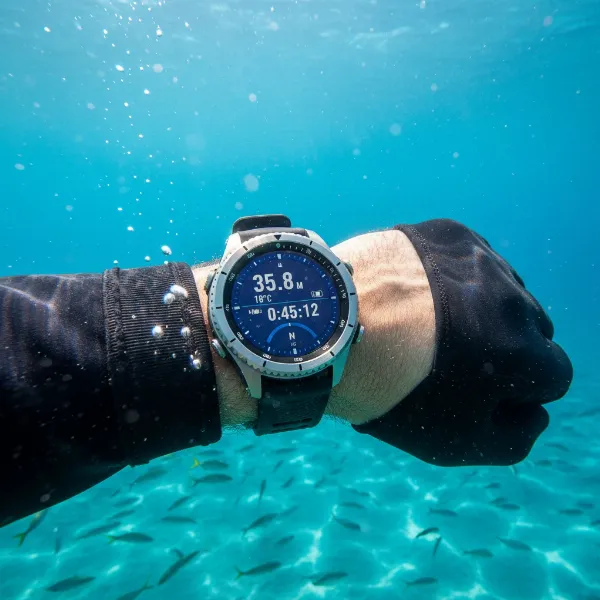 Diver checking advanced smartwatch underwater, displaying depth and water temperature.
Comparing Leading Smartwatch Brands
Several brands stand out in the smartwatch market for water sports, each bringing its unique strengths and ecosystem to the table. Let’s delve into some of the top contenders.
Apple Watch
The Apple Watch series, particularly the Ultra models, has become a strong contender for water sports enthusiasts, offering robust water resistance and advanced tracking capabilities.
- Pros: Excellent ecosystem integration for iPhone users, reliable swim tracking with automatic stroke detection, support for numerous third-party swimming apps, vibrant and bright display, sleek design. The Apple Watch Ultra and Ultra 2 offer exceptional water resistance, a depth gauge, and are suitable for recreational diving.
- Cons: Battery life, while improved in Ultra models, can still be a limitation for multi-day expeditions compared to some dedicated sports watches. Features are optimized for iPhone users, making them less suitable for Android users.
- Key Features: 5ATM water resistance (Series models), 10ATM and EN13319 certification for recreational diving (Ultra models), GPS, optical heart sensor, blood oxygen sensor, bright Retina display, large app ecosystem.
- Price: Ranges from mid-tier for Series models to premium for Ultra models.
Samsung Galaxy Watch
Samsung’s Galaxy Watch lineup offers a compelling experience for Android users, combining elegant design with comprehensive health and fitness tracking, including water activities.
- Pros: Seamless integration with Android, especially Samsung Galaxy phones, sleek and customizable designs, comprehensive health monitoring, good swim tracking with automatic exercise detection, often features bright AMOLED displays. The Galaxy Watch Ultra offers enhanced durability and water resistance.
- Cons: Battery life can be average compared to some sports-focused watches, and some advanced features are best utilized within the Samsung ecosystem.
- Key Features: 5ATM and IP68 water resistance, MIL-STD 810H durability, GPS, heart rate monitoring, body composition analysis, Wear OS integration for a wide range of apps.
- Price: Generally competitive, offering options from mid-range to high-end.
Garmin
Garmin is synonymous with outdoor sports and fitness, and their smartwatches excel in tracking, durability, and battery life, making them a top choice for serious water sports enthusiasts.
- Pros: Industry-leading GPS accuracy for open water, exceptional battery life (often weeks, not days), robust and rugged designs, extensive and detailed sport-specific metrics (including advanced swim dynamics), comprehensive training and recovery insights. Many models are 5ATM or 10ATM rated.
- Cons: Smartwatch features can be less developed compared to Apple or Samsung (e.g., fewer third-party apps, less polished smart assistant integration), and designs are often utilitarian rather than fashion-forward.
- Key Features: 5ATM or 10ATM water resistance, multi-band GPS, advanced swim metrics (SWOLF, stroke type, critical swim speed), heart rate monitoring, robust build quality, long-lasting transflective or AMOLED displays.
- Price: Varies widely, from mid-range dedicated swim watches to high-end multisport and outdoor adventure watches.
 Open water swimmer with smartwatch tracking performance in a lake.
Fitbit
Fitbit smartwatches and fitness trackers are known for their user-friendliness, focus on holistic health, and effective automatic activity tracking, including swimming.
- Pros: User-friendly interface, excellent for automatic swim tracking (laps, distance, calories), focus on overall health and wellness, often comfortable and lightweight for daily wear, good value.
- Cons: Primarily designed for pool swimming, tracking fewer advanced metrics compared to dedicated sports watches, limited third-party app support, and not always ideal for open water or high-velocity water sports due to less robust GPS or lower water resistance ratings on some models.
- Key Features: 5ATM water resistance, automatic exercise recognition, continuous heart rate tracking, sleep tracking, stress management tools, vibrant displays.
- Price: Generally affordable to mid-range.
Detailed Smartwatch Comparison Table
Choosing the right smartwatch requires a clear understanding of what each model offers. This table provides a quick overview of key specifications for popular smartwatches suitable for swimming and water sports.
| Feature / Model | Water Resistance | Battery Life (Typical Use) | Key Swim Features | Price Range (Approx.) | Suitable For |
|---|---|---|---|---|---|
| Apple Watch Ultra 2 | 10ATM (40m dive) | 36-72 hours | Depth gauge, water temp, dive computer, advanced pool/open water tracking, GPS | $799+ | Recreational diving, extreme water sports, triathlons |
| Apple Watch Series 9 | 5ATM (50m) | 18-36 hours | Pool/open water tracking, stroke detection, SWOLF, GPS, 3rd party apps | $399+ | Casual swimming, light water sports |
| Samsung Galaxy Watch Ultra | 10ATM, IP68, MIL-STD 810H | Up to 60 hours | Advanced swim tracking, GPS, robust build, comprehensive health features | $649+ | Advanced water sports, robust daily wear |
| Samsung Galaxy Watch 7 | 5ATM, IP68, MIL-STD 810H | Up to 30 hours | Pool/open water tracking, auto-detect workouts, GPS, health metrics | $299+ | Casual swimming, general fitness |
| Garmin Fenix 8 | 10ATM | Weeks (Smartwatch), Days (GPS) | Multisport, advanced swim dynamics (pool/open water), GPS, rugged, offline maps | $600+ | Endurance sports, adventure, triathlons |
| Garmin Forerunner 265 | 5ATM | Up to 13 days | Pool/open water tracking, detailed swim metrics, AMOLED display, GPS | $449+ | Triathletes, dedicated swimmers |
| Garmin Swim 2 | 5ATM | 7 days (Smartwatch), 3 days (GPS) | Dedicated swim tracking (pool/open water), stroke type, SWOLF, HR in water, GPS | $249+ | Dedicated pool/open water swimmers |
| Fitbit Versa 4 | 5ATM | 6+ days | Pool swim tracking (laps, distance, pace), heart rate, automatic recognition | $199+ | Casual pool swimmers, general fitness |
| Coros Pace 3 | 5ATM | Up to 17 days | Pool/open water, accurate GPS, underwater HR, lightweight, multi-sport | $229+ | Triathletes, serious swimmers, runners |
| Amazfit T-Rex 2 | 10ATM | Up to 24 days | Rugged, pool/open water tracking, stroke type, SWOLF, reliable stats, GPS | $229+ | Outdoor adventurers, rugged sports |
| Suunto Vertical | 10ATM | Up to 60 days | Pool/open water, dual-band GPS, extensive battery, TOPO maps, SWOLF | $600+ | Outdoor endurance, extreme sports, navigation |
Note: Battery life can vary significantly based on GPS usage, always-on display, and other features.
How to Choose the Right Smartwatch for Your Water Adventures
Selecting the perfect smartwatch involves weighing your needs against the features and capabilities of various models. Here’s a structured approach to guide your decision.
1. Define Your Usage Needs
Your primary activities will dictate the essential features your smartwatch must have.
- What is your main purpose for a smartwatch in water? Are you a casual lap swimmer, an open-water enthusiast, a triathlete, or someone who enjoys high-speed water sports or even recreational diving?
- Which features are most important to you? Do you need advanced swim metrics like SWOLF and stroke recognition, accurate open-water GPS mapping, robust heart rate monitoring in water, or a depth gauge for diving? Consider if you need a specific “Drill Mode” for kick sets or single-arm drills.
- What other activities will you use it for? Will it also serve as your daily fitness tracker, a running companion, or a navigation tool for hiking?
2. Set Your Budget
Smartwatches for water sports span a wide price range. Determine how much you are willing to invest.
- Entry-level (Under $250): Often fitness trackers or basic smartwatches with 5ATM water resistance, suitable for casual pool swimming and essential tracking.
- Mid-range ($250 – $500): Offer more advanced swim metrics, better GPS, and often better build quality or more comprehensive smartwatch features.
- High-end ($500+): Typically include dedicated sports watches or premium smartwatches with superior durability, advanced multisport features, exceptional battery life, and potentially diving capabilities.
3. Consider Brand and Ecosystem
The brand often dictates compatibility and overall user experience.
- Smartphone Compatibility: Apple Watch is best for iPhone users, while Samsung Galaxy Watch and other Wear OS devices integrate best with Android phones. Garmin, Coros, and Suunto often have their own robust app ecosystems that work across both iOS and Android.
- Familiarity and Preference: If you already own devices from a particular brand, sticking to that ecosystem can offer a more seamless experience.
4. Evaluate Other Crucial Factors
Beyond the primary considerations, several technical specifications and design elements significantly impact your experience.
- Water Resistance Rating:
- 5ATM (50 meters): Standard for swimming in pools and shallow open water. Most smartwatches fall into this category.
- 10ATM (100 meters): Suitable for high-speed water sports (e.g., jet skiing, surfing) and recreational diving up to specified depths.
- Note: Water resistance is not permanent and may decrease over time with normal wear.
- Battery Life: For long training sessions or multi-day trips without charging, a watch with extended battery life (especially in GPS mode) is crucial. Garmin and Coros often excel here.
- Display Visibility: Bright, high-resolution displays (like AMOLED) are great for clarity, but transflective displays (often found on Garmin) offer excellent visibility in direct sunlight and save battery. Ensure the screen is responsive even when wet.
- Durability and Build Quality: Look for rugged materials like titanium or reinforced polymers, and consider MIL-STD 810H certification for extreme resistance to drops, temperature, and water.
- Comfort and Fit: A comfortable strap and appropriate watch size are vital, especially during prolonged water activities. Nylon or silicone straps are often preferred for water sports.
- GPS Accuracy: For open water swimming or tracking water sports routes, reliable and accurate GPS is a non-negotiable feature. Dual-band GPS can offer enhanced precision.
- Heart Rate Monitoring: While optical heart rate sensors can be less accurate in water due to movement and water interference, many watches offer the option to pair with external chest straps for more precise data.
Frequently Asked Questions
What is the minimum water resistance needed for swimming?
For reliable swimming, a smartwatch should have a water resistance rating of at least 5 ATM (50 meters). This rating indicates it can withstand pressures equivalent to a depth of 50 meters, making it suitable for pool swimming and shallow water activities.
Can I track open water swimming with any waterproof smartwatch?
No, not all waterproof smartwatches can track open water swimming accurately. For open water, you need a smartwatch with built-in GPS that can accurately record your distance and map your route without relying on a pool’s fixed length.
How accurate is heart rate monitoring in water?
Optical heart rate sensors on smartwatches can sometimes be less accurate in water due to factors like water movement and light interference. For maximum accuracy during intense water workouts, some smartwatches allow pairing with an external chest strap heart rate monitor.
What is a SWOLF score?
SWOLF (Swim Golf) is a measure of swimming efficiency, calculated by adding your stroke count and the time it takes to swim a length. A lower SWOLF score generally indicates greater efficiency, making it a valuable metric for swimmers looking to improve their technique.