In an age where personal technology seamlessly integrates into every aspect of our lives, the humble period diary has evolved into a sophisticated digital companion: the smartwatch. Gone are the days of guesswork and manual charting; today’s smartwatches offer an unprecedented level of insight into your menstrual cycle, empowering you to understand your body’s unique rhythms like never before. From predicting your next period and fertile window to correlating symptoms with cycle phases, smartwatches are revolutionizing how we approach women’s health. This guide will walk you through the world of smartwatch-based cycle tracking, highlighting how these devices work, their numerous benefits, and how to choose the perfect one to enhance your wellness journey.
The Evolution of Cycle Tracking: Why Smartwatches are a Game Changer
For generations, women have sought ways to understand and predict their menstrual cycles, relying on everything from calendar markings to dedicated journaling. While these methods provided a basic framework, they often lacked the precision and holistic insights that modern technology can offer. Smartwatches have ushered in a new era of cycle tracking, transforming a once manual and often overlooked aspect of health into a dynamic, data-rich experience.
The integration of advanced sensors and intelligent algorithms allows smartwatches to move beyond simple date logging. They continuously collect biometric data, such as body temperature fluctuations, resting heart rate, heart rate variability, and sleep patterns, which are all intricately linked to hormonal shifts throughout the menstrual cycle. This constant stream of personal data, combined with your manual input, enables smartwatches to generate surprisingly accurate predictions and offer a deeper understanding of how your cycle impacts your overall well-being. The result is a proactive approach to health, where you can anticipate physical and emotional changes, optimize your fitness routines, and make informed decisions about reproductive health with confidence.
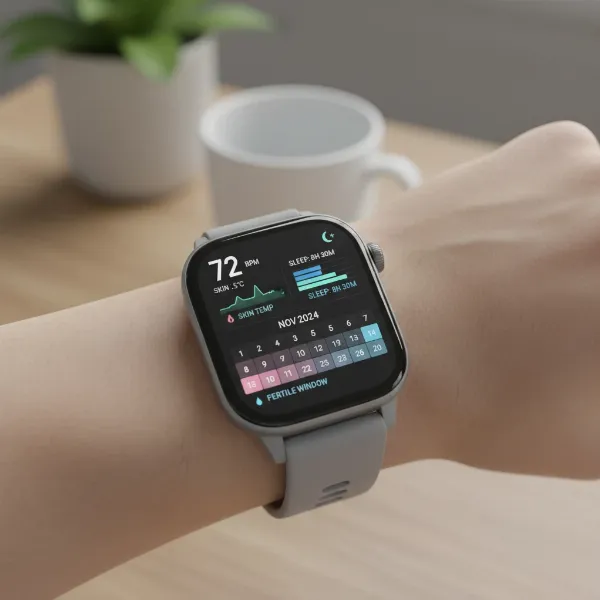 Smartwatch displaying various biometric data points used for menstrual cycle tracking.
How Smartwatches Track Your Menstrual Cycle: Behind the Tech
The magic of smartwatch cycle tracking lies in its blend of user input and advanced sensor technology. While the exact methods vary between brands, the core principles remain consistent, providing a comprehensive view of your menstrual health.
Manual Input & Symptom Logging
|
Our Picks for the Best Smartwatch in 2026
As an Amazon Associate I earn from qualifying purchases.
|
||
| Num | Product | Action |
|---|---|---|
| 1 | WHOOP 5.0/MG Activity Tracker - 12 Month Membership - Health and Fitness Wearable – 24/7 Activity and Sleep Tracker, Personalized Coaching, Menstrual Cycle Insights – 14+ Days Battery Life |

|
| 2 | Smart Watch for Men, 120 Sports Modes Smartwatch with 1.83" HD Touchsreen, IP67 Waterproof, Sleep Monitor, Bluetooth Call & Music Control Fitness Watch for Android/iPhone (Black) |
|
| 3 | Smart Watch for Men Women Compatible with iPhone Samsung Android Phone 1.83 inch Full Touch Screen IP68 Waterproof Bluetooh Fitness Tracker Heart Rate/Sleep Monitor, Black |
|
| 4 | Smart Watch for Men, 120+ Sports Modes Smartwatch with 1.83" HD Touchsreen, Sleep Monitor, IP67 Waterproof, Bluetooth Call & Music Control Fitness Watch for iPhone/Android Black |
|
| 5 | Apple Watch Series 11 [GPS 46mm] Smartwatch with Jet Black Aluminum Case with Sport Band - M/L. Sleep Score, Fitness Tracker, Health Monitoring, Always-On Display, Water Resistant |
|
| 6 | Smart Watch with Alexa Built-in, 1.83" HD Touchscreen Fitness Tracker with Bluetooth Calling, Fitness Watch with Heart Rate/Sleep Monitor, 120+ Sports Modes, IP68 Waterproof Smartwatch for Android iOS |
|
| 7 | SAMSUNG Galaxy Watch 7 40mm Bluetooth AI Smartwatch w/Energy Score, Wellness Tips, Heart Rate Tracking, Sleep Monitor, Fitness Tracker, 2024, Cream [US Version, 1Yr Manufacturer Warranty] |
|
| 8 | Smart Watch, 2026 AMOLED 1.43" Fitness Smartwatch for Men Women, Bluetooth 5.4 Call, 130+Sports Modes, 60+Days Flashlight, Heart Rate/Sleep Monitor, IP68 Waterproof Activity Tracker for Android iOS |
|
| 9 | Amazfit Bip 6 Smart Watch 46mm, 14 Day Battery, 1.97" AMOLED Display, GPS & Free Maps, AI, Bluetooth Call & Text, Health, Fitness & Sleep Tracker, 140+ Workout Modes, 5 ATM Water-Resistance, Black |
|
| 10 | Apple Watch Series 11 [GPS 42mm] Smartwatch with Rose Gold Aluminum Case with Light Blush Sport Band - S/M. Sleep Score, Fitness Tracker, Health Monitoring, Always-On Display, Water Resistant |
|
At its foundation, smartwatch cycle tracking still relies on your active participation. You typically begin by logging the start and end dates of your periods within the watch’s companion app. Over time, this historical data forms the basis for initial predictions. Beyond basic period dates, most apps allow you to log a wide array of symptoms, including mood swings, headaches, cramps, energy levels, discharge consistency, and even sexual activity. This detailed symptom logging helps you identify recurring patterns and understand how different phases of your cycle influence your daily life.
Advanced Sensor Data
This is where smartwatches truly differentiate themselves from traditional period tracking apps. Modern wearables leverage a suite of sensors to collect passive, continuous biometric data that provides deeper insights:
- Wrist Temperature: Many high-end smartwatches, like the Apple Watch Series 8 and newer Samsung Galaxy Watch models, feature sophisticated wrist temperature sensors. Worn overnight, these sensors detect subtle shifts in your basal body temperature (BBT). A sustained rise in BBT often indicates ovulation has occurred, allowing the watch to provide retrospective ovulation estimates and refine period predictions. While wrist temperature isn’t identical to core body temperature, its trends can reliably correlate with hormonal changes.
- Heart Rate & Heart Rate Variability (HRV): Hormonal fluctuations throughout your cycle can influence your resting heart rate (RHR) and heart rate variability (HRV). For instance, a slight increase in RHR and a decrease in HRV are often observed during the luteal phase (after ovulation). Smartwatches continuously monitor these metrics, using these subtle changes as additional data points to identify cycle phases.
- Sleep & Respiration: Your sleep patterns and respiratory rate can also be affected by hormonal shifts. Smartwatches track sleep stages, duration, and even breathing rate during the night. By analyzing these parameters in conjunction with other data, the device can provide a more holistic picture of your body’s state throughout your cycle.
Predictive Algorithms
All this collected data – both manual and automatic – feeds into sophisticated algorithms, often developed in collaboration with women’s health experts or integrated with FDA-cleared fertility tracking platforms like Natural Cycles. These algorithms learn your unique cycle patterns, gradually improving the accuracy of predictions for your next period, fertile window, and estimated ovulation day. The more consistently you wear your smartwatch and log your symptoms, the more personalized and precise these insights become.
Types of Smartwatches for Menstrual Tracking
The smartwatch market offers a diverse range of devices, each catering to different preferences and priorities. When considering a smartwatch for menstrual tracking, they can generally be categorized based on their primary focus:
Sports & Fitness Smartwatches
These smartwatches are designed for active individuals who prioritize robust fitness tracking alongside health monitoring. Brands like Garmin excel in this category, offering extensive features for various sports, GPS tracking, and advanced performance metrics.
- Pros: Highly durable, excellent battery life (often several days to weeks), comprehensive sports modes, and detailed health tracking that can be optimized with cycle-phase insights. Garmin Connect offers guidance on nutrition and training based on your cycle.
- Cons: Designs can be bulkier or more “sporty,” which may not appeal to everyone for everyday wear. Advanced health features like temperature tracking might be limited to newer, higher-end models.
- Best for: Athletes, outdoor enthusiasts, or anyone who wants their cycle tracking to integrate seamlessly with an active lifestyle and optimize their training around their hormonal phases.
Fashion & Everyday Smartwatches
This category emphasizes style, seamless integration with your smartphone, and general health and wellness features. Fitbit’s Versa and Sense lines, along with some lighter models from Samsung, often fit here. They balance aesthetic appeal with practical smart features and basic health insights.
- Pros: Sleek and stylish designs, comfortable for all-day wear, good for notifications and daily conveniences, user-friendly apps for logging periods and symptoms. Often more affordable entry points.
- Cons: Battery life might be shorter compared to fitness-focused watches. Advanced sensor-based cycle tracking (like wrist temperature) might be less prevalent or less precise in older or budget models.
- Best for: Individuals who value a balanced blend of style, smartphone connectivity, and essential health monitoring, including basic period tracking and symptom logging.
Advanced Health & Wellness Smartwatches
These smartwatches prioritize comprehensive health insights, often featuring advanced sensors for more precise data collection, particularly for cycle tracking and fertility awareness. Apple Watch Series 8 and newer, and the latest Samsung Galaxy Watch series, are prime examples. They often include temperature sensors and sophisticated algorithms for enhanced period and ovulation prediction.
- Pros: Leading-edge health sensors (e.g., wrist temperature for ovulation estimates), deep integration with comprehensive health ecosystems, and robust app support (including third-party fertility apps like Natural Cycles). Can offer detailed correlations between cycle phases and sleep, stress, and recovery.
- Cons: Can be more expensive. Battery life might be shorter due to power-intensive features and bright displays, sometimes requiring daily charging.
- Best for: Those seeking the most detailed and accurate cycle tracking, fertility planning support, and a holistic view of how their cycle impacts various health metrics, or individuals managing conditions like PCOS or PMS.
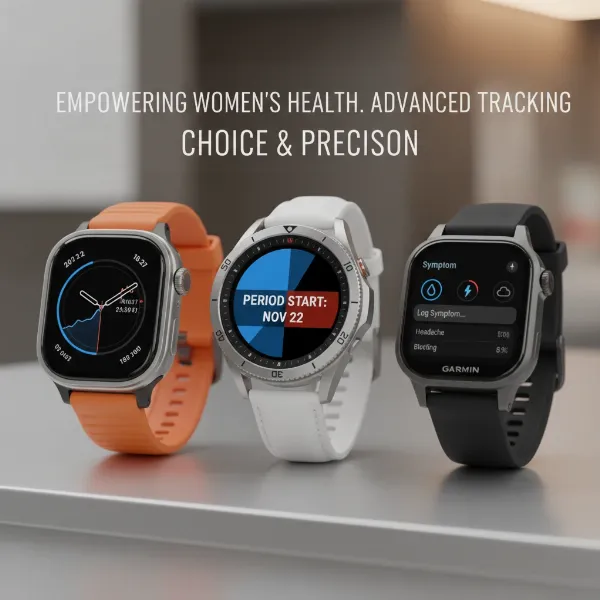 Three different smartwatch models (Apple, Samsung, Garmin) displayed, highlighting their cycle tracking interfaces.
Top Smartwatch Brands for Menstrual Cycle Tracking: A Deep Dive
Several leading smartwatch brands have embraced menstrual cycle tracking, integrating it into their health platforms with varying levels of sophistication. Here’s a closer look at some of the most popular options:
Apple Watch
The Apple Watch, particularly Series 8 and newer models, offers robust cycle tracking capabilities through its built-in Cycle Tracking app.
- Key Features: Manual logging of periods and symptoms, wrist temperature sensor (Series 8 and later) which provides retrospective ovulation estimates and improves period predictions when worn overnight, heart rate data integration. It can also integrate with FDA-cleared apps like Natural Cycles for advanced fertility awareness.
- Pros: Seamless integration with the Apple Health ecosystem, user-friendly interface, strong privacy controls, and the ability to combine manual entries with advanced sensor data for more accurate insights.
- Cons: Shorter battery life (typically 18-36 hours) can make continuous overnight temperature tracking challenging if charging daily. Only compatible with iPhones.
- Price: Premium range.
Samsung Galaxy Watch
Samsung’s Galaxy Watch series, especially the Galaxy Watch 5, 6, and 7, provides comprehensive menstrual cycle tracking via the Samsung Health app.
- Key Features: Manual logging of period dates and symptoms, an infrared temperature sensor that monitors wrist temperature during sleep to predict ovulation and enhance period predictions. Samsung’s cycle tracking is powered by Natural Cycles’ algorithm, ensuring robust research backing.
- Pros: Strong integration with the Samsung Health ecosystem, good balance of smart features and health tracking, and the temperature sensor specifically for ovulation prediction. Newer models (Galaxy Watch 7) reportedly integrate Natural Cycles’ algorithm directly without an extra subscription.
- Cons: Some reviews for earlier temperature-tracking models (like Galaxy Watch 6) suggested measurements needed more precision. Optimal performance requires consistent overnight wear and enabling sleep mode.
- Price: Mid to premium range.
Garmin
Garmin smartwatches, known for their strong fitness and outdoor capabilities, also offer reliable menstrual cycle tracking through the Garmin Connect app.
- Key Features: Manual logging of period start/end, cycle length, and a wide range of symptoms (mood, discharge, ovulation, sexual activity). Compatible devices track skin temperature during sleep for more accurate period predictions and retrospective ovulation estimates. Garmin Connect provides guidance on how your cycle phases might affect nutrition, training, and general health.
- Pros: Excellent battery life (often several days to weeks), robust fitness tracking, durable designs, and comprehensive health insights tailored for active users. The app offers a helpful calendar view and customizable reminders.
- Cons: Designs can be more geared towards sports, which may not appeal to all. Some older models might not have advanced temperature sensors.
- Price: Mid to premium range, with models across different price points.
Fitbit
Fitbit devices, including the Sense and Versa series, offer accessible and user-friendly menstrual cycle tracking.
- Key Features: Allows users to log periods, track symptoms, predict periods, and receive notifications about their menstrual cycle and fertile windows. It helps users link cycle phases with mood, energy, and stress levels through the Fitbit app.
- Pros: Generally more affordable options, strong focus on overall wellness (sleep, stress, activity), and intuitive app interface. Good for those new to cycle tracking via wearables.
- Cons: Historically, Fitbit relied more on manual input than advanced sensor data for cycle prediction, though newer models incorporate skin temperature trends.
- Price: Entry to mid-range.
Detailed Comparison of Smartwatch Cycle Tracking Features
To help you navigate the options, here’s a detailed comparison of key features across popular smartwatches for menstrual cycle tracking:
| Smartwatch Brand/Series | Key Cycle Tracking Features | Temperature Sensor | App Integration | Price Range | Battery Life (Typical Use) |
|---|---|---|---|---|---|
| Apple Watch (Series 8+) | Manual logging, retrospective ovulation estimates, symptom tracking, period prediction. | Yes (Wrist) | Apple Health, Natural Cycles | Premium | 18-36 hours |
| Samsung Galaxy Watch (5, 6, 7) | Manual logging, ovulation prediction, symptom tracking, period prediction. | Yes (Infrared) | Samsung Health, Natural Cycles | Mid-Premium | 1-2 days |
| Garmin (Compatible Models) | Manual logging, period & ovulation predictions, symptom logging, training/nutrition guidance. | Yes (Skin) | Garmin Connect | Mid-Premium | 5-14+ days |
| Fitbit (Sense, Versa) | Manual logging, period predictions, symptom tracking, link to mood/energy. | Yes (Skin) | Fitbit App | Entry-Mid | 4-6 days |
| **Oura Ring (Gen 3+)*** | Accurate period & ovulation prediction, detailed temperature tracking, holistic health insights. | Yes (Finger) | Oura App, Natural Cycles | Premium (+subscription) | 5-7 days |
Note: The Oura Ring is a smart ring, not a smartwatch, but is included for its leading temperature-based cycle tracking capabilities and is often considered a strong alternative for those prioritizing discreet, accurate cycle and sleep tracking.
Choosing Your Ideal Smartwatch for Cycle Tracking
Selecting the right smartwatch for menstrual cycle tracking involves considering your personal needs, lifestyle, and priorities.
Identify Your Needs
Start by asking yourself what you hope to gain from tracking your cycle with a smartwatch.
- Fertility Planning: Are you trying to conceive or avoid pregnancy? Devices with accurate temperature sensors and FDA-cleared integrations (like Natural Cycles) will be paramount for reliable ovulation prediction.
- Symptom Management: Do you want to understand how your cycle impacts your mood, energy, or specific physical symptoms (e.g., cramps, headaches) to better manage them? Look for comprehensive symptom logging and clear data visualization in the app.
- Fitness Optimization: Are you an athlete or highly active individual looking to adapt your training and recovery to your hormonal phases? Garmin’s insights on training and nutrition based on cycle phases might be a key feature for you.
- Overall Health Awareness: Do you simply want a better understanding of your body and its rhythms for general wellness? Most smartwatches with basic cycle tracking will serve this purpose well.
Budget Considerations
Smartwatches range significantly in price. You can find entry-level fitness trackers with basic period logging for a modest cost, while advanced health-focused smartwatches with precise temperature sensors and premium features will command a higher price. Determine how much you’re willing to invest based on the importance of specific features to your needs.
Brand Ecosystem and Compatibility
Your current smartphone ecosystem plays a significant role. Apple Watches are exclusively for iPhones, while Samsung Galaxy Watches pair best with Android phones, particularly Samsung devices. Fitbit and Garmin typically offer broader compatibility with both iOS and Android. Choosing a device that integrates seamlessly with your existing technology will enhance your user experience.
Key Features to Look For
- Temperature Sensors: For the most accurate ovulation and period predictions, a smartwatch with a dedicated wrist or skin temperature sensor (like Apple Watch Series 8+, Samsung Galaxy Watch 5/6/7, or Garmin) is highly recommended.
- Comprehensive Symptom Logging: The ability to record various symptoms, moods, and activities helps the app learn your unique patterns and provides richer insights.
- Predictive Accuracy: While no wearable is 100% accurate, look for brands that leverage advanced algorithms and biometric data to refine their predictions over time.
- App Quality and User Interface: An intuitive, easy-to-read companion app that clearly visualizes your cycle data is crucial for practical use.
- Privacy: Given the sensitive nature of menstrual data, choose a brand with a strong commitment to data privacy, encrypted storage, and clear controls over what information is shared.
Other Factors
- Comfort and Design: Since you’ll ideally be wearing the smartwatch day and night for optimal data collection, comfort is paramount. Consider size, weight, and strap materials.
- Battery Life: Longer battery life reduces the frequency of charging, ensuring more consistent data collection, especially for overnight temperature tracking.
- Water Resistance: Important for daily wear, showers, and swimming, especially for active individuals.
- Medical Disclaimer: Remember that smartwatches are wellness tools, not medical devices. Always consult a healthcare professional for diagnosis, treatment, or critical health decisions.
Conclusion
Embracing a smartwatch for menstrual cycle tracking offers an empowering path to understanding and managing your health with unprecedented ease and accuracy. By combining your personal input with sophisticated biometric data, these wearables provide invaluable insights into your cycle’s influence on everything from energy levels and mood to fertility and fitness. Whether you’re aiming for precise ovulation prediction, better symptom management, or simply a deeper connection with your body’s natural rhythms, there’s a smartwatch perfectly suited to your needs. Take control of your menstrual health journey – the future of wellness is quite literally at your fingertips.
Ready to unlock the secrets of your cycle? Which smartwatch feature do you think would make the biggest difference in your daily life?
Frequently Asked Questions
How accurate is smartwatch cycle tracking?
Smartwatch cycle tracking accuracy has significantly improved, especially with the integration of temperature sensors and advanced algorithms. When combined with consistent user input of period dates and symptoms, these devices can offer surprisingly precise predictions for your period and fertile window. However, they should not be used as the sole method for contraception or for diagnosing medical conditions.
Can smartwatches predict ovulation?
Yes, many modern smartwatches can provide retrospective ovulation estimates and predict fertile windows. Devices like the Apple Watch Series 8+ and Samsung Galaxy Watch 5, 6, and 7 series use overnight wrist or skin temperature changes, which typically rise after ovulation, along with other biometric data to make these predictions. Consistent wear and data logging enhance their accuracy over time.
Is cycle tracking data private?
Most reputable smartwatch manufacturers emphasize data privacy, often using encrypted storage for sensitive health information. They typically provide users with control over what data is shared with third-party apps or contacts. Always review the privacy policy of your chosen device and app to understand how your data is collected, stored, and used.
Can smartwatches help with irregular periods?
Smartwatches can be a valuable tool for individuals with irregular periods by helping to identify patterns and track symptoms. While they may not be able to predict irregular cycles with the same precision as regular ones, the continuous data collection of temperature, heart rate, and sleep can still provide valuable insights into your body’s unique fluctuations, which you can then share with a healthcare professional for further guidance.
Do all smartwatches have period tracking?
No, not all smartwatches include menstrual cycle tracking features. While it has become a common feature in many popular models from brands like Apple, Samsung, Garmin, and Fitbit, some basic or older smartwatches may not offer this functionality. If cycle tracking is a priority for you, it’s essential to check the specifications and features of any smartwatch before purchasing.