In an increasingly connected world, keeping our devices powered is a constant concern. From smartphones to smartwatches, the debate between wireless charging and traditional pin (wired) charging is more relevant than ever. Each method offers distinct advantages and disadvantages that cater to different user priorities, and understanding these can help you make an informed decision for your digital lifestyle. Are you prioritizing speed, convenience, or battery longevity? Let’s delve into the intricacies of both technologies to determine which one truly stands out.
Exploring Common Charging Methods
The way we power our gadgets has evolved significantly. While the fundamental goal remains the same – transferring energy to a battery – the methods by which this occurs differ greatly.
Wireless Charging: The Cordless Future
Wireless charging, often associated with the Qi standard, operates on the principle of electromagnetic induction. When a compatible device is placed on a charging pad, an electromagnetic field is created, inducing a current in the device’s receiver coil to charge its battery. This eliminates the need for physical cables, offering a seamless and clutter-free experience.
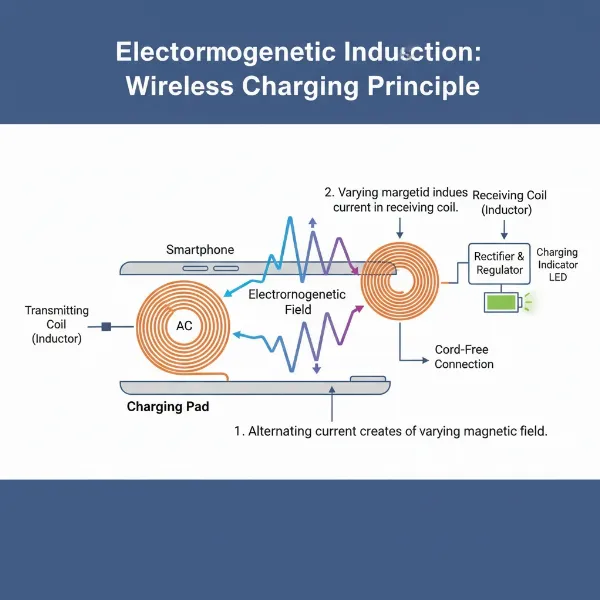 Diagram showing how wireless charging works using electromagnetic induction
- Pros:
- Unmatched Convenience: Simply place your device on the charging pad; no fumbling with cables or connectors. This is ideal for desks, bedside tables, or quick top-ups throughout the day.
- Reduced Port Wear and Tear: Eliminates the constant plugging and unplugging, significantly extending the lifespan of your device’s charging port.
- Tidier Environment: Contributes to a cleaner, more organized space by reducing cable clutter.
- Multi-Device Charging: Some advanced wireless pads can simultaneously charge multiple compatible devices like smartphones, smartwatches, and earbuds.
- Cons:
- Slower Charging Speeds: Generally, wireless charging is slower than its wired counterpart, though recent advancements like the Qi2 standard are narrowing this gap, offering speeds up to 25W.
- Lower Energy Efficiency: Wireless charging is typically 70-80% efficient, meaning more energy is lost as heat during transfer compared to wired charging’s 90-95% efficiency.
- Heat Generation: The conversion of energy into an electromagnetic field and back generates more heat, which can, over prolonged and continuous use, slightly impact battery longevity. However, modern devices and certified chargers incorporate safety features to manage this.
- Placement Limitations: Devices must be properly aligned with the charging coil for optimal performance, and thick or magnetic cases can sometimes interfere with power transfer.
- Higher Initial Cost: Quality wireless charging pads can be more expensive upfront than basic wired chargers.
|
Our Picks for the Best Smartwatch in 2026
As an Amazon Associate I earn from qualifying purchases.
|
||
| Num | Product | Action |
|---|---|---|
| 1 | Smart Watch for Men, 120+ Sports Modes Smartwatch with 1.83" HD Touchsreen, Sleep Monitor, IP67 Waterproof, Bluetooth Call & Music Control Fitness Watch for iPhone/Android Black |

|
| 2 | Amazfit Bip 6 Smart Watch 46mm, 14 Day Battery, 1.97" AMOLED Display, GPS & Free Maps, AI, Bluetooth Call & Text, Health, Fitness & Sleep Tracker, 140+ Workout Modes, 5 ATM Water-Resistance, Black |
|
| 3 | Smart Watch, 2026 AMOLED 1.43" Fitness Smartwatch for Men Women, Bluetooth 5.4 Call, 130+Sports Modes, 60+Days Flashlight, Heart Rate/Sleep Monitor, IP68 Waterproof Activity Tracker for Android iOS |
|
| 4 | Smart Watch for Men, 120 Sports Modes Smartwatch with 1.83" HD Touchsreen, IP67 Waterproof, Sleep Monitor, Bluetooth Call & Music Control Fitness Watch for Android/iPhone (Black) |
|
| 5 | Apple Watch Series 11 [GPS 46mm] Smartwatch with Jet Black Aluminum Case with Sport Band - M/L. Sleep Score, Fitness Tracker, Health Monitoring, Always-On Display, Water Resistant |
|
| 6 | SAMSUNG Galaxy Watch 7 40mm Bluetooth AI Smartwatch w/Energy Score, Wellness Tips, Heart Rate Tracking, Sleep Monitor, Fitness Tracker, 2024, Cream [US Version, 1Yr Manufacturer Warranty] |
|
| 7 | Smart Watch with Alexa Built-in, 1.83" HD Touchscreen Fitness Tracker with Bluetooth Calling, Fitness Watch with Heart Rate/Sleep Monitor, 120+ Sports Modes, IP68 Waterproof Smartwatch for Android iOS |
|
| 8 | WHOOP 5.0/MG Activity Tracker - 12 Month Membership - Health and Fitness Wearable – 24/7 Activity and Sleep Tracker, Personalized Coaching, Menstrual Cycle Insights – 14+ Days Battery Life |
|
| 9 | Apple Watch Series 11 [GPS 42mm] Smartwatch with Rose Gold Aluminum Case with Light Blush Sport Band - S/M. Sleep Score, Fitness Tracker, Health Monitoring, Always-On Display, Water Resistant |
|
| 10 | Smart Watch for Men Women Compatible with iPhone Samsung Android Phone 1.83 inch Full Touch Screen IP68 Waterproof Bluetooh Fitness Tracker Heart Rate/Sleep Monitor, Black |
|
Pin (Wired) Charging: The Tried and True Method
Pin charging, also known as wired or traditional charging, involves a direct physical connection between a power source and your device via a cable. Connectors like USB-C and Apple’s Lightning cable are common, providing a direct electrical current for charging.
- Pros:
- Superior Charging Speed: Wired charging, especially with modern fast-charging technologies (e.g., USB-C Power Delivery), is typically much faster and more efficient, making it ideal for quick power-ups.
- Higher Energy Efficiency: With an efficiency of 90-95%, wired charging minimizes power loss during the process, making it more energy-efficient and generating less heat.
- Reliability and Consistency: A direct physical connection ensures a stable and reliable charge, unaffected by device placement or minor obstructions.
- Cost-Effective and Universal: Wired solutions are generally less expensive and more widely available, with universal standards like USB-C enhancing compatibility across various devices.
- Lower Heat Output: The direct transfer of electricity results in less heat generation, which is generally better for maintaining long-term battery health.
- Cons:
- Cable Clutter and Management: Wires can lead to messy spaces, tangles, and the hassle of finding the right cable.
- Wear and Tear: Constant plugging and unplugging can cause physical wear to charging ports and cables, leading to eventual damage or fraying and requiring replacements.
- Limited Mobility: Devices are tethered to the charging point, limiting your movement while they power up.
- Safety Hazards: Damaged cables can pose tripping hazards or, in rare cases, electrical shock risks.
Magnetic Pogo Pin Charging: A Hybrid Solution
For certain specialized devices, particularly smartwatches, magnetic pogo pin charging offers a blend of wired reliability and some wireless convenience. This method uses spring-loaded pins that magnetically connect to contacts on the device, providing a direct electrical connection without the need for traditional plugs.
- Pros:
- Fast Charging: Similar to wired charging, the direct metal-to-metal contact allows for rapid power transfer with minimal energy loss.
- Enhanced Durability and Waterproofing: The device side can be designed as a flat, solid surface, making it easier to achieve high waterproof ratings (e.g., IP68).
- Space Saving and Cost-Effective: Can simplify the device’s internal structure, saving space and potentially lowering manufacturing costs for smartwatches.
- Zero-Force Mating: Magnets ensure easy and precise alignment, reducing friction wear.
- Cons:
- Contact Oxidation: Over time, the exposed metal contacts can oxidize, potentially leading to poor connection and reduced charging efficiency.
- Stain Accumulation: Dirt, sweat, or debris can accumulate around the contacts if not regularly cleaned, affecting performance.
- Non-Universal: Chargers are typically proprietary to specific devices, lacking the universal compatibility of USB-C.
Impact on Battery Health
A common concern for users is how different charging methods affect their device’s battery longevity. Lithium-ion batteries, prevalent in most modern gadgets, are sensitive to heat.
“Wired charging is around 95% efficient, while wireless charging is typically 70-80% efficient – sometimes higher under ideal conditions,” explains Kent Griffith, an Assistant Professor of Chemistry and Biochemistry at the University of California, San Diego. “Any time energy is lost, it’s lost as heat, and heat is what can speed up battery aging.”
While wireless charging does generate more heat due to energy conversion, modern smartphones and certified charging pads (like those adhering to Qi standards) are equipped with sophisticated battery management systems (BMS). These systems actively monitor and regulate voltage, current, and temperature, preventing overcharging and excessive heat. Experts agree that while wireless charging might cause a device to run slightly warmer, the real-world impact on overall battery lifespan for most users is minimal and should not significantly affect daily usage. However, for those keen on maximizing every percentage point of battery health over many years, the cooler operation of wired charging could offer a marginal advantage.
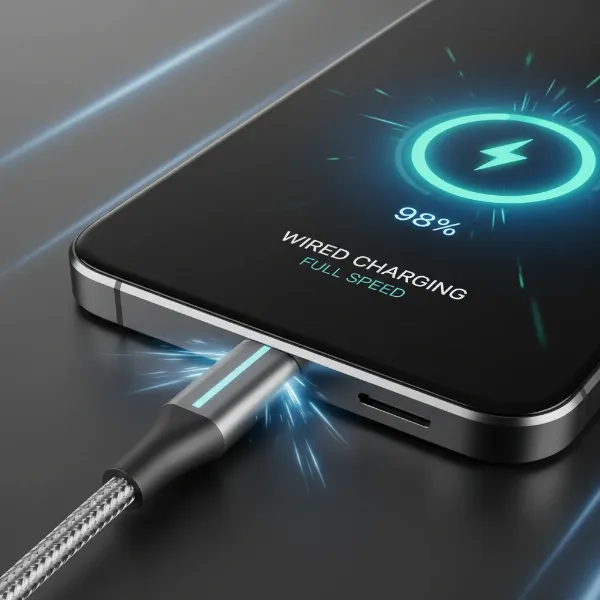 Close-up of a smartphone being fast charged with a USB-C cable
Key Differences at a Glance
| Feature | Wireless Charging (Qi Standard) | Pin (Wired) Charging (e.g., USB-C) | Magnetic Pogo Pin Charging (Smartwatches) |
|---|---|---|---|
| Convenience | High (place and go, no cables) | Moderate (needs cable, can be messy) | High (magnetic snap, no fiddling with ports) |
| Charging Speed | Moderate (improving, up to 25W with Qi2) | High (very fast, up to 240W with advanced wired) | High (direct contact, fast) |
| Efficiency | 70-80% (energy lost as heat) | 90-95% (minimal loss) | Near 100% (direct contact) |
| Heat Generation | Higher | Lower | Lower (direct contact) |
| Port Wear | Minimal (no physical connection) | High (constant plugging/unplugging) | Minimal (magnetic, no friction) |
| Cost | Higher initial cost for pads | Lower initial cost for cables/adapters | Varies, often integrated into device ecosystem |
| Mobility | Limited to charging pad vicinity | Limited by cable length | Limited by cable length (charger to power source) |
| Compatibility | Qi-compatible devices only | Wide, especially with USB-C standard | Device-specific |
| Waterproofing | Good (sealed device) | Depends on port design | Excellent (device can be completely sealed) |
How to Choose the Right Charging Method for You
The “better” charging method ultimately depends on your individual needs, lifestyle, and priorities.
1. Identify Your Usage Needs
- For Speed Demons: If you need rapid power-ups, especially for devices with large batteries, wired charging remains the undisputed champion. It’s perfect for quick boosts before heading out or when time is critical.
- For Convenience Seekers: If a clutter-free desk and effortless charging are paramount, wireless charging offers unparalleled ease. It’s ideal for casual charging throughout the day or overnight.
- For Smartwatch Users: The robustness and direct connection of magnetic pogo pins can be highly beneficial for smartwatches, offering a balance of fast charging and convenience while maintaining water resistance.
2. Consider Your Budget
Wired charging solutions are generally more affordable, especially for basic cables and adapters. Wireless charging pads, particularly those with higher wattage and multi-device capabilities, often come with a higher price tag.
3. Evaluate Device Compatibility and Future-Proofing
Ensure your device supports wireless charging (look for Qi compatibility). While USB-C has become a universal standard for wired charging, wireless charging standards are also evolving, with Qi2 promising enhanced features. For smartwatches, check the specific charging solution provided by the manufacturer.
4. Other Factors to Weigh
- Portability: Wired chargers (just a cable) are highly portable. Wireless pads require a flat surface and are less mobile unless they are integrated into car mounts or furniture.
- Aesthetics: Wireless charging contributes to a minimalist aesthetic, reducing cable mess.
- Environmental Concerns: While both methods consume electricity, wireless charging’s lower efficiency means it uses slightly more power to achieve the same charge.
Ultimately, both wireless and pin charging have carved out essential niches in our tech-driven lives. Wired charging excels in speed, efficiency, and cost-effectiveness, while wireless charging champions convenience and reduces wear on physical ports. For specialized devices like smartwatches, magnetic pogo pins offer a compelling hybrid. Many users find the optimal solution involves integrating both methods into their routine, leveraging the strengths of each for different situations.
Frequently Asked Questions
Is wireless charging safe for my phone’s battery?
Yes, wireless charging is generally safe for your phone’s battery. Modern devices and Qi-certified chargers incorporate advanced battery management systems that prevent overcharging and manage heat. While it generates slightly more heat than wired charging, the impact on long-term battery health for typical usage is minimal.
How much faster is wired charging compared to wireless?
Wired charging is significantly faster, especially with current fast-charging technologies. While wireless charging speeds are improving (up to 25W with Qi2), wired solutions can deliver much higher wattages, leading to quicker full charges.
Can I use my phone while it’s wirelessly charging?
Yes, you can use your phone while it’s wirelessly charging. However, excessive use might slightly increase the heat generated, as the phone’s processor is also active, which could marginally affect charging speed and battery temperature.
Does wireless charging consume more electricity?
Yes, due to the inherent energy conversion process, wireless charging is less efficient than wired charging (70-80% vs. 90-95%). This means it consumes slightly more electricity from the wall outlet to deliver the same amount of charge to your device’s battery.
Why do some smartwatches use pogo pin charging instead of wireless?
Some smartwatches use pogo pin charging for its benefits in waterproofing, cost-effectiveness, and direct, efficient power transfer. This method can simplify the watch’s design and ensure a robust connection, which is crucial for devices exposed to water and sweat.