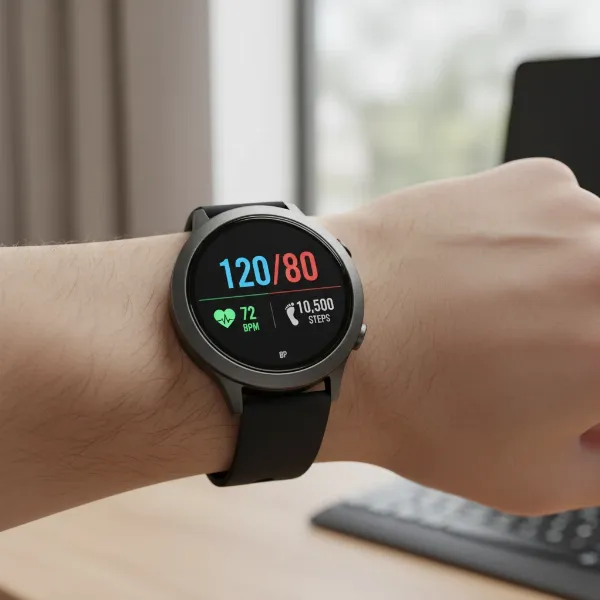
For serious athletes, a smartwatch isn’t just a gadget—it’s an essential training partner, offering critical insights and motivation. When it comes to performance on the wrist, two names consistently lead the pack: Garmin and Apple Watch. But for those pushing their limits, which one truly rises to the occasion? This comprehensive guide will dissect their capabilities, helping you determine which smartwatch best aligns with your athletic demands and lifestyle.
Understanding Smartwatch Categories for Athletes
The landscape of smartwatches for athletes isn’t uniform. While both Garmin and Apple Watch track fitness, their core philosophies and feature sets cater to slightly different needs.
Sports-Focused Smartwatches (Garmin)
Garmin has built its reputation on creating devices designed from the ground up for sports and outdoor activities. These watches are robust, data-rich, and built to withstand demanding conditions.
- Pros: Garmin offers unrivaled battery life, a vast array of advanced training metrics, and a rugged design often featuring physical buttons that are easier to operate during intense workouts or when wet. Its multi-sport functionality is exceptional.
- Cons: Generally, Garmin watches come with fewer “smart” features compared to Apple Watch, and integration with a smartphone (especially iPhones) is not as seamless for everyday tasks.
- Key Features: Athletes benefit from detailed analytics like VO2 Max, Heart Rate Variability (HRV), Body Battery™ energy monitoring, comprehensive training load and recovery advisors, and race time predictors. Many models include advanced multi-band GPS for superior accuracy, offline mapping, and specific profiles for nearly 80 different activities, including trail running, cycling power metrics, and swim stroke detection.
- Ideal For: Garmin is the go-to for endurance athletes, ultramarathoners, triathletes, hikers, and outdoor adventurers who prioritize deep physiological data, navigation, and extended battery life over daily smartphone conveniences.
|
Our Picks for the Best Smartwatch in 2026
As an Amazon Associate I earn from qualifying purchases.
|
||
| Num | Product | Action |
|---|---|---|
| 1 | Smart Watch for Men, 120 Sports Modes Smartwatch with 1.83" HD Touchsreen, IP67 Waterproof, Sleep Monitor, Bluetooth Call & Music Control Fitness Watch for Android/iPhone (Black) |

|
| 2 | Amazfit Bip 6 Smart Watch 46mm, 14 Day Battery, 1.97" AMOLED Display, GPS & Free Maps, AI, Bluetooth Call & Text, Health, Fitness & Sleep Tracker, 140+ Workout Modes, 5 ATM Water-Resistance, Black |
|
| 3 | Apple Watch Series 11 [GPS 42mm] Smartwatch with Rose Gold Aluminum Case with Light Blush Sport Band - S/M. Sleep Score, Fitness Tracker, Health Monitoring, Always-On Display, Water Resistant |
|
| 4 | Smart Watch with Alexa Built-in, 1.83" HD Touchscreen Fitness Tracker with Bluetooth Calling, Fitness Watch with Heart Rate/Sleep Monitor, 120+ Sports Modes, IP68 Waterproof Smartwatch for Android iOS |
|
| 5 | Smart Watch for Men, 120+ Sports Modes Smartwatch with 1.83" HD Touchsreen, Sleep Monitor, IP67 Waterproof, Bluetooth Call & Music Control Fitness Watch for iPhone/Android Black |
|
| 6 | Smart Watch, 2026 AMOLED 1.43" Fitness Smartwatch for Men Women, Bluetooth 5.4 Call, 130+Sports Modes, 60+Days Flashlight, Heart Rate/Sleep Monitor, IP68 Waterproof Activity Tracker for Android iOS |
|
| 7 | Apple Watch Series 11 [GPS 46mm] Smartwatch with Jet Black Aluminum Case with Sport Band - M/L. Sleep Score, Fitness Tracker, Health Monitoring, Always-On Display, Water Resistant |
|
| 8 | Smart Watch for Men Women Compatible with iPhone Samsung Android Phone 1.83 inch Full Touch Screen IP68 Waterproof Bluetooh Fitness Tracker Heart Rate/Sleep Monitor, Black |
|
| 9 | SAMSUNG Galaxy Watch 7 40mm Bluetooth AI Smartwatch w/Energy Score, Wellness Tips, Heart Rate Tracking, Sleep Monitor, Fitness Tracker, 2024, Cream [US Version, 1Yr Manufacturer Warranty] |
|
| 10 | WHOOP 5.0/MG Activity Tracker - 12 Month Membership - Health and Fitness Wearable – 24/7 Activity and Sleep Tracker, Personalized Coaching, Menstrual Cycle Insights – 14+ Days Battery Life |
|
General-Purpose Smartwatches with Athletic Capabilities (Apple Watch)
The Apple Watch, particularly the Ultra models, has increasingly positioned itself as a formidable fitness tracker, blending cutting-edge smart features with growing athletic capabilities.
- Pros: The Apple Watch offers unparalleled integration within the Apple ecosystem, delivering a seamless user experience with robust smart features like communication, payments, and a vast app store. Its sleek design and medically validated health features are also significant advantages.
- Cons: The primary drawback for serious athletes is its comparatively shorter battery life, which often necessitates daily charging. The touchscreen can also be challenging to use in wet conditions or with gloves.
- Key Features: Apple Watch provides comprehensive smart notifications, Apple Pay, Siri voice assistant, and cellular connectivity (LTE) for phone-free workouts. For health, it includes FDA-approved features like ECG and AFib detection, along with fall and crash detection. For fitness, it offers accurate GPS, heart rate tracking, customizable heart rate zones, activity rings to promote movement, and with watchOS 11, an evolving training load feature.
- Ideal For: The Apple Watch suits casual fitness enthusiasts, athletes deeply embedded in the Apple ecosystem who value daily convenience, advanced health monitoring, and a highly interactive smartwatch experience.
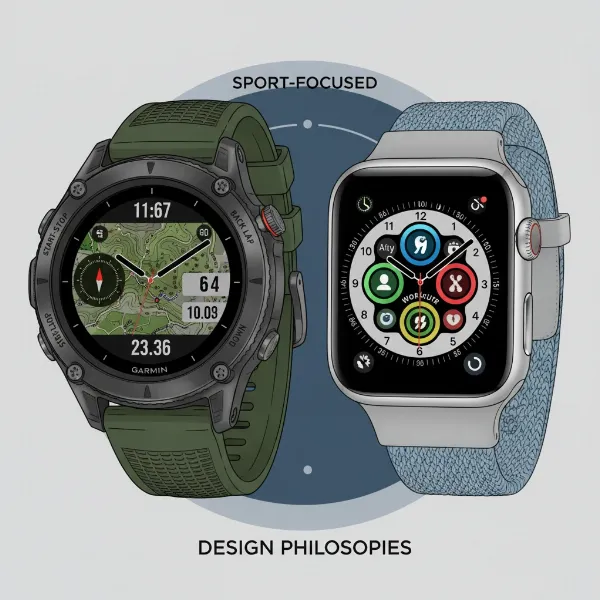 Illustration showing a rugged Garmin watch next to a sleek Apple Watch, representing their different focuses.
Head-to-Head: Garmin vs. Apple Watch for Athletes
When pitting these two giants against each other, specific aspects of athletic performance and daily usability come into sharp focus.
Battery Life: The Endurance Champion
For athletes, especially those engaged in long-duration events like ultramarathons or multi-day hikes, battery life is often the single most critical factor.
- Garmin: Garmin watches are legendary for their longevity. Most models provide at least a week of general use with daily GPS activity, and some high-end devices like the Enduro or Fenix series can last for weeks, even a month, without needing a charge. Several models also offer solar charging to extend battery life further. This eliminates the anxiety of a dying watch mid-activity.
- Apple Watch: Standard Apple Watch models typically offer around 18 hours of battery life, while the more robust Apple Watch Ultra models extend this to 2-3 days with regular use and training. While the Ultra can handle a 100km ultra, it falls short of Garmin’s capabilities for multi-day expeditions. Daily or every-other-day charging is generally required.
Fitness Tracking & Advanced Metrics
This is where Garmin traditionally sets itself apart with its unparalleled depth of physiological data and analytical tools.
- Garmin: Garmin provides a comprehensive suite of native metrics, offering detailed breakdowns of training effect, time spent in aerobic vs. anaerobic zones, training load, and personalized recovery time recommendations. Features like Body Battery, HRV status, and daily training readiness scores offer actionable insights into your physical state and optimal training windows. It also boasts activity-specific metrics like stride analysis for runners, power metrics for cyclists, and precise stroke detection for swimmers.
- Apple Watch: The Apple Watch excels at tracking fundamental fitness metrics like distance, pace, heart rate, and calories burned across various activities. It supports customizable heart rate zones and, with watchOS 11, has introduced a training load feature that uses user-rated effort to calculate weekly and monthly load. However, for truly advanced, prescriptive training insights, Apple Watch often relies more heavily on third-party applications.
GPS & Heart Rate Accuracy
Accuracy is paramount for any athlete relying on their watch for performance data.
- GPS Accuracy: Both Garmin and Apple Watch devices offer excellent GPS accuracy. However, Garmin’s higher-end models, which often feature multi-band GPS, are frequently cited for providing slightly more consistent and reliable tracking in challenging environments such as dense urban areas or heavy tree cover.
- Heart Rate Accuracy: Both brands deliver highly accurate wrist-based heart rate monitoring. While minor differences may occur in specific scenarios, for most athletes, both watches provide reliable heart rate data.
Durability & Design
An athlete’s watch needs to withstand the rigors of training and competition.
- Garmin: Garmin watches prioritize function over fashion, featuring rugged constructions, often with larger faces and transflective or MIP (Memory-in-Pixel) displays that are easily readable in direct sunlight and contribute to superior battery life. Crucially, many Garmin models incorporate physical buttons, which are far more practical and reliable for controlling the watch when your hands are sweaty, wet, or gloved.
- Apple Watch: Apple Watch features a sleek, often square-ish design with a vibrant OLED touchscreen. While the Apple Watch Ultra offers enhanced durability with a titanium case and sapphire front crystal, the reliance on a touchscreen can be a disadvantage in adverse weather conditions or during high-intensity activities where precise button presses are preferred.
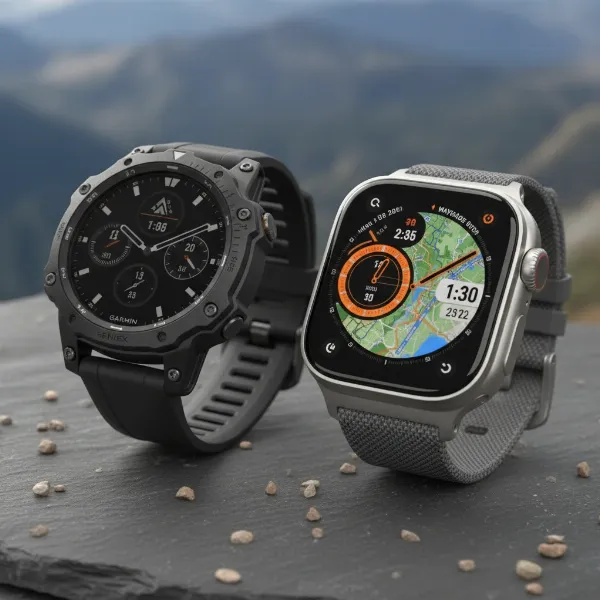 Side-by-side comparison of Garmin and Apple Watch designs, emphasizing ruggedness vs sleekness.
Smart Features & Ecosystem Integration
Beyond athletic tracking, smart features define much of the smartwatch experience.
- Garmin: While Garmin watches include essential smart features like notifications, basic contactless payments (Garmin Pay), and music storage (often requiring manual syncing), they are not designed to be a “phone on your wrist.” Their ecosystem, Garmin Connect, is robust for fitness data but less expansive for general smart capabilities. Garmin also offers broad compatibility with both iOS and Android devices.
- Apple Watch: Deeply integrated into the Apple ecosystem, the Apple Watch offers unparalleled smart capabilities. Users can make and receive calls, send texts, use Apple Pay, control smart home devices, and access a vast array of third-party apps directly from their wrist. Social features like sharing activity rings with friends further enhance its appeal for Apple users. It is, however, exclusively compatible with iPhones.
Detailed Comparison Table: Garmin vs. Apple Watch (Athlete Focus)
| Feature | Garmin (e.g., Fenix, Forerunner) | Apple Watch (e.g., Ultra, Series) |
|---|---|---|
| Primary Focus | Fitness & Outdoor Sports | Smartwatch & General Health |
| Battery Life | Days to Weeks (with GPS, up to a month for some models) | 18 hours – 3 Days (Ultra models) |
| Advanced Metrics | VO2 Max, Training Load, Recovery Advisor, HRV, Body Battery, Race Predictor, detailed sport profiles | Heart Rate Zones, Activity Rings, Training Load (WatchOS 11, more user-input based), generally relies on 3rd party apps for deeper insights |
| GPS Accuracy | Excellent, Multi-band GPS (some models) | Excellent |
| Durability | Rugged builds, physical buttons, often larger designs | Sleek, touchscreen, Ultra models offer enhanced robustness |
| Smart Features | Notifications, basic payments, music storage (manual sync), cross-platform compatibility | Calls, texts, Apple Pay, Siri, extensive app ecosystem, LTE, iPhone-exclusive |
| Medical Features | Fitness-oriented health metrics (HRV status, sleep scores, stress tracking) | FDA-approved features (ECG, AFib detection, Fall/Crash Detection) |
| Price Range | Wide range, from entry-level runners to premium multi-sport devices | Premium, especially for Ultra and cellular-enabled models |
How to Choose the Right Smartwatch for Your Athletic Journey
Selecting between a Garmin and an Apple Watch ultimately comes down to a careful evaluation of your specific athletic needs, lifestyle, and existing technological ecosystem.
1. Define Your Primary Needs
- Endurance & Multi-Sport: If your activities involve long hours, multi-day excursions, or highly specific sports like triathlon training, Garmin’s specialized tools and superior battery life are almost certainly paramount.
- General Fitness & Daily Wear: If you’re a casual fitness enthusiast who also values daily convenience, communication, and a sleek design, an Apple Watch might offer a better balance.
- Medical Health Monitoring: For those who prioritize medically validated health features like ECG and AFib detection, the Apple Watch is the clear choice.
- Data-Driven Training: If diving deep into physiological data, recovery metrics, and performance analytics is crucial for your training, Garmin provides a more comprehensive native experience.
2. Consider Your Ecosystem
- iPhone User: If you’re firmly within the Apple ecosystem, the seamless integration, communication features, and vast app availability of the Apple Watch are highly compelling.
- Android or Mixed Ecosystem: Garmin provides broader compatibility, working seamlessly with both iOS and Android devices, making it a more flexible choice if you don’t use an iPhone.
3. Evaluate Battery Requirements
- Long Events or Minimal Charging: If you need a watch that can go for days or weeks without a charge, especially during GPS-intensive activities, Garmin is the undisputed leader.
- Daily Charging is Acceptable: If you’re comfortable with charging your watch every night or every other night, the Apple Watch’s battery life might suffice for your needs.
4. Prioritize Design & User Interface
- Physical Buttons & Ruggedness: For active use in challenging conditions, the physical buttons and robust build of many Garmin models offer a significant advantage.
- Sleek Touchscreen & Style: If you prefer a highly responsive touchscreen, a wide array of stylistic options, and a watch that transitions smoothly from workout to daily life, the Apple Watch may be more appealing.
5. Budget Considerations
Both brands offer a wide range of devices at various price points. High-end athletic features, whether from Garmin’s Fenix series or Apple’s Ultra line, typically come with a premium price tag. Ensure your chosen watch offers the essential features you need without overspending on those you won’t use.
Conclusion
The debate between Garmin and Apple Watch for athletes isn’t about one being universally “better,” but rather which one is better for you. Garmin excels in its laser focus on raw athletic performance, offering unmatched battery life and an incredibly deep well of training and recovery metrics. It’s built for the long haul, the harsh elements, and the data-driven pursuit of peak physical condition. The Apple Watch, on the other hand, shines as a brilliant all-rounder, combining robust fitness tracking with industry-leading smart features and medically validated health monitoring, all wrapped in a sleek, user-friendly package that integrates perfectly into the Apple ecosystem.
Ultimately, your choice hinges on what matters most in your athletic pursuit: is it the unyielding endurance and granular data of a dedicated sports tool, or the sophisticated convenience and comprehensive health oversight of a premium smartwatch?
Frequently Asked Questions
Is Garmin’s GPS more accurate than Apple Watch?
While both brands offer excellent GPS accuracy for most activities, higher-end Garmin models equipped with multi-band GPS technology are often cited for providing slightly more consistent and reliable tracking, particularly in challenging environments like dense urban areas or heavily forested trails.
Which smartwatch has better battery life for long workouts?
Garmin watches are renowned for their superior battery life, making them ideal for long workouts and multi-day adventures. Many Garmin devices can sustain GPS tracking for days and offer weeks of battery life in smartwatch mode, whereas even the Apple Watch Ultra typically requires charging every 2-3 days with consistent training.
Can Apple Watch provide advanced training metrics like Garmin?
Apple Watch provides core fitness metrics like heart rate zones and has introduced a training load feature with watchOS 11. However, Garmin generally offers a much more extensive and prescriptive suite of native advanced training metrics, recovery insights, and physiological data directly on the watch, often requiring fewer third-party apps for deep analysis.
Is the Apple Watch Ultra a direct competitor to high-end Garmin watches?
The Apple Watch Ultra represents Apple’s most direct competition to high-end Garmin sports watches, featuring enhanced durability, an action button, and significantly improved battery life compared to standard Apple Watch models. While it’s a strong contender for many athletes, Garmin often still maintains an edge in ultra-endurance battery life and the sheer depth of specialized, native training analytics.