In an era where personal health takes center stage, smartwatches have evolved from simple time-telling devices into sophisticated health companions. Among their most crucial features is the ability to monitor blood oxygen saturation, commonly known as SpO2. This metric offers a vital window into your respiratory health and overall well-being, helping you stay informed about one of your body’s most essential functions. If you’re looking to integrate advanced health tracking into your daily life, understanding which smartwatches excel in SpO2 monitoring is key.
Understanding Blood Oxygen (SpO2) and Its Importance
Blood oxygen saturation (SpO2) measures the percentage of oxygen-carrying hemoglobin in your red blood cells. Essentially, it tells you how effectively your lungs are taking in oxygen and distributing it throughout your body. For a healthy individual, normal SpO2 levels typically range between 95% and 100%. Maintaining these optimal levels is crucial, as oxygen is fundamental for every cell and tissue in your body to function correctly.
Monitoring SpO2 can provide valuable insights for various reasons. Athletes, for instance, often use SpO2 data to assess their acclimation to higher altitudes and optimize training performance. For those with underlying health conditions, such as chronic obstructive pulmonary disease (COPD) or asthma, tracking SpO2 can help manage their respiratory health. Furthermore, consistent monitoring, especially during sleep, can act as an early warning sign for conditions like sleep apnea, a disorder characterized by pauses in breathing during sleep. Identifying sustained low SpO2 readings can prompt a conversation with a healthcare professional, ensuring timely attention to potential health concerns.
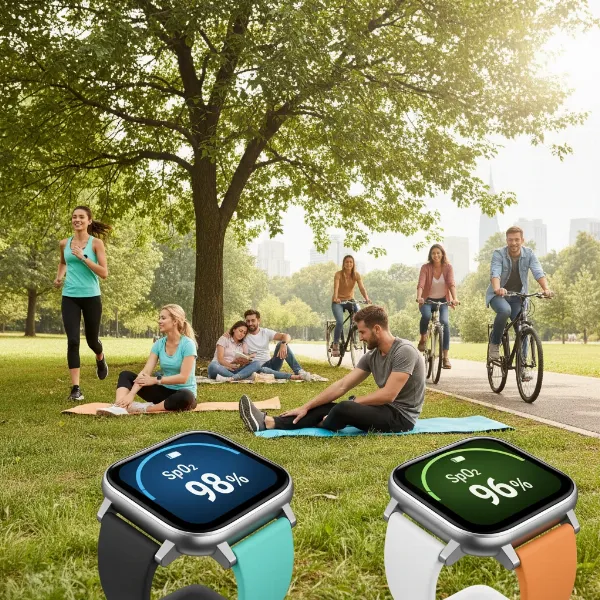 Diverse individuals using smartwatches to monitor blood oxygen levels for health and fitness.
How Smartwatches Measure SpO2: Reflectance Photoplethysmography (PPG)
Smartwatches primarily measure blood oxygen levels using a technology called reflectance photoplethysmography (PPG). This method involves shining red and infrared light onto your wrist and analyzing how the light reflects back to the sensor. Oxygenated blood absorbs light differently than deoxygenated blood, allowing the smartwatch to estimate your SpO2 levels.
It’s important to distinguish smartwatch SpO2 sensors from medical-grade pulse oximeters, which are often clipped onto a fingertip, toe, or earlobe. Medical devices typically use transmittance oximetry, where light passes through the tissue to a detector on the opposite side. These devices are usually FDA-regulated and designed for clinical accuracy. Smartwatches, on the other hand, utilize reflectance PPG from the wrist, an area with lower blood perfusion, which can affect signal quality. While effective for wellness tracking, smartwatches are generally not considered medical devices and are not intended for diagnosing or treating medical conditions.
Accuracy and Limitations of Smartwatch SpO2 Sensors
While smartwatch SpO2 sensors offer convenience and continuous monitoring, it’s crucial to understand their accuracy and limitations. Most consumer smartwatches are designed for general wellness and fitness tracking, not for medical diagnosis. Unlike clinical pulse oximeters that undergo rigorous FDA regulation for diagnostic accuracy (typically aiming for an accuracy root mean square, or ARMS, of ≤3%), smartwatches are not usually held to the same medical standards.
Studies indicate that while smartwatches can provide a good general indication of blood oxygen trends, their readings may not always match the precision of medical devices. Factors such as skin tone, excessive movement during measurement, ambient temperature, and even how snugly the device fits on your wrist can influence the accuracy of SpO2 readings. For example, some research has shown varying mean absolute errors (MAE) across different smartwatch brands when compared to a clinical-grade oximeter, with some devices performing better than others. It’s common for users to experience occasional discrepancies or even low readings, especially during sleep, which can sometimes cause unnecessary anxiety. If you consistently receive low SpO2 readings or experience symptoms like shortness of breath, fatigue, or dizziness, it’s always best to consult a healthcare provider for a professional medical assessment rather than relying solely on your smartwatch for diagnosis. Smartwatches are excellent tools for monitoring trends and prompting awareness, but they are not substitutes for professional medical advice or equipment.
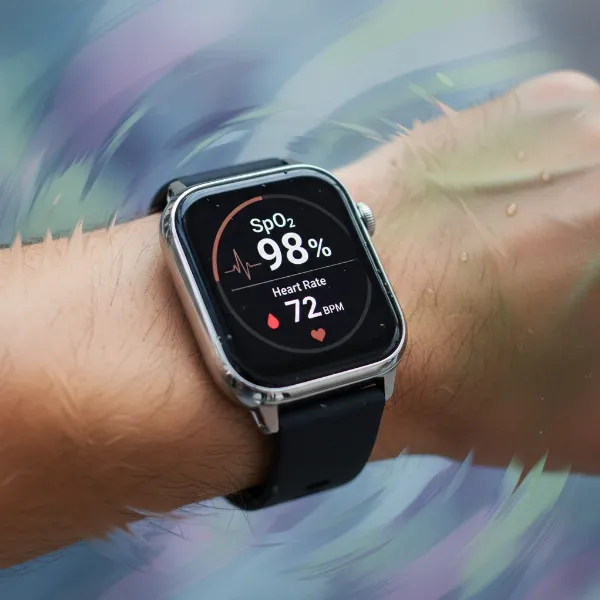 Close-up of a smartwatch measuring SpO2 on a wrist, with visual elements representing factors like skin tone and movement affecting accuracy.
Top Smartwatches with Blood Oxygen (SpO2) Sensors
Choosing the right smartwatch with an SpO2 sensor depends on your specific needs, whether you’re an athlete, a health-conscious individual, or someone monitoring a specific condition. Here are some of the leading smartwatches renowned for their blood oxygen monitoring capabilities:
Garmin
Garmin smartwatches are frequently lauded for their robust health and fitness tracking, including comprehensive SpO2 monitoring. Models like the Garmin Venu 4 and Venu X1 offer advanced features.
- Pros: Many Garmin watches provide all-day SpO2 readings, taking measurements at frequent intervals when the watch detects you’re at rest. They integrate SpO2 data with features like Altitude Acclimation, which helps athletes understand how their body adjusts to higher elevations, and Health Status, which tracks trends and alerts you to significant variations from your baseline. Their in-depth sleep analysis also incorporates breathing variations and SpO2.
- Cons: Garmin watches can be on the pricier side. While they provide insightful data that can hint at issues like sleep apnea, they typically do not offer an official sleep apnea diagnosis feature.
- Ideal for: Athletes, outdoor enthusiasts, and individuals seeking comprehensive all-day and overnight health data, especially those concerned with altitude performance or long-term wellness trends.
|
Our Picks for the Best Smartwatch in 2026
As an Amazon Associate I earn from qualifying purchases.
|
||
| Num | Product | Action |
|---|---|---|
| 1 | Smart Watch with Alexa Built-in, 1.83" HD Touchscreen Fitness Tracker with Bluetooth Calling, Fitness Watch with Heart Rate/Sleep Monitor, 120+ Sports Modes, IP68 Waterproof Smartwatch for Android iOS |

|
| 2 | SAMSUNG Galaxy Watch 7 40mm Bluetooth AI Smartwatch w/Energy Score, Wellness Tips, Heart Rate Tracking, Sleep Monitor, Fitness Tracker, 2024, Cream [US Version, 1Yr Manufacturer Warranty] |
|
| 3 | Smart Watch for Men, 120+ Sports Modes Smartwatch with 1.83" HD Touchsreen, Sleep Monitor, IP67 Waterproof, Bluetooth Call & Music Control Fitness Watch for iPhone/Android Black |
|
| 4 | Smart Watch for Men, 120 Sports Modes Smartwatch with 1.83" HD Touchsreen, IP67 Waterproof, Sleep Monitor, Bluetooth Call & Music Control Fitness Watch for Android/iPhone (Black) |
|
| 5 | WHOOP 5.0/MG Activity Tracker - 12 Month Membership - Health and Fitness Wearable – 24/7 Activity and Sleep Tracker, Personalized Coaching, Menstrual Cycle Insights – 14+ Days Battery Life |
|
| 6 | Apple Watch Series 11 [GPS 42mm] Smartwatch with Rose Gold Aluminum Case with Light Blush Sport Band - S/M. Sleep Score, Fitness Tracker, Health Monitoring, Always-On Display, Water Resistant |
|
| 7 | Smart Watch for Men Women Compatible with iPhone Samsung Android Phone 1.83 inch Full Touch Screen IP68 Waterproof Bluetooh Fitness Tracker Heart Rate/Sleep Monitor, Black |
|
| 8 | Smart Watch, 2026 AMOLED 1.43" Fitness Smartwatch for Men Women, Bluetooth 5.4 Call, 130+Sports Modes, 60+Days Flashlight, Heart Rate/Sleep Monitor, IP68 Waterproof Activity Tracker for Android iOS |
|
| 9 | Amazfit Bip 6 Smart Watch 46mm, 14 Day Battery, 1.97" AMOLED Display, GPS & Free Maps, AI, Bluetooth Call & Text, Health, Fitness & Sleep Tracker, 140+ Workout Modes, 5 ATM Water-Resistance, Black |
|
| 10 | Apple Watch Series 11 [GPS 46mm] Smartwatch with Jet Black Aluminum Case with Sport Band - M/L. Sleep Score, Fitness Tracker, Health Monitoring, Always-On Display, Water Resistant |
|
Samsung Galaxy Watch
Samsung’s Galaxy Watch series provides a compelling option for Android users, combining advanced health tracking with a full smartwatch experience. The Samsung Galaxy Watch 8 (and often previous generations like the Galaxy Watch 7/5) stands out.
- Pros: Offers reliable at-night SpO2 tracking and spot-check capabilities. A notable feature is its sleep apnea risk detection test, available through the Samsung Health Monitor app (requires a Galaxy phone), which can estimate moderate to severe obstructive sleep apnea risk over two nights. The baseline models are often lightweight and comfortable for sleep tracking.
- Cons: Battery life is typically shorter compared to dedicated fitness watches, requiring daily charging. The sleep apnea detection is a one-time assessment rather than continuous diagnostic monitoring. Full health features may require a Samsung Galaxy phone.
- Ideal for: Android users who want a feature-rich smartwatch with robust health tracking, including detailed sleep analysis and an initial assessment for sleep apnea risk.
Withings ScanWatch
The Withings ScanWatch 2 (and its predecessor) is recognized for its medical-grade health insights, presented in a classic hybrid smartwatch design.
- Pros: Known for accurate SpO2 spot checks and nightly testing. The original ScanWatch even received FDA clearance for SpO2 readings, and while the ScanWatch 2’s SpO2 feature is not FDA-approved (its ECG is), its overall health data quality remains high. It offers comprehensive health insights like breathing quality and continuous temperature variations. Its standout feature is impressive battery life, often lasting over a month on a single charge.
- Cons: As a hybrid smartwatch, it has limited “smart” features and a smaller digital display for notifications. It focuses more on health metrics than on extensive apps or interactive capabilities.
- Ideal for: Individuals who prioritize highly accurate health data and exceptional battery life in a traditional watch design, and don’t require a full-fledged “smart” experience.
Fitbit
Fitbit, now part of Google, offers smartwatches and trackers known for their user-friendly health ecosystems. The Fitbit Sense 2 is a prime example.
- Pros: Provides consistent nightly SpO2 readings as part of its comprehensive health data suite, which also includes continuous electrodermal activity (cEDA) for stress management, skin temperature, and ECG. Fitbit’s app is excellent for visualizing trends and offers a personal health coach for analyzing data and creating insights. It boasts good battery life, typically over six days.
- Cons: The Sense 2 primarily offers nightly SpO2 readings, with no option for on-demand spot checks. Some advanced features might require a Fitbit Premium subscription. It has fewer “smart” functionalities compared to Wear OS devices.
- Ideal for: Users seeking a holistic view of their health with a strong emphasis on stress management, sleep tracking, and overall wellness trends, within a user-friendly platform.
Apple Watch
The Apple Watch Series 9 (and the latest Series 10) remains a popular choice for iOS users, integrating seamlessly into the Apple ecosystem.
- Pros: Offers highly accurate SpO2 measurements, along with a comprehensive suite of health features including ECG, irregular heart rhythm notifications, and temperature sensing. Its deep integration with iOS provides a fluid user experience for accessing health data and other smart features.
- Cons: It is one of the more expensive smartwatches on the market and has limited compatibility with non-Apple devices. Battery life, while improved, typically requires daily charging.
- Ideal for: iPhone users who want a premium smartwatch experience with advanced health monitoring, seamless ecosystem integration, and a wide array of smart features.
Amazfit
For those seeking an affordable entry into SpO2 monitoring without compromising too much on features, Amazfit offers compelling value. The Amazfit Bip 6 and GTR 4 are good examples.
- Pros: Amazfit watches provide SpO2 tracking, including both spot checks and nightly insights, at a significantly lower price point. They generally offer strong battery life and come with a BioTracker sensor suite for comprehensive health data like heart rate, stress, and breathing rate.
- Cons: While offering great value, their sensors may not always match the accuracy levels of more premium brands. Hardware compromises are made to keep the price low, and the app ecosystem might be more basic.
- Ideal for: Budget-conscious users or those new to smartwatches who want essential SpO2 tracking and other fitness features without a hefty investment.
Detailed Comparison of Top Smartwatches with SpO2
| Feature | Garmin Venu 4 | Samsung Galaxy Watch 8 | Withings ScanWatch 2 | Fitbit Sense 2 | Apple Watch Series 9/10 | Amazfit Bip 6 |
|---|---|---|---|---|---|---|
| SpO2 Modes | On demand, Sleep, All-day | Spot check, Sleep | Spot check, Sleep | Sleep only | On demand, Sleep | Spot check, Sleep |
| Other Health Data | HR, HRV, ECG, Skin Temp, Body Battery, Breathing Variations | HR, Stress, ECG, Skin Temp, BIA, Sleep Apnea (test) | HR, HRV, ECG, Passive AFib, Breathing Quality, Continuous Temp | HR, HRV, cEDA, ECG, Skin Temp, Breathing Rate | HR, ECG, Temperature, Cycle Tracking, Fall Detection | HR, Stress, Breathing Rate |
| Battery Life | Up to 12 days | Up to 40 hours | Up to 35 days | 6+ days | Up to 18 hours (36 in low power) | 6-14 days (typical/heavy) |
| OS Compatibility | Android, iOS | Android (best with Samsung phones) | Android, iOS | Android, iOS | iOS only | Android, iOS |
| Price Range | Premium | Mid-High | Mid-High | Mid | Premium | Budget |
| Key Differentiator | All-day SpO2, Altitude Acclimation, Health Status | Sleep apnea risk detection, Wear OS, Android integration | Hybrid design, exceptional battery, high health accuracy | Stress management, comprehensive app, nightly SpO2 | Seamless iOS integration, broad health ecosystem | Ultra-affordable, one-tap measurements, good battery |
How to Choose a Smartwatch with SpO2 That Fits Your Needs
Selecting the ideal smartwatch with an SpO2 sensor involves more than just picking the latest model. Consider these factors to find a device that truly serves your health and lifestyle:
1. Determine Your Primary Use Case
- General Wellness & Proactive Monitoring: If you’re simply curious about your overall health and want to track trends, most smartwatches with SpO2 will suffice. Look for devices that offer nightly or on-demand readings and provide clear data visualization in their companion apps.
- Athletic Performance & Altitude Training: For serious athletes or those who spend time at high altitudes, features like Garmin’s all-day SpO2 and Altitude Acclimation can be invaluable for understanding your body’s response to environmental changes.
- Sleep Apnea Concerns: If you suspect sleep apnea, a smartwatch like the Samsung Galaxy Watch 8 with its risk detection tool can be a starting point, but always follow up with a medical professional for proper diagnosis. Devices with detailed sleep tracking and breathing variation analysis are also beneficial.
- Monitoring Chronic Conditions: While smartwatches aren’t medical devices, they can offer supplementary data for individuals with respiratory conditions. Discuss with your doctor if and how smartwatch SpO2 data might be helpful for your specific situation.
2. Understand Accuracy Expectations
Remember that consumer smartwatches are not medical devices. Their SpO2 readings are intended for wellness tracking and can be influenced by several factors. For critical medical decisions, a clinically validated pulse oximeter or a doctor’s assessment is always recommended. Look for watches with strong reputations for consistency and consider devices like Withings ScanWatch if accuracy is a very high priority.
3. Compatibility with Your Smartphone
Ensure the smartwatch you choose seamlessly integrates with your existing smartphone. Apple Watches are exclusively for iPhones, while Samsung Galaxy Watches offer the best experience with Android phones (especially Samsung). Brands like Garmin, Fitbit, and Amazfit generally offer broad compatibility with both iOS and Android.
4. Battery Life
Continuous SpO2 monitoring, especially all-day or during sleep, can be a significant drain on battery life. If you want uninterrupted tracking, consider models known for longer battery performance, such as Garmin or Withings. If you’re comfortable with daily charging, a feature-rich smartwatch like the Apple Watch or Samsung Galaxy Watch might be suitable.
5. Budget and Additional Features
Smartwatches range widely in price. Determine your budget and then prioritize the features most important to you. Beyond SpO2, do you need ECG, GPS, cellular connectivity, advanced fitness metrics, or smart home integration? Entry-level options like Amazfit provide core SpO2 and fitness tracking, while premium models offer a wider array of functionalities and a more refined user experience.
“The true power of a smartwatch with an SpO2 sensor lies not in replacing medical equipment, but in empowering individuals with continuous insights into their body’s subtle changes. It’s a fantastic tool for preventative health and trend identification, fostering a more proactive approach to well-being.” – Tech Wellness Expert
Conclusion
Smartwatches with blood oxygen (SpO2) sensors are revolutionary tools, offering a convenient way to monitor a vital health metric right from your wrist. From tracking sleep quality and athletic performance to providing early warning signs for potential respiratory issues, these devices empower you to take a more active role in managing your health. Whether you prioritize all-day monitoring, specific sleep apnea detection, medical-grade accuracy in a hybrid design, or an affordable entry into health tracking, there’s a smartwatch perfectly suited to your needs.
By understanding the technology, its capabilities, and its limitations, you can make an informed decision and choose a smartwatch that becomes a trusted partner in your health journey. While these devices are incredible for monitoring wellness trends, always remember to consult a healthcare professional for any medical concerns or symptoms. What health insights are you most eager to unlock with your next smartwatch?
Frequently Asked Questions
What is a healthy SpO2 level for adults?
A healthy blood oxygen saturation (SpO2) level for most adults typically ranges between 95% and 100%. Readings below 92% may indicate hypoxemia (low blood oxygen) and should prompt a consultation with a healthcare professional, especially if accompanied by symptoms like shortness of breath.
Can smartwatches accurately detect medical conditions like sleep apnea?
While smartwatches can provide data like low SpO2 during sleep, which may be a sign of conditions like sleep apnea, they are generally not medical devices and cannot provide an official diagnosis. Some, like the Samsung Galaxy Watch, offer risk detection tools, but a definitive diagnosis requires a clinical evaluation by a doctor.
How often should I check my SpO2 with a smartwatch?
The frequency depends on your individual needs. Many smartwatches offer automatic nightly SpO2 tracking, which is excellent for monitoring sleep patterns. Some also allow on-demand spot checks throughout the day. If you have specific health concerns, follow your doctor’s recommendations for monitoring.
Are smartwatch SpO2 readings affected by skin tone?
Yes, studies have shown that smartwatch SpO2 readings can be influenced by skin tone, with some devices potentially having reduced accuracy in individuals with darker skin pigmentation. This is due to how the light-based sensors interact with melanin in the skin. However, manufacturers are continually working to improve the inclusivity and accuracy of their sensors.
Should I replace a medical pulse oximeter with a smartwatch for health monitoring?
No, smartwatches should not replace medical-grade pulse oximeters for clinical use or diagnosis. Medical oximeters are specifically designed and regulated for high accuracy in critical situations. Smartwatches are best used for general wellness monitoring and detecting trends, prompting you to seek professional medical advice if concerning patterns emerge.