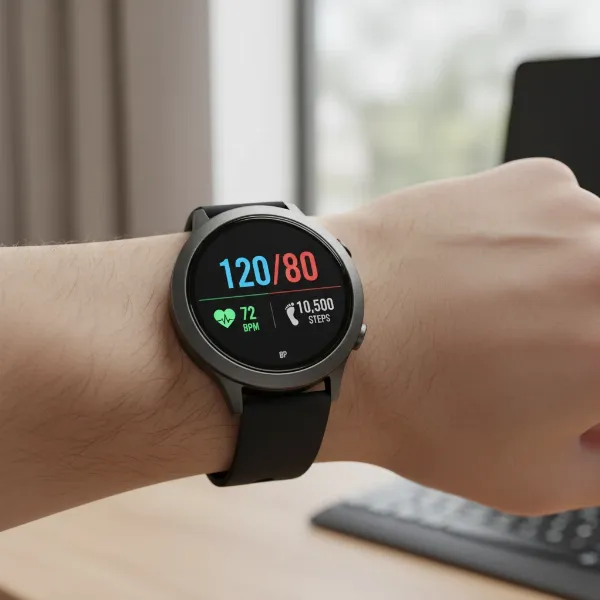
Sleep apnea, a common but often undiagnosed condition, can significantly impact overall health and well-being. Fortunately, advancements in wearable technology are providing new ways for individuals to monitor their sleep patterns and detect potential signs of this disorder. While no smartwatch can offer a definitive diagnosis, several devices now feature sophisticated sensors and algorithms, with some even gaining FDA authorization, to help screen for sleep apnea, encouraging users to seek professional medical advice.
How Smartwatches Aid in Sleep Apnea Detection
Modern smartwatches and other wearable devices employ a combination of advanced sensors to track various physiological metrics during sleep. These typically include:
- Blood Oxygen Saturation (SpO2): Monitoring oxygen levels can reveal drops that may occur during breathing interruptions characteristic of sleep apnea.
- Heart Rate and Heart Rate Variability (HRV): Irregularities in heart rate patterns, such as sudden accelerations after a period of slowed pulse, can indicate sleep disturbances.
- Movement (Accelerometer Data): Subtle body movements, twitches, or restlessness can signal arousals from sleep caused by breathing difficulties.
- Breathing Patterns and Snoring: Some devices can analyze breathing rate and detect snoring, a prominent symptom of obstructive sleep apnea (OSA).
These data points are processed by complex algorithms to identify patterns consistent with sleep-disordered breathing. It is crucial to understand that these devices function as screening tools, alerting users to potential risks rather than providing a medical diagnosis. A formal diagnosis always requires a comprehensive sleep study (polysomnography) conducted by a healthcare professional.
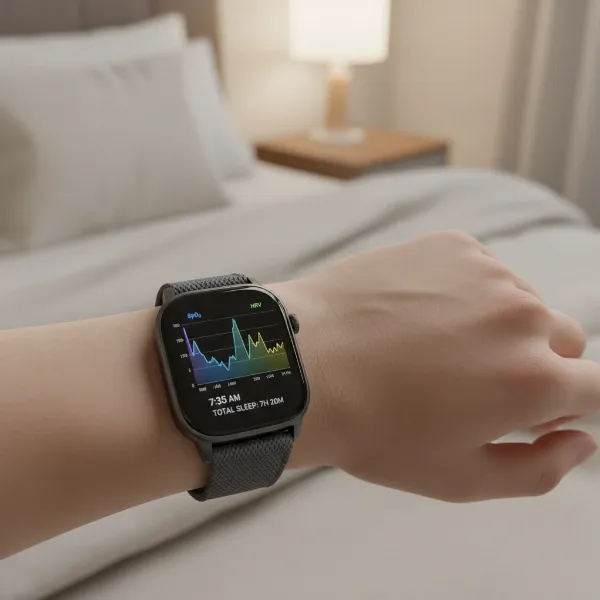 Smartwatch on a wrist showing sleep tracking data with blood oxygen and heart rate graphs.
Top Smartwatches with FDA-Authorized Sleep Apnea Detection Features
Both Apple and Samsung have led the charge in integrating FDA-authorized features aimed at detecting signs of moderate to severe obstructive sleep apnea.
Samsung Galaxy Watch Series
Samsung was among the first to receive FDA De Novo authorization for its sleep apnea detection feature.
- Models: Available on the Samsung Galaxy Watch7, Galaxy Watch Ultra, and newer models. Samsung has also announced that this feature will soon be available for the Watch4 and Watch5 series.
- How it Works: The feature assesses for signs of moderate-to-severe OSA in individuals aged 22 or older. It typically requires wearing the watch for at least two nights, each with a minimum of four hours of sleep, within a 10-day period. The Samsung Health app also offers snore detection and sleep coaching.
- Purpose: This feature is designed to empower users to seek appropriate medical care if potential signs are detected, not to diagnose the condition.
|
Our Picks for the Best Smartwatch in 2026
As an Amazon Associate I earn from qualifying purchases.
|
||
| Num | Product | Action |
|---|---|---|
| 1 | SAMSUNG Galaxy Watch 7 40mm Bluetooth AI Smartwatch w/Energy Score, Wellness Tips, Heart Rate Tracking, Sleep Monitor, Fitness Tracker, 2024, Cream [US Version, 1Yr Manufacturer Warranty] |
![Check SAMSUNG Galaxy Watch 7 40mm Bluetooth AI Smartwatch w/Energy Score, Wellness Tips, Heart Rate Tracking, Sleep Monitor, Fitness Tracker, 2024, Cream [US Version, 1Yr Manufacturer Warranty] on Amazon](https://smartwatchus.com/wp-content/plugins/amazon-tables/assets/images/buy.png)
|
| 2 | Smart Watch, 2026 AMOLED 1.43" Fitness Smartwatch for Men Women, Bluetooth 5.4 Call, 130+Sports Modes, 60+Days Flashlight, Heart Rate/Sleep Monitor, IP68 Waterproof Activity Tracker for Android iOS |
|
| 3 | Smart Watch for Men, 120+ Sports Modes Smartwatch with 1.83" HD Touchsreen, Sleep Monitor, IP67 Waterproof, Bluetooth Call & Music Control Fitness Watch for iPhone/Android Black |
|
| 4 | WHOOP 5.0/MG Activity Tracker - 12 Month Membership - Health and Fitness Wearable – 24/7 Activity and Sleep Tracker, Personalized Coaching, Menstrual Cycle Insights – 14+ Days Battery Life |
|
| 5 | Apple Watch Series 11 [GPS 46mm] Smartwatch with Jet Black Aluminum Case with Sport Band - M/L. Sleep Score, Fitness Tracker, Health Monitoring, Always-On Display, Water Resistant |
|
| 6 | Smart Watch for Men, 120 Sports Modes Smartwatch with 1.83" HD Touchsreen, IP67 Waterproof, Sleep Monitor, Bluetooth Call & Music Control Fitness Watch for Android/iPhone (Black) |
|
| 7 | Smart Watch for Men Women Compatible with iPhone Samsung Android Phone 1.83 inch Full Touch Screen IP68 Waterproof Bluetooh Fitness Tracker Heart Rate/Sleep Monitor, Black |
|
| 8 | Apple Watch Series 11 [GPS 42mm] Smartwatch with Rose Gold Aluminum Case with Light Blush Sport Band - S/M. Sleep Score, Fitness Tracker, Health Monitoring, Always-On Display, Water Resistant |
|
| 9 | Amazfit Bip 6 Smart Watch 46mm, 14 Day Battery, 1.97" AMOLED Display, GPS & Free Maps, AI, Bluetooth Call & Text, Health, Fitness & Sleep Tracker, 140+ Workout Modes, 5 ATM Water-Resistance, Black |
|
| 10 | Smart Watch with Alexa Built-in, 1.83" HD Touchscreen Fitness Tracker with Bluetooth Calling, Fitness Watch with Heart Rate/Sleep Monitor, 120+ Sports Modes, IP68 Waterproof Smartwatch for Android iOS |
|
Apple Watch Series
Apple has also received FDA authorization for its sleep apnea detection feature, enhancing its health monitoring capabilities.
- Models: Supported by Apple Watch Series 9, Series 10, Series 11, Ultra 2, Ultra 3, and newer devices.
- How it Works: This feature flags potential moderate-to-severe obstructive sleep apnea (OSA) in individuals aged 18 or older by analyzing accelerometer data over a 30-day period. It monitors “Breathing Disturbances” that may indicate interruptions in airflow.
- Purpose: Similar to Samsung, the Apple Watch acts as a screening alert, prompting users to consult with a doctor for further evaluation and potential diagnosis.
Other Smartwatches and Wearables for Comprehensive Sleep Tracking
While not explicitly FDA-authorized for sleep apnea detection, many other wearables offer robust sleep tracking features that can provide valuable insights into overall sleep health and potential warning signs.
- Withings ScanWatch 2: This hybrid smartwatch is highly regarded for its comprehensive health tracking, including on-demand ECG, atrial fibrillation detection, SpO2 monitoring, and temperature tracking. It also tracks activity and cardiovascular health, making it a strong contender for general sleep health monitoring with impressive battery life.
- Fitbit Devices (e.g., Charge 6, Inspire 3): Fitbit is known for its detailed and reliable sleep data, tracking sleep stages (light, deep, REM), total time asleep, and wakefulness. Newer models also include continuous SpO2 monitoring, which can be crucial for identifying oxygen desaturations.
- Oura Ring 4: For those preferring a discreet form factor, the Oura Ring offers in-depth sleep data, including sleep stages, movement, heart rate variability (HRV), and blood oxygen saturation, providing a holistic view of overnight health.
- Google Pixel Watch Series (e.g., Pixel Watch 4): Leveraging Fitbit’s acclaimed sleep platform, the Pixel Watch provides detailed sleep tracking, monitoring sleep stages, HRV, restlessness, and breathing patterns. It offers a comprehensive wellness experience within the Wear OS ecosystem.
- Garmin Venu Series (e.g., Venu 4): Garmin’s smartwatches are praised for their advanced fitness and health tracking, including sophisticated sleep tools, automatic nap detection, and personalized sleep coaching, alongside excellent battery life.
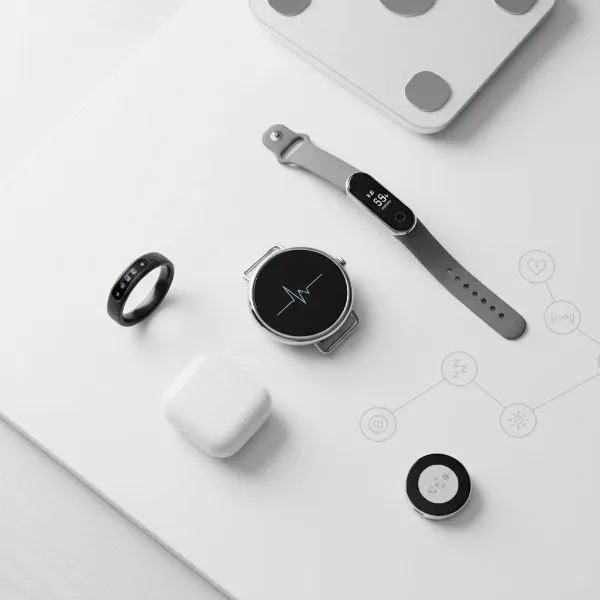 Collection of various smartwatches and wearable devices for health and sleep monitoring on a table.
Detection vs. Diagnosis: Understanding the Difference
It is vital to reiterate the distinction between “detection” and “diagnosis.” Smartwatches with FDA-authorized features are cleared to detect signs or assess risk of sleep apnea. They are screening tools that use algorithms to identify patterns indicative of the condition.
A definitive diagnosis of sleep apnea, however, requires a professional sleep study, typically a polysomnography (PSG) conducted in a sleep lab, or an FDA-approved home sleep apnea test (HST). These diagnostic tests measure a broader range of physiological factors, including brain waves (EEG), respiratory effort, and airflow, to provide a conclusive assessment of sleep architecture and breathing disturbances. For instance, the Happy Ring is an example of an FDA-approved device specifically designed to diagnose obstructive sleep apnea via a home sleep test.
When to Consult a Doctor
If your smartwatch, especially one with an FDA-authorized sleep apnea detection feature, alerts you to potential signs of sleep apnea, it is a strong indicator that you should consult your doctor. Additionally, be vigilant for common symptoms of sleep apnea, regardless of smartwatch data:
- Loud and chronic snoring
- Witnessed pauses in breathing during sleep
- Gasping or choking during sleep
- Excessive daytime sleepiness or fatigue
- Waking up with a dry mouth or sore throat
- Morning headaches
- Difficulty concentrating, memory problems, or irritability
Conclusion
Smartwatches are becoming increasingly powerful allies in personal health management, offering valuable insights into our sleep patterns and potentially identifying early warning signs of conditions like sleep apnea. Devices from Apple and Samsung, with their FDA-authorized features, represent a significant step forward in making initial screening more accessible. While these wearables are not substitutes for professional medical diagnosis, they serve as crucial tools to empower individuals to take proactive steps, consult healthcare providers when necessary, and ultimately move towards healthier, more restorative sleep.